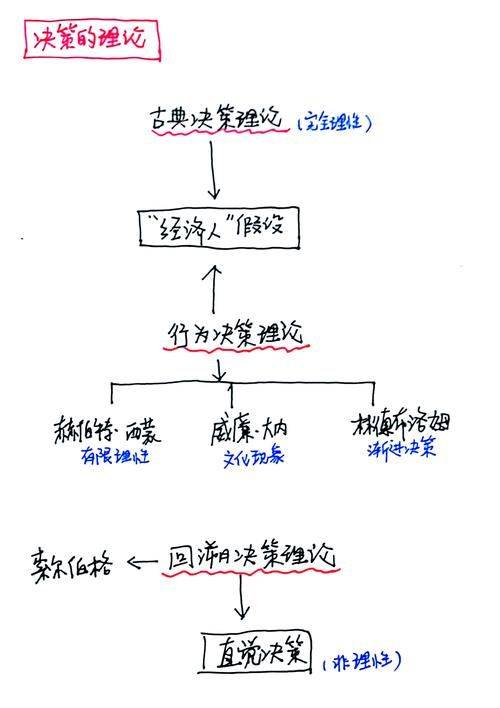
The 5th rational choice theory rational selection theory is an economic model based on human behaviour, which considers that individuals take into account all possible consequences in their decision-making and choose options that maximize their own interests or effectiveness. This theory is applied in many areas, including economics, politics, sociology, etc. In that statement, we will explore the rationale of rational choice theory, its application areas and its application in practice. First, the central view of the rational choice theory underlying rational choice theory is that individuals take into account all possible consequences in their decision-making and choose options that maximize their own interests or effectiveness. The term “interest” or “use” here is a relatively broad concept that can refer to anything that is valuable to individuals, such as money, time, health, happiness, etc. In making decisions, individuals assess the costs and benefits of programmes against their own preferences, objectives and constraints, and then choose the best. Self-interest: individuals prioritize their own interests over others in decision-making. 2. Complete information: individuals have all relevant information in their decision-making and can accurately assess the consequences of programmes. 3. Reasonability of expectations: individuals can reasonably expect the future based on past experience and projections of the future. Optimization: individuals will choose options that maximize their own benefits or effectiveness. Economics: in economics, rational choice is widely applied to consumer behaviour, business decision-making, market balance, etc. 2. Political science: in political science, rational choice theories are used to explain voter behaviour, politicians ' decision-making, government policy making, etc. 3. Sociology: in sociology, the rational choice theory is used to study social behaviour, social systems, social change, etc. The rational choice theory is not only a theoretical model but can also be used to explain and predict people's behaviour in everyday life. In shopping, for example, we compare the prices, quality, brands, etc. Of different commodities, and then choose the most expensive. When looking for work, we take into account pay, the working environment, development prospects, etc., and then choose the job that is best suited to ourselves. In making decisions, we weigh all possible consequences and then choose the best option. The rational choice theory is a very useful tool to help us understand human behaviour, predict people's behaviour and develop sound policies and strategies. However, there are limitations to the rational choice theory, such as the assumption that an individual has complete information, expected rationality, etc., which is not always established in practice. Therefore, when applying the rational choice theory, we need to adapt and amend it to the actual situation. Fourthly, the challenges and limitations of rational choice theory, while widely applied in interpreting human behaviour, also face some challenges and limitations. The rational choice theory assumes that individuals have complete information, which is not possible in real life. People often have access to only part of the information, and the cost of access may be high. The rational choice theory assumes that individuals have stable preferences, but in practice preferences may change over time, environment, etc. The rational choice theory assumes that individuals can make precise calculations and reasoning, but human cognitive capacity is limited and we may make mistakes or make irrational decisions. V. The expansion and application of the rational choice theory has been expanded and revised by researchers to address these challenges and constraints. For example, behavioural economics combines psychological research with the concept of “limited rationality”, whereby people may be affected in decision-making by factors such as perception bias, emotion, etc. Other researchers have introduced the concept of “social preference” that people take into account not only their own interests but also the interests of others and social welfare. In terms of application, the rational choice theory has been widely applied in areas such as public policy formulation, market analysis and enterprise management. For example, governments can develop more effective electoral strategies by analysing the behaviour of voters; enterprises can develop more accurate marketing strategies by analysing the behaviour of consumers. The rational choice theory can also be used to explain and predict people's decisions in education, health, environment, etc. Sixthly, the rational choice of development prospects theory of rational choice is an important tool that helps us to understand human behaviour, predict people's behaviour and develop sound policies and strategies. However, the rational choice theory also faces a number of challenges and constraints that require appropriate adjustments and modifications in its application. With advances in science and technology, the rational choice theory is expected to be further developed and applied. 7. The ethical and social impact of rational choice theory, while emphasizing the maximization of individual interests, has also led to discussions on ethical and social implications. In the pursuit of personal interests, there may be situations where the interests of others or the well-being of society are ignored. For example, in seeking to maximize profits, enterprises may resort to practices that harm the environment or exploit employees. Therefore, balancing individual interests with social responsibility in rational choices is an important ethical issue. Viii. Cross-cultural comparisons of rational choice theory may vary people's values and decision-making patterns in different cultural contexts. The application of rational choice theory in intercultural research can help us understand how people in different cultures make decisions and the cultural logic behind them. Through comparative research, we can better understand the impact of cultural differences on decision-making behaviour and promote understanding and communication among cultures. 9. The rational choice theory, the future direction of research, is 1. Dynamic decision-making: the rational choice theory usually assumes that decision-making is static, but in reality it is often taking place in a changing environment. Research on dynamic decision-making can help us better understand how individuals adapt to environmental change. 2. Group decision-making: the rational choice theory focuses on individual decision-making, but in many cases it is the group that makes the decision together. A study of group decision-making can help us understand how collective wisdom is formed and how to optimize group decision-making. The rational choice theory, as an economic model to explain human behaviour, has demonstrated its strong interpretive and predictive power in many areas. However, it also faces the challenges of incomplete information, precarious preferences and cognitive limitations. By expanding and applying the rational choice theory, we can better understand human behaviour and develop more effective policies and strategies. As social science and cognitive science develop, the rational choice theory will continue to evolve, providing us with deeper understanding and wider application。