Overview of technology for the production of cedars
Chestnut, an important dry fruit that has been hailed as “wood food”, is not only a rich nutritional value, but also an important means for mountain people to grow wealth. Its cultivation techniques cover various stages, ranging from seedlings, planting to pest control, and each step is related to the production and quality of the chestnuts. And then we're going to go deep into the efficient cultivation of chestnuts, and we're going to give you a full picture。
Seed selection and treatment
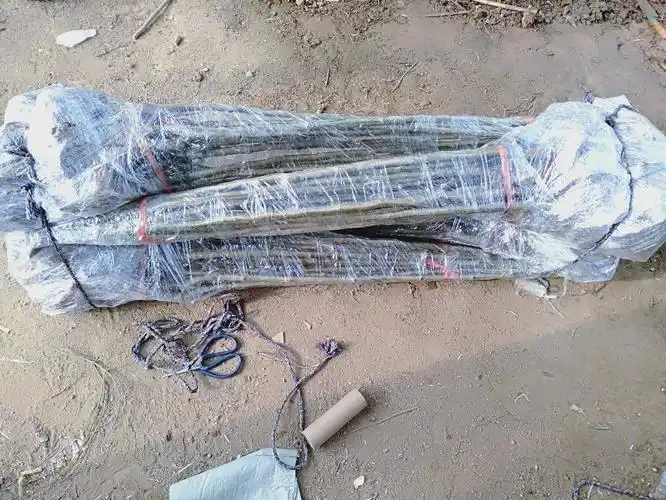
Chestnut harvesting requires careful selection of pest-free seeds. Subsequently, a ditch with a depth of 1 metre was dug in an area of plenty of sunlight and water. A layer of 20 cm thick wet sand should be laid in the ditch, followed by a 20 cm thickness for the chestnut seeds, noting that the ratio of seeds to sand should be maintained at 1:2. The sand shall be moderate in humidity and shall not be held in hand. In the sand cover process, about 10 straws will need to be inserted in the middle position and tied in to ensure ventilation and prevent the decay of the chestnut seeds. Seeds will be available for seedlings once the land is frozen in the spring。
032. Orchard establishment and planting
The establishment of the chestnut garden
Chestnuts are widely distributed in our country, ranging from 18°30 north to 40°30 north. It prefers an annual average temperature between 10. 5 and 21. 8°c, with an absolute maximum temperature of not more than 41. 6°c and an absolute minimum temperature of not less than 24. 5°c. Chestnuts are equally well adapted to humidity, with evidence of growth in both wet areas with annual precipitation of over 1,000 mm and arid or semi-arid areas with annual precipitation of 500-2000 mm. In the case of soil, the phs are the most suitable for growth in sandy sandy earth, which is deep in the soil, well drained and has low groundwater levels。
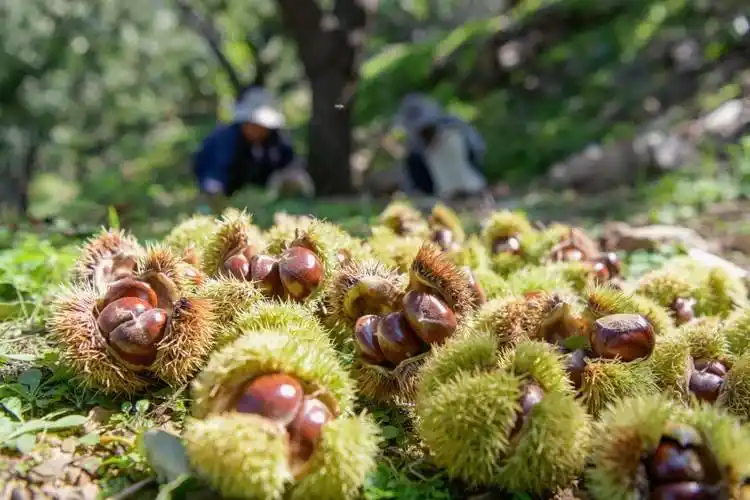
Chestnuts are suitable for growth in deep, well-watered sandy soils, with attention to the use and depth of organic fertilizers. Land level and slopes are available when the site is selected. If a pit is dug deep in the earth, it is recommended that 20 cm of topsoil be placed on the side and then mixed with organic fertilizers such as cots, chicken dung, etc., when planted. Please note that 1 ton of organic fertilizer needs to be fermented with 1 to 2 generations of ammonium carbon to facilitate full soil mixing. Since the roots of the chestnuts can reach 1 to 1. 5 metres deep in the earth, most of them are spread from 0. 5 to 1 metre deep, so that the depth of planting is appropriate for the root neck of the nursery. During planting, attention needs to be paid to such steps as seedlings, solid and timely watering. For hilly areas, the pit should be dug at a depth not less than 60 cm and planted at a range of 3 m x 4 m or 2 m x 3 m。
The time to plant
Chestnut planting is suitable for the spring and autumn seasons. If plant is chosen before the fall freeze, it is easier to heal the roots because of the small wind power. During this period, conditions permitting should ensure full application of base fat and water。
043. Bridging and shearing techniques
The technology of twilight marriage
It is fitting that after the planting of the chestnuts, the marriage took place in the spring of the following year. High-quality, disease-free ears should be selected during the marriage and collected in conjunction with winter shears. The length of each ear should be controlled at about 13 cm and treated using wax sealing techniques. Note the control of wax temperature, which usually starts to melt at 70°c when smoke occurs in the pot at a temperature of about 130°c, with a small amount of water added to prevent temperatures above 150°c. When the wax is sealed, the head of the ear shall be sealed, then the other head shall be sealed and then placed on the cold ground, and every 100 pieces shall be kept in the cellar to ensure proper humidity。
In the case of indoctrination, it is common to use the two methods of cutting and cutting. When cutting, the logs are to be split from the middle to ensure that the formation layers on the ear are closely aligned and tied. Upon completion, plastic sheeting was used to bind. Plugging, on the other hand, requires the cutting of the earring into a triangulation, the insertion into the aluminum, and the same plastic sheeting. For the shekels of the nursery, approximately 10 cm long. Upon completion of the indoctrination, the sprouts must be periodically sprung and carefully treated as the sprouts grow to 30 cm。
Twilight, chestnuts and trim
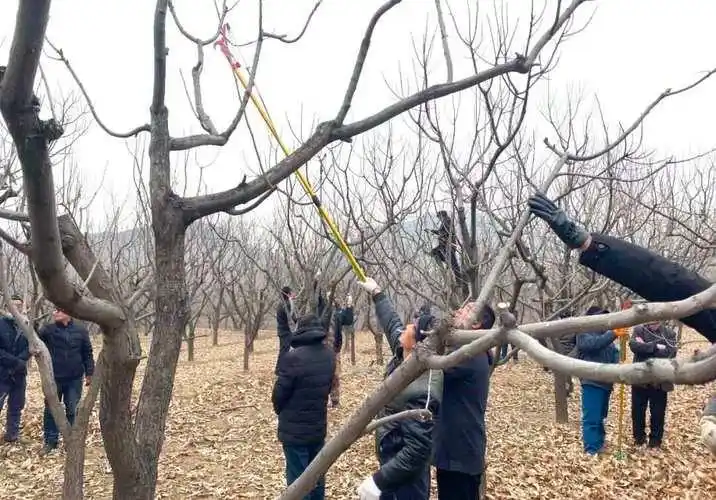
The tree structure commonly found in the chestnuts consists of a natural happy shape, a side-drive stem shape, a small coronary strangulation and a hammer shape. In the year following the marriage of chestnuts, when the new edges drawn from the ears grew to about 30 cm, a decision should be made. Then, the vertical branches will have to be drawn from the newly issued branches as the main branches for extension, while the branches will be the first branches. When the main branch lengthens to about 25-30 cm, it is again disheartened, and the second branch is selected from the second branch as the secondary branch. After that, the trunk continued to grow upwards and did not take care of it。
When the branches grow more than 80 cm in the same year, the following spring, when the branches are trimmed, must draw the proper angles from the first and second branches and extend the main branches as the third branch, equally from the right angle and position. If growth does not reach 80 cm in the year, it will not pull, but will continue to be short. Extend the branch until the main branch has grown to about 1 m before pulling it。
554. Soil-based water management
• soil manure management
The application of soil-based fertilizers is essential in the management of fertilizing water in the chestnuts. The main objective of this is to improve soil structures, improve soil fertility and water conservation, and provide comprehensive and balanced nutrition for the chestnuts. The best application time is in the fall after the harvest, when the temperature is moderate and the fertilizer is perishable, while at the same time facilitating the growth and absorption of new roots. The application of base fertilizers can effectively contribute to the accumulation of tree nutrients and provide a solid basis for the division of female flowers in the coming years。
In pursuit of fattening, the main choice is to use fast-acting nitrogen fertilizer supported by phosphorus and potassium fertilizer. The best time to catch up is in early spring and summer. In the spring, urea of 0. 3 to 0. 5 kg is required for each of the first-planted fruit trees, while in the case of the fertilizing tree, the amount of follow-up is increased to 2 kg. Following fatting should be watered in a timely manner to ensure that fertilizer is fully functional. In addition, the period between late july and mid-august in the summer was an important period in the pursuit of fertilizer. At this point in time, the application of appropriate velocity nitrogen and phosphorous fertilizers can effectively contribute to the increase of the cedar cherries and make the meat more full, thereby improving the overall quality of the fruit。
Scientific pursuit of fertilizers is an important means of improving the production and quality of chestnuts. Over the course of the year, multiple external fat hunts are required, with special attention paid to two critical moments. The first fat hunt should take place in the early spring, when the blades of the branch have just turned yellow and green, spraying solutions containing 0. 3% - 0. 5% urea and adding 0. 3% - 0. 5% boron. The second fertilizer shall be sprayed with 0. 1% potassium phosphate every 10-15 days during the month and half months preceding the harvest。
Water management
Chestnuts need adequate moisture during their growth, especially before they germinate and during the period of rapid growth of the fruit, each of which can ensure healthy growth of the fruit tree and help to improve the quality of the fruit. An adequate water supply is required before the gestation and during the rapid growth of the fruits。
Pest control
Major pests and control
There are specific measures to combat the torture of peaches, chestnuts, chestnuts and red spiders. For example, the macabre is the primary pest that endangers the cranberry fruit and breeds three generations in one year. The first two generations primarily attacked crops such as maize and sorghum, while the third generation mainly attacked chestnuts. The response included 80 per cent of the 1000 times more dichlorvos during the larvae hatching。
Chestnut insects, also known as platinum insects or chipmocks, are important pests in nut crops such as platinum. Their adult insects operate during the day after the soil is released, feeding on the young tissues of the twigs and the young fruit, and then gnawing their eggs on the fruit. In may, the soil could be rocked to eliminate the winter larvae。
Chestnuts, also known as chestnuts, chestnuts or chestnuts, are important pests in nut crops such as chestnuts, whites and platinums. The insects and the insects gather on the back of the fresh, the young branches and the leaves, sucking on the juice, thus affecting the growth of the fresh and the maturity of the fruits。
The red spider of the chestnuts, also known as the dragon of fire, is a common pest on the chestnuts. Its activities are concentrated in the period from april to october, particularly between may and july, and are expected to be heavily proliferated and seriously harmful。
:: main diseases and their prevention and treatment
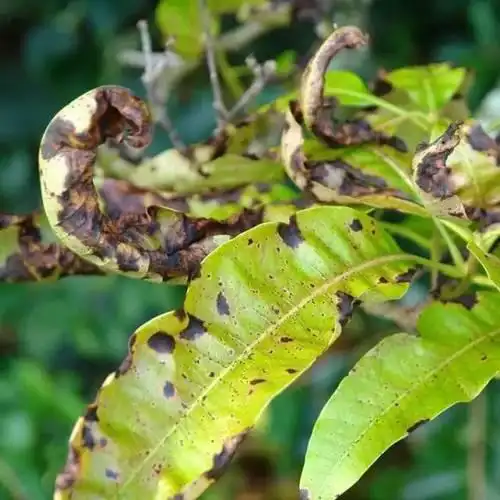
The most common diseases such as carcasses and root diseases are controlled and treated with appropriate medications. For example, the disease of palsy is mainly an attack on the stem of the branch, and measures include the removal of spots, the reduction of wounds and the coating of thiomer fluids or fruits. Degenerative diseases can lead to the decomposition of roots, which can be treated with polymice or thiomers。