


In order to effectively prevent, control and eliminate the hazards of public health emergencies, to safeguard the health and safety of the public and to maintain normal social order, this plan is drawn up in accordance with the laws and regulations of the people's republic of china on the prevention and control of infectious diseases, the regulations on emergency response to public health emergencies, the national health sector health emergency management code, the shandong public health emergency response scheme, the shandong province health emergency response plan and the specific provisions of the emergency response plan established by various levels of government。
Public health emergencies, as described in the present plan, are major outbreaks of infectious diseases that cause, or are likely to cause, serious damage to public health, mass unknown diseases, severe food and occupational poisoning and other events that seriously affect public health。
General provisions
(i) purpose of preparation
Effective prevention, control and elimination of public health emergencies and their hazards, guidance and regulation of emergency response to various public health emergencies, timely and effective treatment of the sick and wounded in public emergencies, protection of public health and safety, and maintenance of normal social order。
(ii) basis of preparation
In accordance with the law of the people's republic of china on the prevention and control of infectious diseases, the regulations on the emergency response to public health emergencies, the national health sector health emergency management code, the shandong public health emergency response scheme, the shandong public emergency emergency response plan and the specific provisions of the emergency response plan established by all levels of government, this plan is prepared。
(iii) classification of public emergencies
Public health emergencies are classified as particularly significant (level i), significant (level ii), larger (level iii) and general (level iv), depending on the nature of the event, the level of hazard and the extent of coverage。
Of particular significance public health emergencies include:
1. Pulmonary plague, the occurrence and spread of anthrax in large and medium cities, or pulmonary plague and anthrax outbreak in more than two provinces, with further spread
2. The incidence and spread of infectious atypical pneumonia and highly pathogenic avian influenza
3. Unidentified group-based diseases involving several provinces and spreading trends
4. The occurrence or introduction of new or undiscovered infectious diseases in the country, as well as the trend towards their spread, or the detection of a resurgence of the epidemic, which has been eradicated in the country
5. Losses of strains, strains, causal factors, etc.
6. The outbreak of mega-communicable diseases and imported cases in the immediate vicinity and with the countries and territories that operate the country, which seriously endanger the public health security of the country
7. Other particularly significant public health emergencies identified by the department of health administration。
(iv) scope of application
This plan applies to the emergency response of major infectious diseases, diseases of unknown group causes, major food and occupational poisonings, and public health events that seriously affect the physical and mental health of the public, caused by events such as natural disasters, accidents or social security。
(v) working principles
Prevention is the main focus, and there is constant readiness. To raise awareness of public health emergencies throughout the institution, to implement preventive measures and to provide emergency reserves of personnel, technology, materials and equipment. All types of public health emergencies must be promptly analysed, early warning, early detection, early reporting and early response。
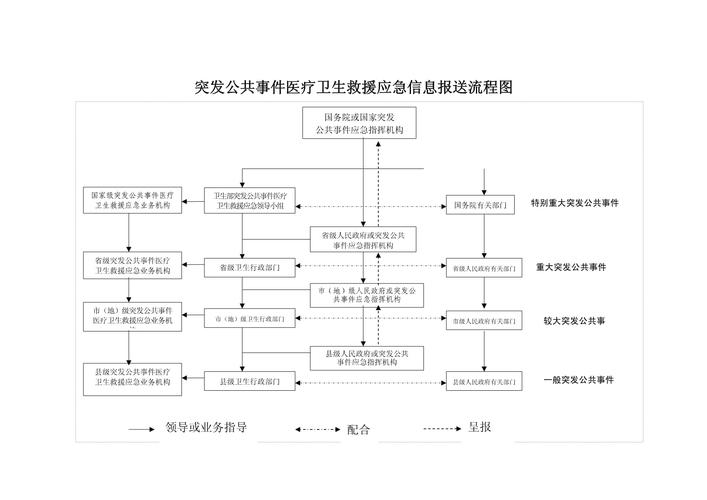
1. Unity of leadership and responsibility. Public health emergencies are managed in a hierarchical manner according to their scope, nature and level of hazard, under the unified leadership and direction of the public health emergency response command group, and the departments are responsible for responding to public health emergencies within their respective areas of responsibility, as foreseen。
2. Legal regulation and decisive measures. The departments are required to improve the public health emergency response system in accordance with the relevant laws, regulations and regulations, to establish a sound system and a standardized public health emergency response system, to respond promptly to public health emergencies and potential public health incidents, and to conduct timely and effective monitoring, reporting and response。
Reliance on science and enhanced cooperation. Response to public health emergencies must be based on full respect for and reliance on science, and attention must be paid to scientific research and training in the prevention and management of public health emergencies and to providing scientific and technical protection for public health emergencies. The relevant departments must work together and share resources to respond effectively to public health emergencies. Public participation in public health emergencies needs to be widely organized and mobilized。
Ii. System and responsibilities for organizing emergency response
(i) emergency command team and functions
(b) the establishment of an emergency command group for emergency medical assistance in public health emergencies at the people's hospital in the city of pyongyang. Under the authority of the director-general, it is responsible for the organization and coordination of emergency public health emergencies and for the establishment of emergency material support teams, emergency medical rescue teams and emergency management teams, depending on the actual needs of public health emergencies。
Its main functions are:
1. Command for emergency medical assistance in case of a major accident
2. Coordination of working relations with the relief-related sectors
3. Integrated command, mobilization of all hospital-wide emergency health resources and emergency medical assistance, including early warning reports, emergency response, on-site disposal and medical treatment
4. Receive feedback from dispatchers, aggregate analysis and decision-making of information, and issue rapid response instructions。
(ii) office of emergency command and its responsibilities
The hospital medical emergency command group for public health emergencies, which is located in the medical services section, is responsible for the day-to-day management of the hospital-wide medical response to public emergencies。
Its main functions are:
1. Organizing the preparation of emergency medical assistance plans
2. Organization of emergency medical response exercises to simulate large-scale public emergencies
3. Oversight of emergency hospital response and emergency health team development and monitoring of operationalization of emergency response plans
Nuclear
4. Organization of training for all levels of command involved in emergency relief in public emergencies
5. Organization of training for emergency teams。
(iii) field command and control structures and responsibilities
On-site command-and-control teams and reporting of public incidents were formed by the first aid centre as soon as a public incident was reported
The medical emergency command office, which is instructed by the medical emergency operations command group for public incidents, promptly transmits information on casualties and medical assistance to the command in the field, making full use of information platforms to implement emergency commands for on-site rescue and reasonable diversion of casualties. The head of medical rescue for public emergencies was present and transferred to the head of command。
(iv) technical support units and functions for emergency medical treatment
On the basis of the emergency response teams of the existing first aid centres, specialized teams have been formed, divided into first-line and back-up teams according to their functional tasks, and a pool of experts in public emergencies has been set up as a technical support unit for medical assistance, based on the technical resources of our hospital. The roles of emergency response teams and experts include:
1. Participation in and guidance of on-site first aid and hospital rescue of persons injured in public emergencies
2. Regular training of clinical medical personnel in first aid
3. To assist in improving the preparation of medical first aid programmes and first aid routines
Participated in medical first aid exercises and made recommendations for improvement。
Iii. Emergency response measures
(i) the office of the commander of medical emergency response to public incidents should immediately notify the emergency medical team of its arrival upon notification. The chief of staff must immediately arrive at the headquarters of the emergency centre, initiate emergency response plans, assume overall command responsibility for emergency response and have the authority to urgently mobilize personnel, stores, rescue equipment, first aid medicines, medical equipment, etc.
(ii) medical aid workers, depending on the severity of the condition, take a “direct transfer, first aid, first aid, second aid, second aid” approach and are sent to the relevant section for treatment on the principle of “near-disposal, professional escort”; the head of the first aid centre is empowered to determine the attribution of the patient if the patient's illness involves multiple sections and the issue of attribution cannot be resolved
(iii) emergency command teams prepare for the treatment of sick and wounded as required by developments, adjust beds to receive sick and wounded within 15 minutes, centralize medical technical capacity, develop optimal rescue treatment options, rapidly and effectively engage in rescue operations, and keep the emergency centre command informed
(b) in the event of serious human injury in a public emergency, activate the backup rescue unit according to the classification and nature of the public event, increase the number of ambulances, as appropriate, and provide on-site command and supply of relief supplies
(iv) establish systems for the collection, analysis, reporting and communication of critical incident information, and report in a timely manner, in accordance with procedures, on potential and potential early detections
(v) the office of emergency command, in collaboration with relevant experts, develops and implements an emergency education programme for staff and the general public on emergency response, and enhances community awareness and response to emergencies
(vi) focus on strengthening the network of emergency medical services, with appropriate medical treatment drugs, technology, equipment and personnel, building and training specialized emergency response teams and conducting regular field exercises to improve emergency response capacity in all types of emergencies
(vii) medical personnel who detect the occurrence or potential occurrence of serious infectious diseases, the occurrence or detection of unknown causes of group diseases, or the occurrence or potential occurrence of major food poisonings, shall report promptly to the medical section and to the deputy director of management operations and, in accordance with the law, to local disease prevention and control bodies. (b) timely online reporting of cases of infectious diseases (e. G., hand and foot, influenza a, etc.) that fall within the focus of the ministry of health and the department of provincial health for a period of time, along with quarantine treatment for patients
(viii) in case of outbreaks and epidemics of infectious diseases, prevent outbreaks of infectious diseases and the movement of people within endemic areas, and implement health-related preventive and control measures. In case of patients with infectious diseases and suspected patients, measures should be taken to isolate, observe and treat them locally. If a person is found with a suspicious infectious disease, he/she is referred to the section for treatment and treatment and, if necessary, the medical section organizes consultations with the staff of the relevant section or invites specialists from the outside to conduct consultations for the purpose of making a definitive diagnosis as soon as possible. The patient is treated in a timely manner and a detailed and complete medical record is drawn up to facilitate the management by the disease prevention and control agency of the source of the epidemic, the insinuation of the disease and the close contact with the patient who needs to be transferred. A copy of the patient and his or her medical record shall be transmitted to a referral or designated hospital, as required。
Safeguards
(i) communications and information security
Establish an information and technical platform to improve the chain of command for decision-making on medical assistance in public emergencies, which is responsible for the collection, processing, analysis and transmission of information on public emergencies. Progressively refine the modern communications command system to facilitate the deployment of emergency medical resources for the emergency network. (ii) emergency force security
The establishment of emergency medical teams, which are equipped with medical first aid equipment according to the target population and the nature of the work, the establishment of appropriate systems and working standards, the organization of regular training in the knowledge, skills, basic life support skills, basic operational skills for first aid (e. G., bronchial intubation, trauma disposal, etc.), specialized life-saving skills (e. G., trauma, poisoning, nuclear radiation, etc.), life-saving treatment equipment (e. G., respirator, defibrillator, etc.) and self-protection skills for various injuries and disasters, and the continuous improvement of the team's emergency response and on-site disposal capabilities。
(iii) transport security
The first-aid vehicle fleet ensures that the vehicle is in good condition at all times and that the vehicle problem is promptly repaired, maintained and managed responsibly. Rapidly following reports of public emergencies, emergency coordination of the transport sector was undertaken to ensure the priority of medical rescue vehicles。
(iv) material security
In accordance with the requirements of the command for the handling of public health emergencies, the functional units have further refined and updated the stocks of emergency medicines, equipment and materials in the public health emergency reserve。
Emergency equipment and items can be classified by purpose into generic safeguards and professional work categories, mainly physical reserves。
1. General-purpose safeguard equipment and items include, inter alia, personal effects (carriage), logistical support equipment, communications equipment, office equipment, emblems and transportation equipment。
2. Specialized work equipment and items, which are provided according to different types of events, such as major disasters, infectious diseases, poisoning, nuclear and radiological, including, inter alia, medicines, vaccines, medical equipment and equipment, rapid detection and detection equipment and reagents, supplies for quarantine of infectious sources and health protection and emergency facilities。
(v) technical reserve and security
Hospitals must plan to organize training for in-house personnel, ensure the study and training of medical staff participating in emergency teams, and take care to develop a backup ladder and update the technical capacity of emergency teams in a timely manner。
(vi) construction of isolation wards
The clinic for infectious diseases is responsible for the construction and management of isolation wards and the establishment of holding rooms for patients suffering from unknown causes of pneumonia and for those who are initially screening for cholera。
V. Advocacy and exercises
(i) public information and education
Public awareness of health issues should be promoted, using radio, television, newspapers, the internet, brochures and other forms of education on emergency self-help in public emergencies, to guide people to act scientifically and effectively in dealing with public emergencies。
(ii) exercises
The office of the commander of medical relief for public incidents has developed an emergency response drill programme, regularly organizing emergency health teams to conduct emergency response drills for different types of public emergencies; and carefully learning from experience and lessons learned and continuously improving emergency response capabilities。
Vi. Penalty
(i) failing to comply with the reporting duties envisaged in this article, concealing, delaying, misrepresenting or instructing others to conceal, delay or falsely report an incident, demoting or dismissing the person concerned and his or her office or head of the competent authority, in accordance with the law, causing the spread, prevalence or other serious harm to the public health of the community, in accordance with the law, and punishing him or her for an offence, in accordance with the law。
(ii) in cases of failure to complete the supply and storage of facilities, equipment, medicines, etc. Required for emergency response in accordance with the requirements of health emergencies, the principal officers of the section shall be sentenced by law to demotion or removal from their posts; in cases of transmission of infectious diseases, epidemics or other serious harm to the public health of the community, they shall be subject to dismissal in accordance with the law; and they shall be subject to criminal liability in accordance with the law. (iii) in cases of negligence, negligence or malfeasance in the investigation, control or medical treatment of a health emergency, demotion or dismissal of the principals, responsible officials and other responsible persons, in accordance with the law; dismissal in accordance with the law, in the event of the spread of an infectious disease, its prevalence or other serious consequences for the public health of the community; and criminal liability for the commission of an offence。
(iv) in accordance with the gravity of the case, on-the-spot instruction, oral warning, administrative sanction, and local dismissal shall be granted until criminal responsibility is established in accordance with the law. 1. Absorption or escape of the outbreak; 2. Failure to listen to command, misalignment or treatment; 3. Absence from duty or passive work; 4. Violation of protocols and imprudentness resulting in the spread and spread of the epidemic as a result of inadequate operation; 5. Denial of access to patients; 6. Refusal to comply with the dispatch of the emergency response management team; 7. Disclosure of secrets or violations of relevant state regulations。



