Elm trees are home to australia and are found in the tropics of pomegranate, which are heavily seeded because of their infertileness, rapid growth and widespread use. In the southern coastal region of the country, a herring tree is planted, with an average annual stock increase of 2. 4 m3/666 m2 (1 acre) for high-yielding forests. In our country's tropical region of central asia, high yields are equally achieved through the introduction of cold-resistant species of eucalyptus, as well as through careful breeding. The main construction technologies are:
I. Selection of species for cold eucalyptus
1 dunnex: it is safe for a cold above 5°c and lasting over 5 days, and resistant to extreme temperatures of 7°c in the short term, and can be seeded in the provinces of fujian, jiangxi, hunan and guangxi。
Ii. Cold-resistant zj6: short-term low temperatures of 5°c to 8°c and drought and wind resistance。
3. Cyclops: are the dominant tree species of pulp wood and can withstand short-term temperatures of 5°c。
4. The cold-resistant species of eucalyptus also include willows, beryllium, several berylliums and lemon bellows, which should be tested first and then promoted on the basis of merit。
Selection of afforestation land
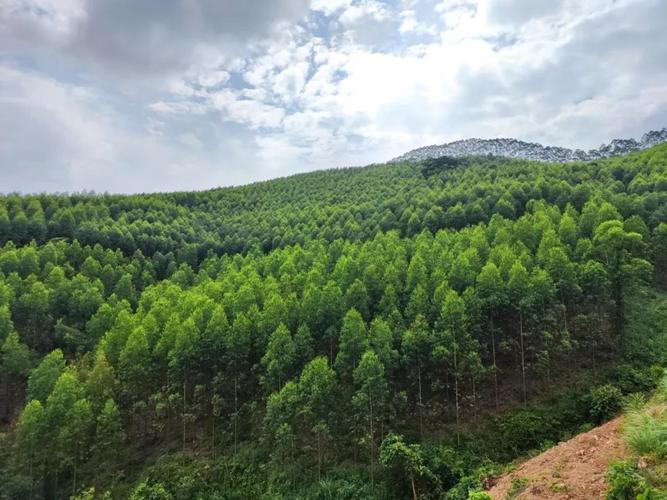
The above-mentioned cold-resistant species of eucalyptus are suitable for planting in our vast low hilly areas, south of latitude 27° north and north of the regression line. The tree is a fast-growing tree that is positive and fertile. It is preferable to choose a deep earth layer (which requires a soil thickness of 80 cm or more), a fertile and loose forest area, which would be more conducive to the growth of the tree if the ground is open and the slope below 30 degrees。
Afforestation technologies
1. Farming: the traditional practice of forest farming is to “seven cuts, eight burns, nine hooves” and, when cutting a mountain, it is not appropriate to claim a height above 15 cm。
Cultivation density: the density of pulp forests is 110 and 667 square metres, and 75 and 667 square metres of wood for construction purposes。
3. Digging: after the mountains are refined and cleared, the circumcular mountain horizontal zone digs holes with a range of 2 m x 3 m, with approximately 110 square metres planted, with a size of 50 cm x 50 cm wide x 40 cm deep and 40 cm wide at the bottom of the cave. When a cave is dug, the topsoil excavated within it is placed on both sides of the den, and the heart is placed below it in order to facilitate its return。
4. Return to the soil and fertilize: crush the soil on both the right and the right sides of the cave and on the top of the cave, and then fill it back into the cave, within a diameter of three centimetres, picking up all the stones and roots of the cave, filling back with one third-1/2 of the ground deep in the cave, adding 0. 5 kg of fattening to each of the caves, and evenling the fertilizer and the soil back to the top five centimetres, which is required to be completed by the end of the month。
5. Selection and treatment of saplings: 1 aluminum group is growing fast, but cultivation costs are high, and more often than not, small, medium-priced and fast-growing group branches are selected. When planted on the mountain, two saplings are selected for a thick, insect-free bag (cup) that is impregnated for 15 seconds in 1,000 times the furan dan, which prevents termite hazards for a period of up to one month and increases the rate of tree activity。
6. Cultivation, seedlings: the planting season is usually february-march, when a small pressure is placed on the trophic soil in the bag, when a plastic bag of the container is torn off, when a hole is dug in the centre of the lavender with a hand or a hoe, when a hand is planted, when it is solid, at a depth appropriate for the absence of contact with fertilizer, and when the soil is 3 to 5 cm above the trophic soil. After planting, the seedlings are to be replanted within half a month, so that the apricot forests can be closed for one year, and if they are not replanted in time for the year, the seedlings that will be replenished in the coming year will not even survive。
7 care, fattening: twice in the year of afforestation and once in the year. First raising and fatting takes place within two to three months after the planting of the eucalyptus. The bushes and weeds in the woodlands are removed and stacked in the middle of the strip at a height not exceeding 20 cm. After weeding, 30-50 centimetres above the aluminum tree, a 20-cm long, 20-cm wide, 15-cm deep cave is dug, and within each den, 0. 25 kilograms of fatty aluminum are recovered and the soil is levelled. 2 plumbing of topsoil in a radius of 50 centimetres around eucalyptus trees, which is centred on the stem of eucalyptus trees and 15 centimetres high in a radius of 20 centimetres. The second rearing in the same year took place in early august and ended at the end of august, when bushes and weeds in the woodlands were cut off. The second year of afforestation and the third year of june are to be followed up with the same upbringing。
Iv. Major pest management of pyramid trees
1 termite control: in case of termite hazard following planting, mirex bait can be placed in the forested land, and 13-33 bags per 667 m2 of termite density. The drop point digs small caves deep at 15 cm, which are then covered by mud with a few dead leaves and 1-2 packs of mirex bait。
2. Prevention and treatment of the platinum larvae: the adult larvae of the plume is 10 cm in length, colours are brown or brown, with visible "eight"-shaped black stripes on the back, with particularly strong tail hooks. The control is in the prime of age and is sprayed with 90% trichlorfon or 80% dichlorvos 800-900 times。
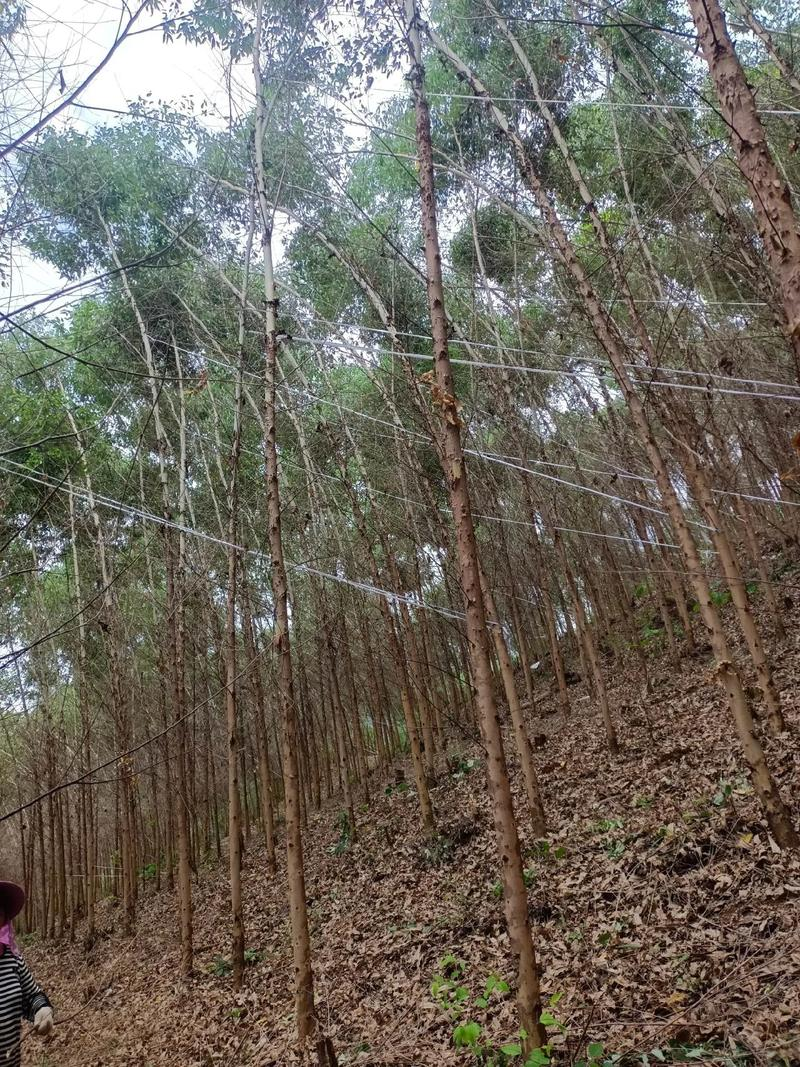
3. Prevention and control of larvae: the larvae take the leaves of the euphoria tree and make the larvae a nest in silo form, with multiple generations of hazards within a year, with 50% of the bhadan humid powder 1500-2000 times liquid or 50% of the methamidophos cream 1,200-1500 times liquid。
4. Prevention and control of aging: the aluminum tree is infected with a sudden loss of water in the leaves of the disease and is hanging on branches without falling off. The response is to clear the strain in a timely manner, to focus on burning and to sterilize the disease with lime。
5. Prevention and treatment of carcinosis: the disease is a fungal infectious disease, there are small water stains in the early stages of foliage, the disease is gradually increasing to the point where the death is burned, there is a green, brown vertebrae on the edges, lightening in the central part of the post-mortem disease, cracking in the disease, and symptoms of typical bad leaves. When the disease is minor, it removes the dead branch from the tree, removes the sick leaves from the ground and is burned in a concentrated manner, and if the disease is serious, the fungicide is sprayed, with the option of 600-800 times the fungic spray of cracking or reoxin zinc。
V. Integrated revision
The acupuncture capacity of eucalyptus is such that second, third and fourth generations of seedlings can be used to update the season by: cutting wood with an ax for winter purposes and cutting wood at height 5. (author, wu orchard, source, rural pepsi)