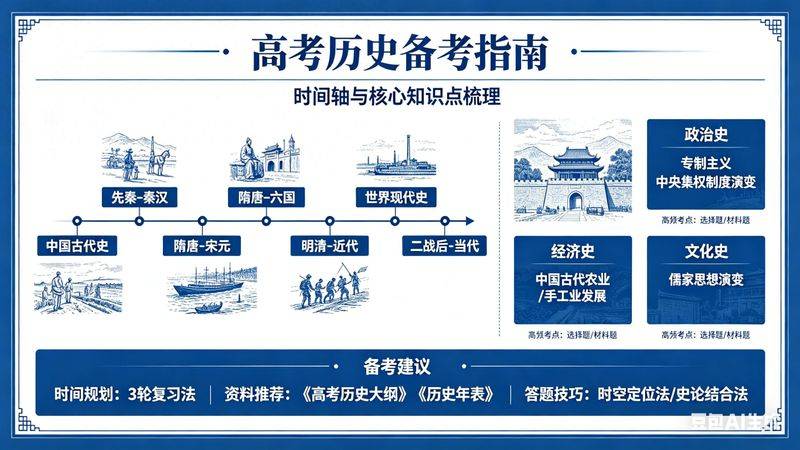
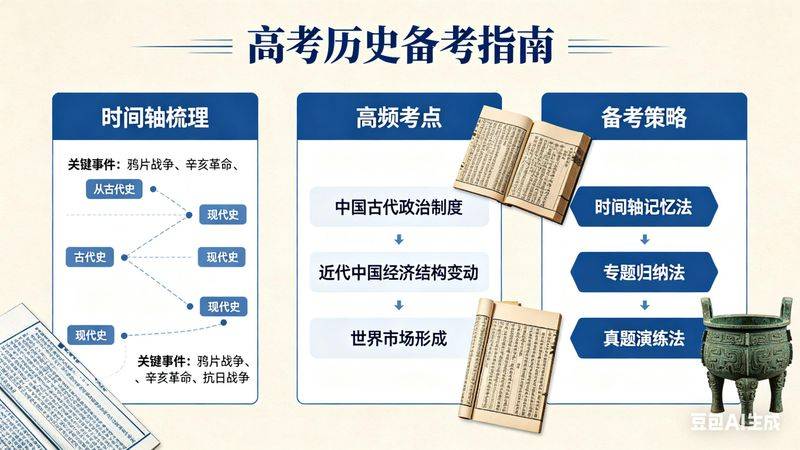
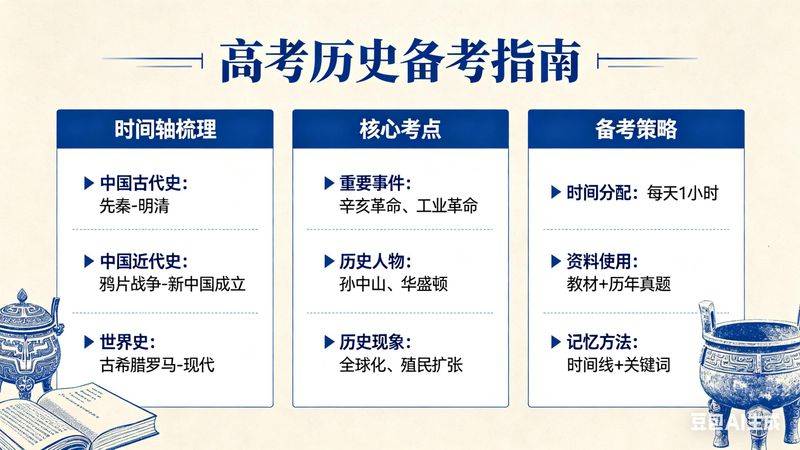
The history of gacován is guided by the core five pillars of the curriculum, covering the three main modules that must be included in the master plan for the history of china and the foreign, focusing on the main lines of institutional evolution, national renewal, world geography, and balancing the anniversary hot spots with cross-topics。
China's ancient history (about 30%)
1. Political. Qinhan county, imperial state; qin tong province, 6 departments, 6 departments, 3 departments, 2 departments, 2 departments, 1 office, 1 office, 1 office, 1 office, 1 office, 1 office, 1 office, 1 office, 1 office, 1 office, 1 office。
2. Economy. Small-scale farmers ' economy and farming practices; land systems (wellfields for private ownership of land); handicrafts (officers, people, cottage industries and china, silk knitting); commerce (market changes, businesses, heavy farmers, sea bans); and economic shift。
Culture of thought. (c) development of confucianism (text, song ming science, ming sing sing sing), four major inventions and technologies; tang poe, song sing, yuan sing, sing sing and the art of book and art。
China's near modern history (about 40%)
1. Recent generation (1840-1949). The great powers have invaded china and the treaty system; saved lives (ocean affairs, e-mails, xinhe, new culture, 54-4); the chinese communist party (ccp) revolution (co-operation, land revolution, resistance, liberation wars); and modernization and social change。
2. Modern (1949-present). Power-building and the rule of law; hpc/acp/nrc autonomy; one-fifth plan, three major transformations; reform of the open and market economies; diplomacy (five principles of peaceful coexistence, return to the united nations, us-china relations, foreign affairs of the new era of power)。
World history (about 30 per cent)
1. Ancient. The content and influence of athens democracy, roman law; the origins of ancient greek humanism。
2. Recent generations. New routes open up and colonize; the american-american bourgeois revolution and representation; the industrial revolution and social transformation; and the birth and practice of marxism。
Modern. Two wars and the evolution of the international order; the cold war and multipolarity; soviet models and reforms; international organizations and globalization after the second world war (wto, regionalization)。
Selective compulsory (choice, integration)
1. National systems and social governance. Comparison of systems, governance experiences and lessons learned。
2. Economic and social life. Changes in economic patterns, social structures and lifestyles。
3. Cultural exchange and dissemination. Civilization, cultural identity and communication。
Introduction
1. Five core elements. Life history, time and space perceptions, historical evidence, historical interpretation, national circumstances (through the entire volume)。
2. Hf main line. Uniting multi-ethnic nation formation and development; state governance and institutional innovation; modernization and national renewal; globalization and the international landscape; and reform, openness and modernization。
3. 2026 hot spots. The 80th anniversary of the victory, the 100th anniversary of the war on the north, the 80th anniversary of the founding of the united nations, the 35th anniversary of the dissolution of the soviet union, and the 105th anniversary of the founding of the chinese communist party (notes historical comparisons and contemporary values)。
Capacity requirements. Access to information, mobilization and application of knowledge, interpretation of things, argument for discussion of issues (a combination of subjective retrospectives)。
Review recommendations
1. Build a framework with a general history of time and deepen understanding with thematic comparisons (e. G. County-based vs sub-separation system, six vs ii divisions in three provinces)。
The subjective question, bearing in mind the four-step approach of “background, process, impact, evaluation”, insists on a combination of historical and multidimensional responses。
3. Specialized material in conjunction with the anniversary hotspots, training in history interpretation and historical interpretation。
#student history #system knowledge point #present points #read recommendations #