Assessment of sunshine rose quoting performance and analysis of key elements of fine cultivation
Wang xinjiang
Vitis `shine muscat', also known as shayin maskat, is the japanese fruit tree test site ansuzin branch 21 x new varieties of transvestite grapes from europe and the united states of america were registered in japan in march 2006, introduced in 2006 and tested domestically in 2009. Sunshine roses are popular with a wide range of obvious advantages, such as their green and bright appearance, their fragrance and their high sugar. The yangtze basin, one of the country's major grape-producing areas, has the advantages of wet weather, abundant heat and high market consumption potential, but at the same time has adverse factors such as high summer temperatures and humidity, the length of the may rainy season and the frequency of pests and diseases, which pose a challenge for solar roses to grow. To this end, in 2020-2022, the study carried out a solar rose seed experiment in the razing area of the city of yichang, hubei province, systematically studying its growth patterns, the characteristics of fruit quality formation and the major environmental coercive responses in the region, as well as the integration of systems to optimize high-quality cultivation techniques, with the aim of providing theoretical and practical guidance for the regularization of sun roses in the yangtze basin and similar eco-regions, and promoting a high-quality and efficient development of the grape industry。
1 reference expression observations
1. 1 botany characteristics
Sunshine rose vines grow strong and canopy open. It's green and green, with thin white fur, without light; it's a year of tan, with an average length of 8. 6 cm, a big, mature branch. The leaves are single-leaved, of a heart size, medium size, of 2. 3 mm thick of the leaves, of light on the face of the leaves, of thin flavour on the back; of the leaves of 3 to 5 splits, of a moderate depth of fracture, of sharp edges of the leaves; of the leaves of 7. 8 cm long, of the leaves of the lobes of open arches. The flowers are gender-specific, conical, 18. 5 cm in length and 12. 3 cm in width, and the average number of small flowers per sequence is 186, and the amount of pollen is sufficient and the rate of self-flowering is high。
1. 2 growing results habits
1. 2. 1 premature and growth
In the test area, the sun roses were budding in mid-march, reaching 85. 3 per cent, with a good sprouting. New growth is high, with an average growth rate of 3. 2 cm/d within 30 d of the bud, an average of 1. 2 cm in the diameter of the new lobe, with a high growth capacity of 2 to 3 steps per node and timely regulation to avoid nutrient consumption。
1. 2. 2 result branch rate and symmetry
The result was an average of 76. 8 per cent, with an average of 1. 8 chronology for each branch, dominated by results in sections 3-5. The flowering period lasts from late april to early may and lasts from 7 to 10 d, with a seating rate of more than 90 per cent and no visible physical fallout, but problems such as small fruit, deformation and so forth need to be improved through vermin。
1. 2. 3 fruit growth cycle
The growth of fruit is divided into three stages, from the flower to the fruit ripening experience of 110 to 120 d: between 1 and 30 d is a period of rapid expansion after the flowering, with the size of the grain increasing from 2. 1 mm to 12. 5 mm; between 31 and 70 d is slow and long-lasting, with the rate of growth slowing, with the main result being the separation and nutrient accumulation of the fruit cell; after 71 d, the fruit color matures from green to yellow and the amount of soluble solids rises rapidly。
1. 3 fruit economics
1. 3. 1 quality of appearance
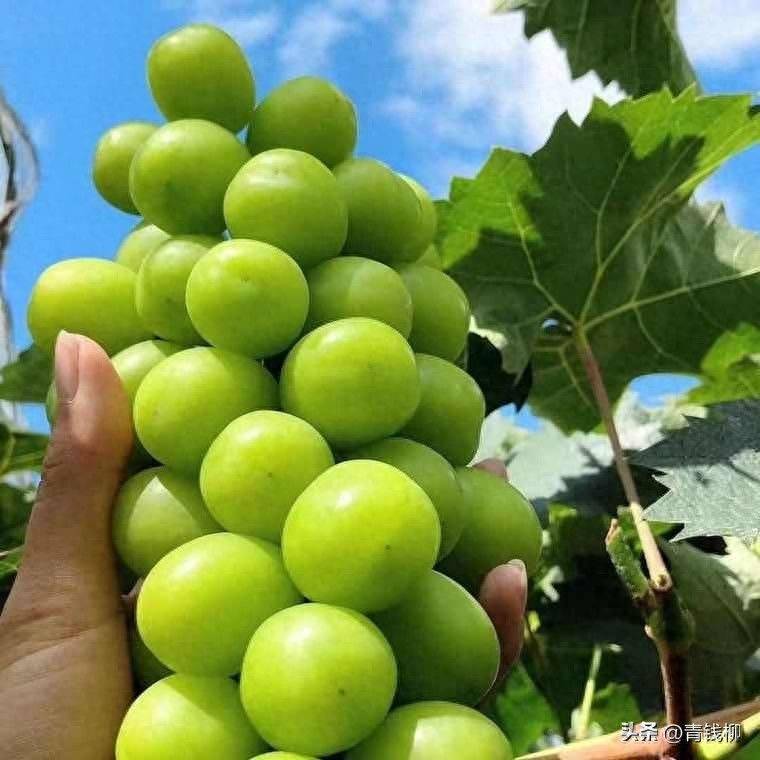
The ears are cone-shaped, the grains are tight, the average is 685 g, and the maximum is 1250 g; the oval of the fruit is 10. 2 g, the average size of which can be 12 to 15 g, after a large expansion; the grains are 3. 2 cm in diameter 2. 8 cm, the fruit index 1. 14; and the loaf is green, thin and even, the crust is 0. 12 mm thick and tasteless。
1. 3. 2 inline quality
The fruit is juicy and fine, with soluble solids containing 18. 5% - 21. 3%, with an average of 19. 6%; the drip acid content of 0. 32% - 0. 45%, with an average of 0. 38%; the sugaric acid ratio of 52. 8%, with vitamin c of 18. 6 mg/100 g; and the fruit smelling of condensed roses, with a concentration of aromatics, somatics, etc., and a sense score of 9. 2。
1. 3. 3 resuscitation
Vegetable fruit peels are closely bound to the meat, resistant to squeeze, and can be stored at temperatures ranging from 7 to 10 d, at low temperatures (0 to 4 °c) or more than 30 d, with a decomposition rate of less than 5 per cent, suitable for long-distance transport and off-site marketing。
1. 4 adaptation and resilience
1. 4. 1 climate adaptation
Sunshine roses show a high degree of climate adaptation in the test area, resistant to high summer temperatures of 38 - 40 °c and winter - 5 °c low temperatures, with no apparent freezing and heat. However, during the rainy season (june-july), sustained high-humid environments are prone to fruit-borne diseases, and ventilation and humidity management needs to be strengthened。
1. 4. 2 soil adaptation
The species is less demanding for soil, is growing normally in sandy soil at ph 6. 0 ~ 7. 5, and is best performed in sandy soil at depths and well drained water, with a better quality of fruit at a soil organic content of 1. 5%。
1. 4. 3 anti-resilient performance
The resistance to frostic disease and asymptomatic diseases is medium, with a field prevalence rate of 8. 3 per cent and 5. 6 per cent, respectively; the resistance to pollinosis is weak at 16. 8 per cent, especially during the high-temperature dry seasons, prone to outbreaks; the sensitivity to pests such as tremors and red spiders is higher, with an incidence of 12. 5 per cent; and the resistance to fisssures is stronger, with a rate of less than 2 per cent, which is better than the species of giant peaks and summer blacks。
2 high-quality planting elements
2. 1 building and planting
2. 1. 1 park selection
Land is chosen to be open, well-lighted (or 1600 h per year per day), well-ventilated, well-drinked and easy-to-drink plots, avoiding low-lying areas and vents. The soil is based on sandy or border soil, with a layer thickness of 60 cm, soil ph of 6. 0 ~ 7. 5 and organic content of 1. 0 per cent。
2. 1. 2 campus planning
The fence is grown using fences with a distance of 2. 5 - 3. 0 m and a distance of 1. 0 - 1. 2 m, with 222 - 267 units per acre, with a distance of 3. 0 - 4. 0 m and a distance of 1. 5 - 2. 0 m and 83 - 148 units per acre. Planning is under way to improve drainage and drainage systems, to install drip irrigation facilities and to open drains and drains in order to avoid the accumulation of water during the rainy season。
2. 1. 3 preparation for planting
Soil improvement is carried out three months before planting, with 3000 - 5000 kg per acre of decomposed organic fattening, 50 kg per phosphate, 20 kg per potassium sulfate, 30 - 40 cm deep tilling, and subsequent rise, 30 cm high and 60 cm wide。
2. 1. 4 electronic technology
The choice is to grow healthy, disease-free, one-year-old incubated seedlings (e. G. 5bb, so4) and set the planting time at mid-march (before the onset). At the time of planting, a cave was established in the centre of the guillotine, 40 cm deep and 50 cm wide, into the tree stretching system, refilling the soil and crushing it, pouring down the root water and covering the membrane to keep it warm。
2. 2 integrative shearing
2. 2. 1 winter shearing
The cut runs from late december to early february of the following year (post-leave to pre-emerge). In the form of short-swipe cutting, the medium-swipe cut, the result of which is two to three female branches full of short-sprouts, with 2,000 to 2,500 female branches per acre, ensuring 4,000 to 5,000 per acre。
2. 2. 2 summer trim
(1) scattered buds: 7 to 10 d of the buds were given the first sprout to remove the sprouts of the foundation, the sprouts and the weak sprouts; the new sprouts ranged from 10 to 15 cm, the fences were planted with 8 to 10 new stubbles per metre, and the sheds were planted with 6 to 8 new stubbles per square metre, ensuring that the new stubbles were 15 to 20 cm。
(2) scrutinization: the result is a three-to-five-d graft, with 6-to-eight leaves in the order; the nutrient graft leaves 10-12 grafts to promote maturity. By-showing follows the one-to-two method, resulting in the following sequence being wiped out. Apart from this, one leaf repeats the heart, and two leaf repeats the heart of the nutrition branch。
(3) accompaniment of chickens: the fast binding of chickens as long as 30 cm is new, the use of “s” bindings is used to prevent the erosion of branches on the surface, to promote their even distribution and to improve ventilation。
2. 3 flower fruit management
2. 3. 1 plumbing
The first 10 to 15 d is a flower-sorting exercise, which removes the acoustics, the disemboweled and the stunted, and preserves the main ear, each with 12 to 15 specks. Ten to fifteen d-sprouts, adjusted to the strength of the tree, leaves two ears in the branch, leaves one in the branch, leaves no ear in the branch, leaves 2,000 to 2,500 per acre。
2. 3. 2 fruit expansion treatment
10-15 d (5-7 mm in diameter of fruit) after gravitation, followed by 50-75 mg/l+chloride (cppu) 2-5 mg/l blend leaching time 5-10 s; 25-30 d after graft after graft for gravitation, contributing to an increase in fruit grains. Processing takes place after clear days of 9-11 or 16:00, so as to avoid high temperature periods, with timely ventilation and wetting。
2. 3. 3 fry packs
After the second swelling process, the fruit is trimmed, the deformity, the disease and the permutation, keeping the grains equal in size and full fruit, with 60 to 80 per ear, and ensuring a distance of 2 to 3 cm. Pocket bags, selected white semi-transparent paper bags, one wide spectrum fungicide sprayed in front of the bag (e. G., methyl tobzin) and liquid dry back-packs, tight pockets to avoid rain and pest entry。
2. 3. 4 fertilizer water management
The fruit swelling period (june-july) was followed by fertilizers, 30 kg + 20 kg potassium sulphate compound fertilizer per acre, which was applied twice at intervals of 15 d; the fruit colouring period (early august) was followed by fertilizers, 15 kg + 10 kg potassium phosphate per acre, which promoted fruit colouring and sugar accumulation. Water is applied in a timely manner to maintain soil moisture of 60 to 70 per cent and to avoid the loss of fissures as a result of damp。
2. 4 green pest control
2. 4. 1 agriculture control
Reasonable insulation and improved ventilation. Timely removal of leaves, fruit, dead branches and weeds and reduction of the source of disease. Rationally trimmed to avoid over-heavy branches; increased application of organic and phosphorous potassium fertilizer and increased resistance to strains. Introduction of a rotational system to avoid obstacles。
2. 4. 2 physical control
Set up cedars in orchards (20-30 pieces per acre) to trap pests such as sorghums and aphids; set up amphibians (1-2 acre) to trap pests such as moths and gold turtles; and use sugar vinegar fluids (sugar and wine = 3,4,5,1 and 10) to trap pests such as fruit flies and fruit-breeding night moths。
2. 4. 3 biological control
The release of dictums (2000-3000 head per acre) to combat red spiders; the release of red-eye bees (10,000-15000 head per acre) to combat fin worms; the spraying of bacterus (1,000 times liquid) to combat frostic disease, asphyxia; and the spraying of bitter alkalin (800 times liquid) to combat pests such as aphids and horse。
2. 4. 4 chemical control
Pesticides are selected in strict compliance with the ny/t844-2017 green foods and temperate fruit criteria, with priority given to low-toxic and low-residual pesticides. Frost cyanide (1,000 times liquid) is sprayed every 7 to 10 d and 2 to 3 times; ethylene ester (1,500 times liquid) is sprayed every 2 to 3 times during the first time of the onset of the outbreak of frostic disease; thomas and red spiders are sprayed with vermin + avicin (1500 to 2,000 times liquid) and be careful to rotate the use of the agent。
3. Plantation efficiency analysis
3. 1 production benefits
Sunshine roses grow at a fast pace, which takes only two years to enter the early stages. Under scientific management conditions, the production of 500 ~ 600 kg per acre per acre during this period is approximately 60 per cent; three years later, production per acre is stabilized at 1000 - 1200 kg per acre, using facilities such as a shelter, which can be increased to 1,300 - 1500 kg due to better environmental regulation, and the ratio of quality fruit is increased to more than 85 per cent; four years and later, production is stable and field and facility acre production is maintained at 1,200 - 1500 kg, 1500 - 1800 kg, compared with large peaks (800 ~ 1000 kg/acre) and summer black (1,000 - 1200 kg/acre), with clear advantages. The cost and benefits of dismantling the production period are between $8,000 and $10,000 per acre, consisting of: a one-time input for the year in which the tree is planted, with an annual share of about $1,000; fertilizer, which covers organic and fertilizer, with an annual average of $2,000 to $2,500; manual work involving trimination, lumbering, kits, etc., with an annual average of $3,000 to $4,000; pesticides, which are mainly controlled by green controls, with an annual average of $800 to $1,200; and additional depreciation for plant cultivation, with an annual average of $1,000 to $1,500。
3. 2 quality benefits
In 2023, data from a study of the grape industry in the yangtze basin showed that the price of sun roses was 40-60 yuan/kg in wholesale markets, 10-20 yuan/kg higher than normal fruit; when the electrician platform sold the goods on live feed, the price of the box (500 g/box, not less than 15 g) could be 80-100 yuan/kg, with a premium of over 100%. At the same time, high-quality fruit-resilient storage capacity, with long-distance transport losses ranging from 3 per cent to 5 per cent, is 8 to 10 percentage points lower than normal fruit, and the sales radius is expanding effectively. By way of example, the high-quality sun roses in the area, which can be sold far in the cities of guangdong, shanghai and beijing, have reduced logistics costs from 15 per cent to less than 8 per cent of ordinary fruit, further increasing the combined benefits. In addition, high quality ensures a stable customer buy-back rate, and data from a grape cooperative show that its quality sun rose customers have a buy-back rate of over 40 per cent, creating a virtuous circle of quality underpinning the volume of slogans and brands。
3. 3 eco-efficiency
In the context of soil improvement, the application of long-term organic fertilizers (3,000-5,000 kg per acre) combined with ablution techniques has resulted in an annual increase in the organic content of orchard soils by 0. 15-0. 2 per cent, a decrease in the weight of the soil by 0. 1-0. 15 g/cm3, an increase in the porescale of the soil by 3-5 per cent, effective improvement of soil structure, increased fertility protection and reduced soil erosion. Monitoring data show that the implementation of soil improvement orchards reduces surface run-off by 20 to 30 per cent in the rainy season compared to unimprovised orchards, and soil erosion by 15 to 25 per cent. The prevention and control of pests and diseases is centred on a green system of prevention and control that combines agricultural, physical and biological control. The use of chemical pesticides is reduced by 40 to 50 per cent compared to conventional cultivation, highly toxic and highly residual pesticides are largely eliminated, and pesticide residues are tested at 100 per cent. The establishment of cedars, vermin lamps in orchards, and the release of dictums, red-eye bees, etc., can effectively control the population of pests and protect natural insects in orchards ecosystems, such as weeds and grasshoppers, to achieve a virtuous ecological cycle of inter-biological restraint. Monitoring results show that the number of natural insects in green orchards is 30 to 50 per cent higher than in conventional orchards, that the number of pests and natural insects rise from 1:1 to 1:8, and that the frequency of pests and pests is significantly lower。
Conclusion
Sunshine roses from the yangtze basin perform well and are characterized by strong growth, early outcomes, good yield, good fruit quality, and high sustainability, while adapting to local climate and soil conditions and being moderate in resilience and suitable for scale cultivation. The successful seeding of the species not only enriches the structure of local grape varieties, but also provides productive planting options for fruit farmers. Quality cultivation needs to focus on four key elements: first, scientific gardening and planting, with soil improvement and rational and dense planting; second, precision orthopaedic trim and improved surface ventilation; third, finely fertilized fruit management, with improved fruit quality; and fourth, green pest control, with a strong combination of agricultural, physical, biological and chemical control. In the future, adaptation studies for sun roses should be further strengthened, with the development of pure and strong varieties, the development of better, more resilient and better-quality varieties, and the promotion of the sustainable and healthy development of the sun rose industry。