


Autumn has been popular at the table in recent years. The same crop, known as “plant gold”, is in the pear village of lok yu, moncong county, where poor households remove “poor hats” from their homes。
The autumn plantation in pearland is based on the “cooperative + base + farmer” model, whereby poor households are able to split their earnings and work at the planting grounds。
Pro-poor autumn is popular
On the afternoon of 24 june, at the autumn plantation base in lok yuen, mong city county, the autumn accelerator was in order. The shed is transparent and does not cover the sun. In the shed, a number of workers wore straw hats and cut off an ark like pepper from their branches. The workers in the base are poor households, with a daily salary of $60 each。
“the method of planting acorns is simple, and growth is fast as long as there is sufficient sunlight, and the picking season can last from april to october.” sun baohai, a member of the poverty alleviation team in the village of pear park, told the journalist。
On 24 june, temperatures exceeded 30 degrees celsius, while temperatures were higher in the shed. Journalists entered the shed for a while and were sweating like they were in the sauna。
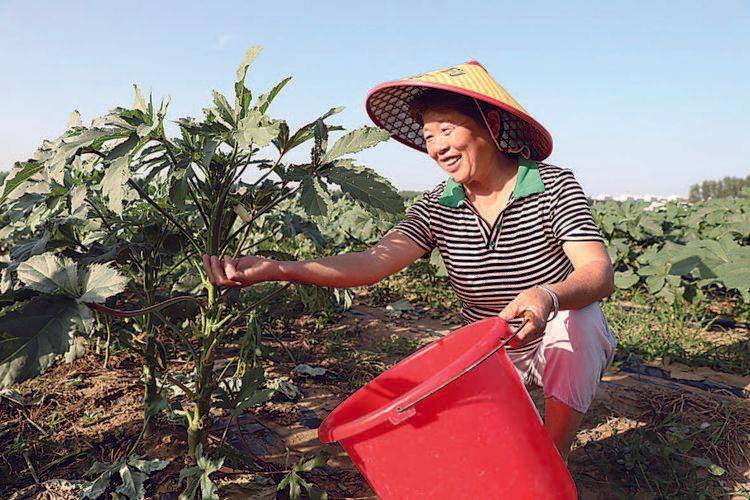
"we're used to the temperature in the shed." “it's nice to be working here, at my age, making thousands of dollars a year and taking care of the family.”
Zhu jinping, aged 70, was rated poor because of illness in 2014. Ju jinping enjoys a policy of low-security, light-volt red, and he has been offered a public-interest job in the village - a village cleaner with a fixed income of $600 per month. Today, zhu jinping has successfully removed his poor hat. After doing his daily cleaning work, he'll go to the autumn base and pick the autumn. There are more than a dozen poor families working here, like zhu jinping。
“autumn is a healthy vegetable and is now popular in the market.” sun bohai said that the base was growing more than 30 acres of acorn. This year's epidemic has not affected the price of acorns; rather, it has increased since last year. "autumn at the base is sold to wholesalers for $5 per pound."
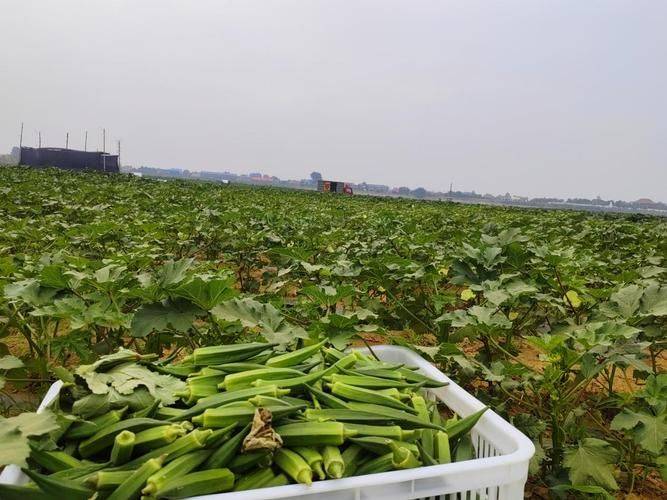
“the sun rises every day and results every day. The flowers are closed for two days, and are usually picked up as long as seven or eight centimetres, and the fruit is too old to sell。
The workers come in the afternoon to pick the autumn, because the base sells to the surrounding wholesale market for vegetables, which starts at night, and the base postpones the workers' pick time so that the autumn can be sold and fresh. Sun baohai said that production was high during the season, and the alumni from the base were sold to hangzhou, etc. And shipped once a week to twice a week。
Selective industries for poverty alleviation
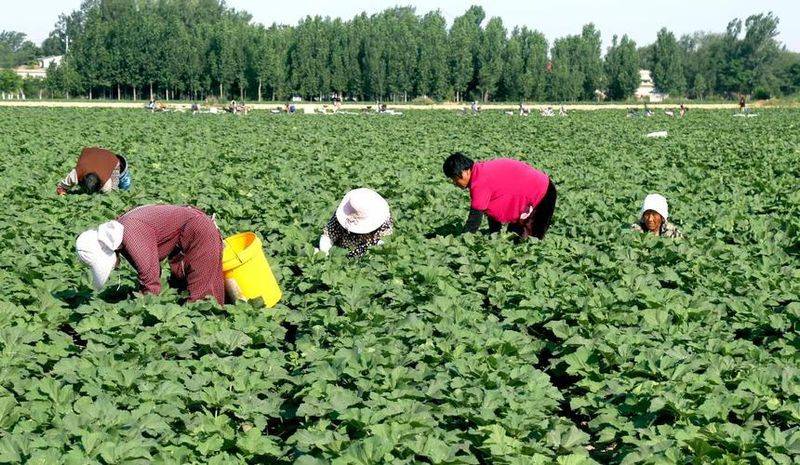
Autumn growing bases are one of the many growing bases of the 90 agricultural cooperatives in pear gardens, which are pro-poor enterprises introduced in pear gardens。
Pear gardens have fertile land and villagers have a tradition of growing vegetables. In 2017, on the basis of extensive public consultation, two agricultural enterprises were introduced by the poverty alleviation task force of pearland village to the pearland village. One is a 90 per cent agricultural cooperative, and one is a zhemont agricultural cooperative, which invests more than $5 million, transfers more than 800 acres of land, builds more than 400 vegetable sheds and earns more than $70,000 a year for the village's collective economy, leading to the employment of nearly 100 villagers, 12 of whom are poor。
More than 30 acres of acres were grown by the 90 agricultural cooperatives, with an average acre production of more than 3,000 pounds and an average acre production of more than $15,000. In addition to autumn cultivation, the zero agricultural cooperative grows a variety of organic vegetables, such as peppers, bean horns, eggplants, cucumbers and tomatoes, and fruits, such as watermelons and melons, with a total area of 410 acres, which is normally produced four seasons a year, with an annual sales revenue of over $3 million. When journalists interviewed the autumn plantation, the cooperative's melon was also being picked。
“each poor household earns $5,000 a year to work in a cooperative for four seasons.” the first secretary of the pear garden village and head of the village-based anti-poverty team said that cooperatives normally work more than 20 people a day, and more than 100 people during the pick-up season。
“it can be said that it would be a good thing for farmers to move land at a rent of $800 per acre and to earn $60 per day to work at the base.” it states that, in addition to land rental and working income, poor households receive annual dividends from cooperative earnings。
When the 90 per cent cooperative was established, $650,000 was injected into the village, and the cooperative will pay $375,000 annually from its profits to the village group. Eighty per cent of the collective economic income of this part of the village is allocated to poor households, while the remaining 20 per cent is spent on building public facilities in the village。
"feed" and "feed"
The pear garden village, which has opted for industrial development projects adapted to local conditions, has emerged from its own path to poverty and prosperity. In 2014, the total population of the pear garden village was 3942, of which 89 families were poor and 205 were poor, with a poverty incidence rate of 5. 2 per cent. By 2019, 4 families in the village were still living in poverty and the incidence of poverty had fallen to 0. 15 per cent。
The development of poverty alleviation projects has boosted the village collective economy. The pear garden village has been developing jobs suitable for the poor, using collective economic income, such as janitors, road rangers, forest rangers, pond rangers, photovoltaics, etc. At present, there are three pro-poor public service jobs developed at the village level, employing 17 poor families in the build-up card。
In accordance with the plan of the 90 agricultural cooperatives, the area of autumn cultivation will be expanded to over 60 acres in the coming year. The reason for this expansion is linked to the momentum of the autumn in recent years. “for the time being, our production is far from meeting the needs of our clients, and there is no need to lose it.” it said that more poor households would benefit from the expansion of autumn cultivation。
Currently, the professional cooperative on farming has become a rich base for pearland farmers. In 2018, the pear garden village also built 150 square metres of training classrooms, 100 acres of hands-on training bases and 200 square metres of workshops to combat poverty, based on the mon town county social welfare bureau and the people's government of lute town, supported by the pear garden agricultural cooperative。
“to give both fish and fish, to bring employment to poor households, and to provide them with opportunities and platforms for learning and skills while increasing their income.” “we have now trained 120 people in the labour force, 20 of whom are poor in the construction of the card. At the same time, poverty-related labour and special job fairs were organized for poor villages, bringing in 20 people from poor families. The next step will be to become a big industry so that poor households can not only escape from poverty, but also take the path to wealth at home.”



