


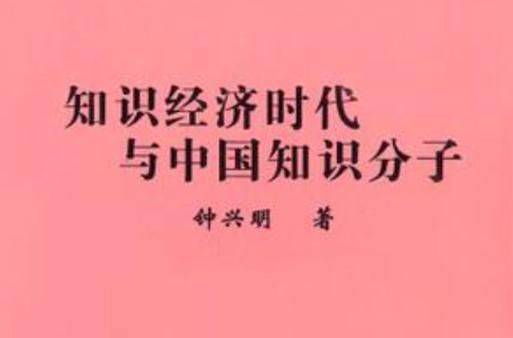
The book, the age of the knowledge economy and china's intellectuals, sets out practical issues such as the social positioning of chinese intellectuals in the age of the knowledge economy, the qualities and capabilities they need, the mental state they deserve, the recognition they deserve and the important role they should play。
The book consists of eight chapters, the main elements of which are: chapter i deals with the social role of intellectuals as forward thinkers, pioneers of science and technology, “four” new human breeders and producers of good spiritual products; chapter ii analyses the new demands of the knowledge economy age on the qualities and capabilities of intellectuals and the specific capabilities that should be available; chapter iii explores the relationship between the knowledge economy and innovation, as well as the content and expression of intellectual innovation; chapter iv addresses the need and transmission of dedication and hard work in the new era; chapter v focuses on the growth of young intellectuals, their pathways to talent and the construction of a social environment; chapter vi discusses the necessary nature of the “valuing of knowledge” of the knowledge economy and its performance in china; chapter vii analyses the development and utilization of resources of intellectuals abroad; and chapter viii focuses on the challenges and responses to developing, attracting and using mechanisms for intellectuals in china。
Briefing by the author
Zhong xingming has a long history of teaching and research in subjects such as political science, marxist theory and party history and sociology. More than 40 academic papers were published, of which several papers, such as the mao zedong idea of “peaceful liberation of taiwan” and deng xiaoping's “one country, two systems” concept, were reproduced in full by the chinese people's university's books information centre; several papers were indexed by the chinese people's university's books information centre; one of the academic monographs (the age of the knowledge economy and chinese intellectuals) was published; four consecutive prizes were awarded for the first degree of scientific research results in schools; and in 2002 they were awarded “two lessons” as an excellent teacher at sichuan university。
Publication of information bulletin
The book was published on 1 may 2002 by the barn books society and is composed of 978780659377 schematics, 295 pages, 32 open copies, classified as economics > sectoral economies。
Award records broadcast
Zhong xing minh has been awarded the first prize for scientific research in schools for four consecutive years and was awarded the “two lessons” as an excellent teacher at sichuan provincial college of higher education in 2002。
Bibliography
Chapter i the age of the knowledge economy and the social role of chinese intellectuals
I. The intellectuals are the transmitters of advanced ideas
Ii. The intellectuals are pioneers of science and technology
Thirdly, intellectuals are. Four are. New human breeder
Intellectuals are producers of good spiritual products
Chapter ii. The age of the knowledge economy and the quality and capabilities of chinese intellectuals
The current state of and trends in the age of the knowledge economy require continuous improvement in the combined quality and capabilities of chinese intellectuals
Ii. Comprehensive quality and capacity required of china's industrials in the history economy
Chapter iii the age of the knowledge economy and the innovation of chinese intellectuals
The knowledge economy is inextricably linked to innovation
Ii. The critical role of creative work by intellectuals under the influence of innovation for the development of the era
China's intellectuals must have the innovation they need for a new era
Fundamental expression of chinese intellectual innovation in the age of the knowledge economy

Chapter iv the age of the knowledge economy and the dedication and hard work of chinese intellectuals
I. Selfless dedication and hard work are the glorious traditions of the new chinese intellectuals
Ii. Sustaining and building on the dedication and hard work of chinese intellectuals is an urgent need for accelerated development in china in the era of the knowledge economy
China's intellectuals in the new era are committed to working hard, selfless, and promoting social progress and career development
Chapter 5. The age of the knowledge economy and the growth and talents of young chinese intellectuals
I. Promoting the development and talents of young intellectuals in the new era, and the need to strengthen the intellectual political work of young intellectuals
Ii. Promoting the growth and talents of young intellectuals in the new era still needs to guide them along the right path to integrate with people and with practice
High quality, creativity” is a fundamental requirement for our young intellectuals in the age of the knowledge economy
Iv. Creating an enabling social environment for young intellectuals
Chapter vi the age of the knowledge economy and the “knowledge appreciation” of chinese intellectuals
The appreciation of knowledge is necessary in the age of the knowledge economy
The knowledge of our intellectuals is now in place. (c) a appreciation. Status
Thirdly, the knowledge of chinese intellectuals today should be viewed correctly. Appreciation”
Chapter 7. The age of the knowledge economy and the development and utilization of the resources of chinese intellectual resources abroad
I. A proper understanding of trends in internationalization of knowledge development and use
Ii. The important role of foreign intellectuals in the modernization of our country
Key initiatives and successful experiences in developing and using intellectual resources abroad
Iv. Increased awareness-raising and more active and effective policies and measures to attract back-to-school knowledge to contribute
Chapter viii. The age of the knowledge economy and the development, attraction and use of chinese intellectuals
I. The challenges of the knowledge economy, which exposes china to a “distress” in the development, selection and use of knowledge skills
Ii. Meeting the challenges of the knowledge economy requires that the issue of our intellectuals be given high priority and addressed



