At a time when the number of cases of restructuring and mixing of state enterprises is increasing, on 1 july the state council's national investment commission and the ministry of finance jointly issued the scheme for the supervision and management of state-owned assets transactions in enterprises (hereinafter referred to as the scheme), which aims to regulate the conduct of state-owned assets transactions in enterprises, strengthen controls and prevent the loss of state assets. The scheme applies from the date of its publication。
The issuance of the scheme has also become an important signal that reform of the state is about to be followed by a period of policy intensity after months of low-key progress. In his presentation to the twenty-first session of the standing committee of the national people's congress on the reform of the state, the director-general of the national council of women, shaaya, said that 13 specific reforms or programmes had been put in place, and that 9 more documents were in the process of being completed。
“the document on state enterprise reform will enter an intensive roll-out period, with much to be done when it is ready. For example, the next steps in the reform of state enterprises will promote reorganization, greater merger restructuring at the group level, further streamlining of the main industries, the reorganization of key operations in the industrial chain, the removal of production capacity, the optimal allocation of similar resources, and professionalization.” the chief researcher of the chinese institute of business studies, li jin, said to the journalist who had submitted the report, “it is timely to publish the above-mentioned scheme, which is an operational document that answers the question of how to prevent the loss of state-owned assets, emphasizing the normative process, transparency and many new things”
“renews” and “transfers of assets” are detailed
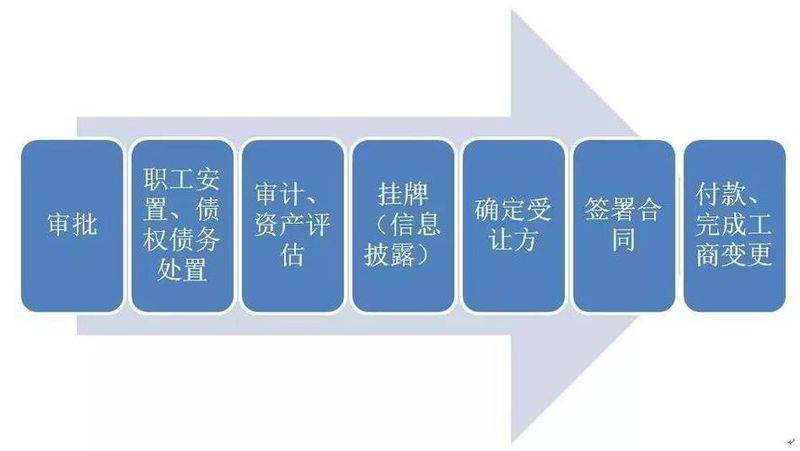
Compared to the interim scheme for the transfer of state-owned property in enterprises, which has been in place since 2004, the recently published scheme adds detailed provisions on the conduct of transactions in two categories of state-owned assets, namely “resources” and “transfer of assets.” “the previous provision focused on equity transactions in the context of equity, while the new scheme focused on new problems in dealing with zombie enterprises. In terms of content, the scheme places great emphasis on procedural norms and disclosure of information in the context of national transactions.” lee jin indicated。
Under the scheme, state-owned assets of enterprises should be traded in a manner conducive to the optimization of the state-owned economy and structural adjustment, in order to optimize the market's allocation of resources, in accordance with the principles of equal pay and “triple public” and in public in the context of legally established property exchange bodies。
With regard to the transfer of business property, the scheme makes it clear that the national regulatory authority is responsible for reviewing the transfer of property rights by state-financed enterprises. Where the state no longer has ownership of the enterprise financed as a result of the transfer of title, the approval of its own government is required from the state regulatory authority. The scheme also makes it clear that the transfer of property rights by state-funded enterprises is subject to the approval of the state-funded enterprises'supervisory authorities in respect of the major sectors and key areas of concern to national security and the national economy。
With regard to the replenishment of enterprises, the scheme makes it clear that the national investment regulatory authority is responsible for auditing the replenishment of state-funded enterprises. Where the state no longer owns the ownership of the financed enterprise as a result of the replenishment, the approval of its own government must also be submitted by the state regulatory authority。
With regard to the transfer of enterprise assets, it is clear from the scheme that the foreign transfer of the enterprise's production equipment, property, construction in progress and assets such as land use rights, claims and intellectual property over a certain amount of money shall be carried out publicly by the property exchange institution after the corresponding decision-making process is carried out in accordance with the enterprise's internal management system. In cases involving transfers of assets within state-funded enterprises or in particular industries, which do require a private transfer between state-owned and state-owned holdings and state-controlled enterprises, the transferring party reports to the state-funded enterprise for approval。
Enhanced public disclosure of core elements
Under the scheme, national transactions are specified at various stages of assessment, pricing, listing, pricing, pricing, payment, etc., and the timing of public disclosure of the core elements is clarified。
For example, a transfer of title that lowers the minimum price of the transfer or changes the condition of the concession to redisclosed the information for a period of not less than 20 working days. When the new transfer floor is less than 90 per cent of the assessed value, it shall be agreed in writing by the unit approving the act of transfer. There is also a replenishment component, in which, upon the conclusion and entry into force of the replenishment agreement, the equity transaction agency shall issue a certificate of the transaction and make public the results of the foreign announcement through the trading institution's website, including the name of the investor, the amount of the investment, the shareholding ratio, etc., for a period of not less than five working days。
It is worth mentioning that some mixed-ownership enterprises are in dispute as to the scope of application of the scheme, focusing mainly on the adoption of regulatory rules equivalent to public-owned enterprises for mixed-ownership enterprises。
According to article 4, paragraph 4, of the scheme, its scope of application includes “enterprises in which no more than 50 per cent of the shares are held, directly or indirectly, by a government department, agency, enterprise, single state-owned and state-owned holding enterprise, but which are the first-largest shareholders and which can be placed at its disposal by means of shareholder agreements, company charters, board resolutions or other arrangements”. In other words, mixed-owned enterprises under the effective control of state capital will be subject to the same transactions as state-owned sole-owned enterprises and enterprises with over 50 per cent of the state-owned holdings。
“mixed-owned enterprises are largely regulated by state-owned enterprises, which amounts to `upgrading' the regulatory treatment of mixed-owned enterprises. The above-mentioned qualification will regulate, to some extent, the procedures for the transfer of property rights and the replenishment of state-owned enterprises, but the `restriction' of regulation and approval issues will also increase the concern of enterprises involved in mixed ownership。
In li jin's view, “mixed ownership is characterized by efficient operations and the need for higher-level approval of everything and limited enterprise viability. Therefore, the relevant document on mixed ownership development should be issued as soon as possible. Relevant laws and regulations, including the state property of enterprises act, the companies act and the provisional regulations for the supervision of state assets of enterprises, are to be amended in accordance with the requirements of a comprehensive and deeper reform. (wing xueqing)