Central i of 2026 was published as scheduled, and as the first “three farmers” guide for the year when the “155” began, the requirements for “stabilization of food production at around 1. 4 trillion pounds” and “hardening the red line of cultivated land” were clearly set out in articles 1 and 3。
How can we achieve the target of 1. 4 trillion pounds of food production, as the helper heard from a friend of the farmer? What does that mean? What specific requirements cannot be met
In this section, the small helpers, speaking from the perspective of those involved in agriculture, say what i think, and when you have read it, you can talk about it together。
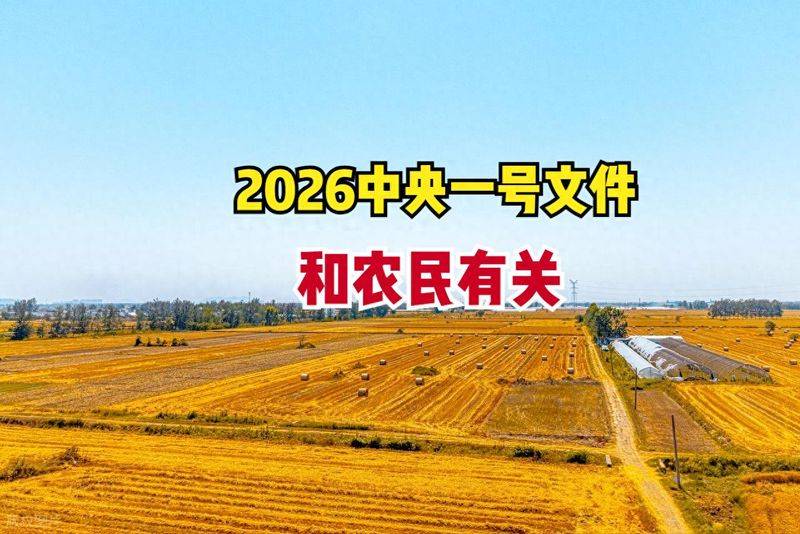
Food production has stabilized at around 1. 4 trillion pounds
First of all, it should be clear that the figure of 1. 4 trillion pounds is not an empty target, but is based on scientific measurements and a comprehensive study of the size of our population, the total food demand, the actual agricultural production。
And in the last two years, this goal has been met, for example, our food production reached 1. 43 trillion pounds in 2025 and 141,000 pounds in 2024。
So what exactly should we do? It can be summarized in four respects。
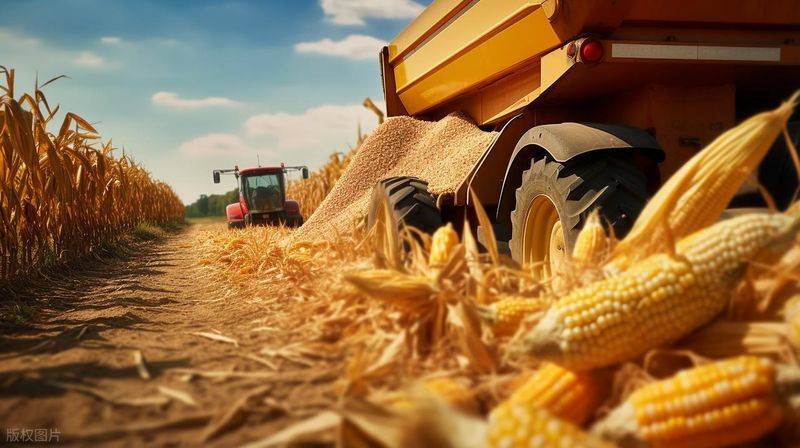
One, strengthening capacity support
Increased production can only be achieved through the integration of good land, seed, opportunity and good practices. For example, the continued promotion of high-standard farm construction, the improvement of field water facilities, the improvement of the quality of cultivated land, the enhancement of the resilience of cultivated land and the transformation of “low-yielding land” into “high-yielding land”。
In practice, it is also necessary to accelerate the selection and promotion of groundbreaking varieties, such as rice, wheat, maize and soybean crops, to produce high-yield, high-quality, resistant and disease-resistant varieties, starting with seeds and increasing food production。
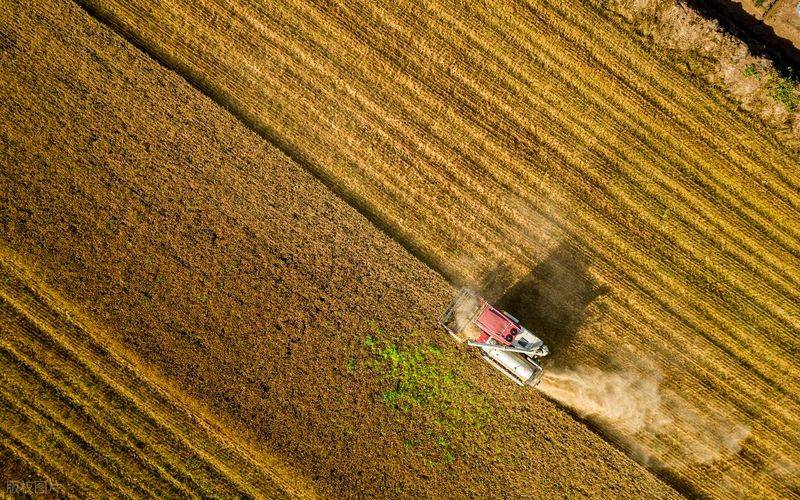
In addition, this year's central document refers to the expansion of the application of modern agricultural technologies, such as drones, networking of goods, intelligent monitoring, which will not only reduce the cost of planting and increase productivity, but also effectively address the technical difficulties faced by farmers in planting。
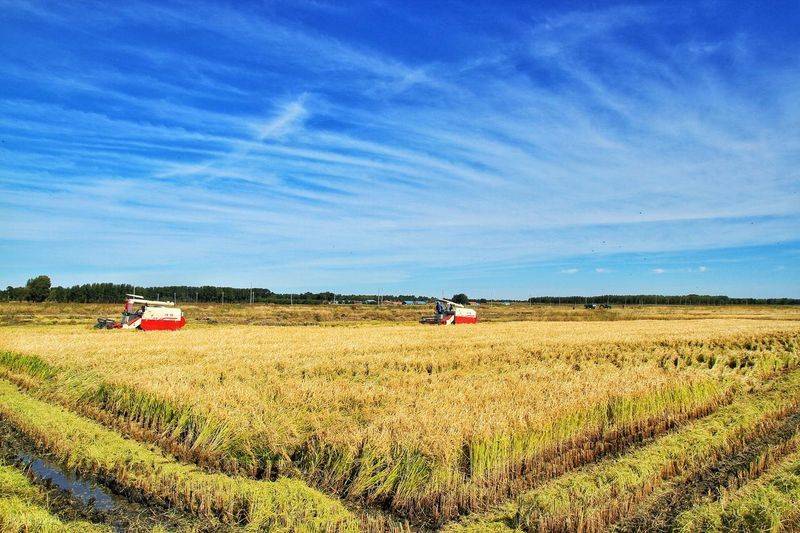
Second, stable cultivation area
Food production is expected to be high, mainly in two areas, the first being the area under cultivation and the second being the production per acre。
The larger the area under cultivation, the higher the yield。
In order to increase the food incentives of farmers ' friends, the continued rational determination of minimum purchase prices for rice and wheat was also mentioned in this year's paper。
In the area of subsidies, the policies of land protection subsidies, maize soybeans producers subsidies and rice subsidies have been implemented steadily。
Through policy guidance on field crops such as wheat, maize, rice and soybean, farmers ' friends are willing to grow food, growing in large areas and producing more。
Third, strengthening disaster prevention and mitigation
The old saying “seeing the sky for food” refers to farmers who grow land and are the most vulnerable to extreme natural disasters, such as drought, floods, pests and diseases, all factors affecting food production。
Disaster prevention and mitigation must therefore be done if the production target of 1. 4 trillion pounds is to be stabilized。
For example, the relevant meteorological services need to improve the accuracy and timeliness of early warning, release disaster information in advance and prepare farmers ' friends in advance。
Farmers ' friends also need to improve drainage and irrigation facilities in the fields to enhance the resilience of their farms。
Fourth, raising food prices
If food production is to be stabilized, it must be “goodly grown” and “goodly sold” and the higher the price, the higher the returns to farmers, the longer the farmers will be able to mobilize their food incentives in the long term。
For example, in 2025 the prices of wheat and maize were not ideal, with the price of wheat hovering at $1. 20 per pound for a long time, and the price of maize was even lower。
If the prices of crops such as wheat, maize, rice and soybeans are properly raised, farmers grow “higher” and more conducive to stabilizing the production target of 1. 4 trillion pounds。
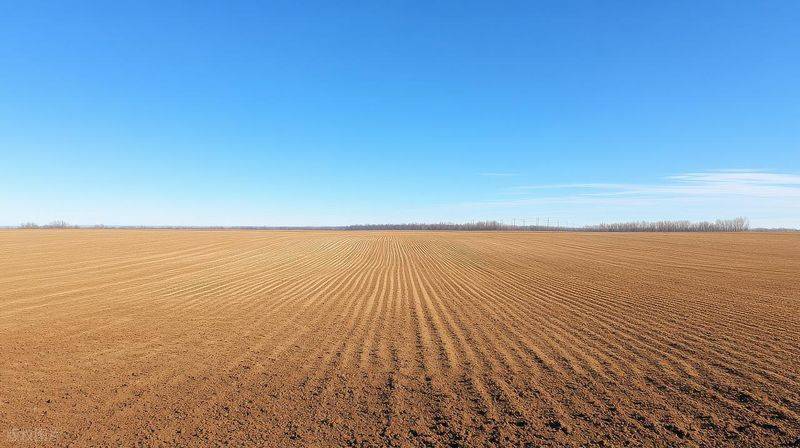
Keep the red line on the cropland
As we all know, the vast majority of the land is the basic national situation in our country, and once arable land has been destroyed and squeezed, the area under which the food is grown is reduced, and the production target of 1. 4 trillion pounds cannot be mentioned。
1. To maintain the minimum level of cropland, not to use it for non-food crops, much less to alter its cultivation。
For example, large areas of cultivated land cannot be converted to cash crops such as fruit trees, saplings and flowers, or to facilities for agricultural land, farming land, etc。
Even in some areas, there has been an arbitrary occupation of arable land for the construction of houses, factories, kilns, illegal use of arable land for the construction of roads, parking lots, etc., which must be firmly eliminated。
2. It is important not only to preserve the “quantity” of arable land but also its “quality”. If there is a large number of barren land, it appears that many crops are being cultivated, resulting in only a few hundred pounds of production per acre, even with no harvest, which makes little sense。
Therefore, during the actual planting process, practices such as over-cultivation, unreasonable fertilization, strangulation, etc., are avoided, as far as possible, by measures such as fertilization of soil formulations, stifling back to the fields and deep pine cultivation。
3. The authorities concerned must intensify their efforts to ensure strict accountability for the misappropriation and destruction of arable land。
Violations of the right to occupy and destroy arable land should be detected and stopped in a timely manner, in particular by avoiding “gifts”。
What do ordinary farmer friends do
1. During the actual planting process, there are no irregularities in the occupation of arable land for the construction of houses and factories, and no arbitrary changes in the use of arable land for cultivation purposes, and no conversion of arable land to non-food crops。
Under the local cultivation structure, priority is given to major food crops such as rice, wheat, maize and soybeans。
Arable land that cannot be cultivated because of its work outside the home may be transferred to family farms, farmers ' cooperatives, etc., by means of land shifting, or to relatives and neighbours, and cannot be left idle。
The traditional concept of “employable land” should be rejected as far as possible, as cultivation techniques are now becoming more sophisticated, giving more attention to technical training organized by the grass-roots agricultural extension sector, as well as sharing and learning with food producers in villages。
In accordance with local climatic conditions, the fertility of the soil itself, the choice of desirable varieties for cultivation, and the strengthening of field management and timely pest control。
3. In the process of planting, no blind fertilization, no excessive use of pesticides, and no contamination of soil, water and the environment by fertilizers, pesticides。
At the same time, they can be broken back to the field, increase soil organic matter and improve the soil structure; they can also be rationalized to avoid persistent soil nutrient imbalances。
4. Use policy dividends, such as those mentioned in this year's central i document, on land protection subsidies for agricultural land, subsidies for maize soybeans producers, subsidies for rice, subsidies for the acquisition of agricultural machinery, etc。
These are subsidies for our ordinary farmers, and we must pay more attention to the information on subsidies issued by village groups and by the grass-roots agro-technologies, which, subject to the conditions of application, can be prepared in a timely manner for applications and represent a significant income。
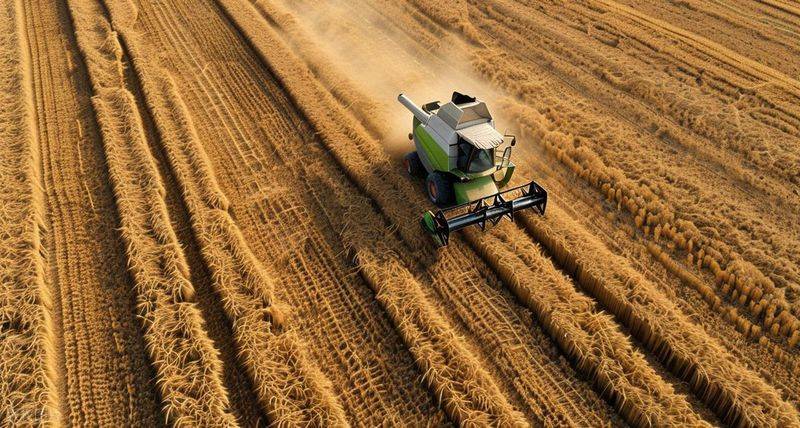
Taken together, the target of 1. 4 trillion pounds of food production set out in central i of 2026 is not an empty slogan. And keeping the red line on the cropland will require action by every friend of our farmers。
In one sentence, with all of you working together, there is a drive, a bottom line and a guaranteed increase。
# on the headline, hotter #