A line of red breeding and cultivation
22/05/07:42 source: summary of the non-born article: a line of red reproduction and cultivation
A series of red reds named western reds, firecrackers, originally produced in brazil, south america, are herbivorous plants. A common set of red items are the "pretty" series, the "newman" series, the "sasha" series, the "vision" series and the "victoria" series. The colours are: cyanide, orange red, pale purple, purple, wine red, red and white, roses, white, mixed, etc。
Form characteristics and growth characteristics
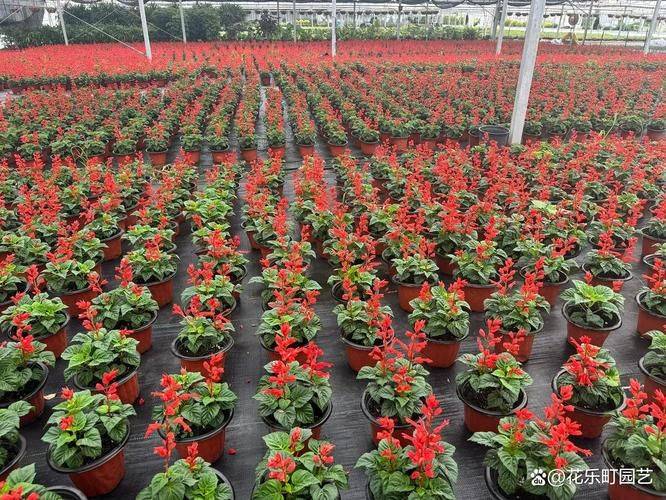
A string of reds, 25-30 cm tall, small, stymied, lined, colored, long-lived and unrewarded, is suitable for both field gardening and potting。
A series of red-hot suns with the highest growth temperature of 20 °c - 25 °c is resistant to high temperatures, but growth and growth are weak when summer temperatures are high, growth is slow above 30 °c, and planting and flowering are bad. Growth stopped at over 35°c. The leaves below 7 °c are unfloated and up to 3 °c can be frozen or stop growing. A string of red water should be managed in such a way that it is managed in such a way that it is either dry or watered. Hexaphosphorus during growth, potassium fat。
Reproduction
It can be divided into sowing and adhesive reproduction。
Sowing breeding
(1) seed treatment: seeds can be immersed in hot water at 25°c ~ 30°c for six to eight hours before sowing, then washed in a veil, wash away the slime on the surface, then seeded directly, with seeding occurring in about six to seven days, or seeding after seeding, i. E. Purified in wet brit, in an environment of 20°c ~ 25°c, rinsed two to three times a day with warm water, and seeding can begin to seed after about five to six days。
(2) sowing method: a. Caucasian seedling: 150-200g methyl tobuzin powder per cubic metre medium (approximately 20 bags) mixed 2-3 times to make the drug fully mixed with the medium, which is then mixed with the spray water, and moved to the medium to hold the medium by hand, so that it remains loose. They are stacked 8-10 hours later in a lacquer, covered with film. A seed is placed in each den, which is then squeezed with a light hand to bind the seed to the medium, then sprayed with sprayers and covered with newspapers or plastic film. The newspaper will be wet for a long time and will be turned open after the seed has sprouts. B. Slender beds: yellow mud, peat, pearl rock is mixed in a ratio of 4°2°1, wetted first with water, seed is mixed with fine sand at a ratio of 1°4 and spread evenly on the bed, with a thin layer of grassy ash spread over it, and soil moist, and seeding is available for approximately 5 - 6 days at 30°c or so with sufficient light. The seeding must be smooth, wet and three-heated. Evenly means the seeding of the soil; wetness of the medium and seedbed after sowing and before seeding; warmness means that the temperature after sowing and before seeding can be kept at a relatively higher temperature than during the seeding period, at which point good or bad management will directly determine the high and low seeding rate and the badness of the seedling。
(3) shrimp management: 3000 times more urea can be sprayed when the leaf grows, prone to sudden fallout during the seeding period, and can be sprayed with 800 to 1,000 times more gypsum, methyl tobuzin, polybacterium, etc., every seven days. Water can be properly controlled to promote root system growth in order to prevent inversion。
Plug-in breeding results in the birth of a disease-free and pest-free plant, with a new cut on the mother's book, and a length of an ear length that is generally consistent with 2 to 3 knots. The root agent is then mixed with a “sun” root agent of 400 times the fluid and slurry, so that the incisor is sewn with a spot of mud, which can be treated and inserted into a nursery, and the incisor medium can be used directly in rough sand, at temperatures of 25°c ~ 28°c, which can be transplanted to the basin for 8-10 days. The management of seedlings is easier, with no fertilisation for the entire period, and only once a day。
Plant media formulation
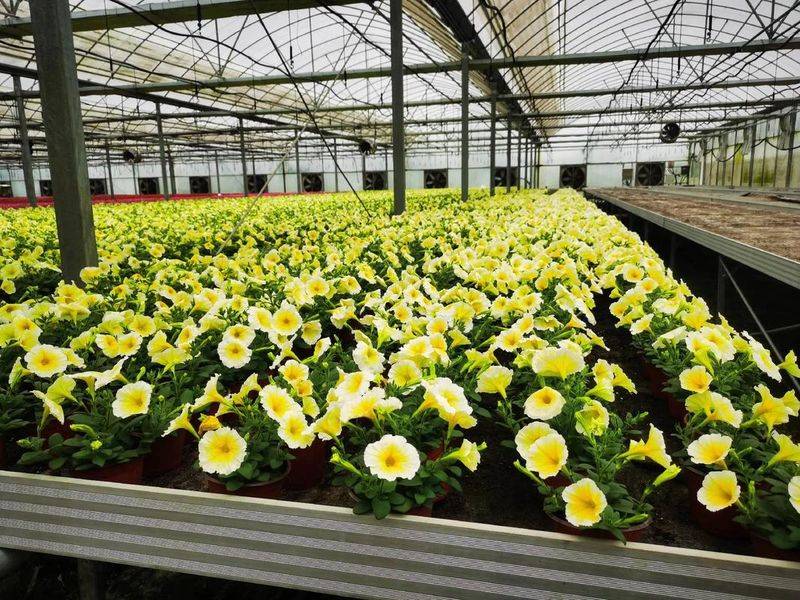
The slurry, wood crumbs, mushroom slurry is mixed at a rate of 6:3:1 and piled for six months。
Port it
The seedlings can be transplanted when they grow up to 5-7 mm. In the case of nursery seedlings, the basin should be transplanted at 2-3 pairs of real leaves, and sufficient water should be poured into the basin immediately to avoid direct sunlight, for example, in the case of luminous seedlings, which should be covered for three to four days with a light net. Cave seedlings are not covered by a light net because they contain the soil matrix. Carcinoma
They are designed to facilitate branching, prevent the growth of stasis, decorate, control the height of the plant and increase the number of flowers and seeds. The first choreography is usually carried out in the case of four to five saplings, which, if left for seedling reproduction, can be taken in the case of 8 to 10 sprouts, while the second choreography can be taken out in the case of three to four sprouts, each of which is only two to three knots on the original basis, so as to encourage the planting of small, full and flowery plants. A string of reds can bloom many times during their growth. In general, under conditions of temperature of 20°c ~ 25°c and short-day photos, the flowers are removed from the flowers, and they can grow and bloom over a period of 15 to 20 days. Therefore, after a string of red flowers, they are cut off in time to reduce nutrient consumption and promote re-opening。
Fertilizer management
Water should be contained without water, otherwise yellow leaves are prone to fall, resulting in larger and thinning branches and fewer flowers. High demand for phosphorous and potassium fertilizer during growth requires a timely increase in the application of fertilizers, mainly in chicken dung and less in nitrogen to meet their growth needs, with 0. 2% potassium phosphate solution sprayed every 10 days. In particular, it is necessary to provide sufficient water after each lettery, after a week of light fertilizing water, logistically fertilizing water and, where appropriate, increasing p and k fertilizers in order to promote new life and flourish。
Light regulation
A group of red-positive plants that grow and bloom requires sufficient sunlight, which also helps to prevent the planting of long plants, but in areas with strong light, sunlight is avoided and the sun is properly shaded to cool。
Temperature control
The temperature can be reduced to 18°c at the end of the upper basin and can be reduced appropriately before and after flowering, so that a good strain can be formed and, generally speaking, a plant above 5°c can not be frozen and can grow well at 10°c-30°c. In summer, for example, high temperatures above 35°c, most varieties are unaffordable unless they are very short or occasional。
Time control
In order to ensure that a string of reds blooms on time throughout the year, in addition to the technical management of the above, a final care time is determined to achieve precise control of the period. Because once a string of red flowers is removed, the flowers can bloom again if the water and the fat keep up. A schedule showing a line of red planting time in the city of guangdong joohai and the last time of heartbreak can serve the purpose of flower control。
Pest control
The main diseases are sudden fallout, foliage, frost and leaf disease. (1) sudden disease can be treated with venom at 800-1000 times more fluids; (2) leaf-leaf disease, frosty disease? 5% of the solution of zinc dysen can be wett 0. 2%; (3) flower disease, also known as a series of red virus diseases, which manifest itself as yellow, wrinkled, small, aging and dying, as most of the disease is caused by aphid transmission, should be treated in a way that prevents disease by acupuncture, with the use of vitamins in cases of severe yellow outbursts, i. E. Ethylamide tetraethylate, 2,000-3000 times more liquid one to two times a week, with better effects and faster greening。
Common pests include white ticks, aphids and red spiders. (1) inhalation of plant juice by white lice can lead to leaf bleaching, curling, atrophy and often become the vector of various toxins, killing 0. 01 per cent of the solution by enemies. In closed environments, such as greenhouses, fumigation with fumigants strong-force shed ii is more effective, two to three times in a row, and greenhouse white lice can be completely eliminated; (2) aphids tend to be concentrated in germs, green leaves and adsorbing juices on young branches, resulting in atrophy of the affected parts of the plant, and aphids to pollute the strain and induce diseases such as coal pollution, which can be sprayed with 600-800 times more fluids; (3) red spiders are mostly strangulation of leaves, often resulting in folication and even corsets, and can be sprayed with 0. 01 per cent of trichlorocide solution。
Attention should be paid to strengthening the management of hydro-fertilizers in normal times and to the detection and early prevention of pests and diseases。
Schedule
Plantation time
A holiday flower
From transplant to flower day
Last heartbreak days
Remarks
7 october
New year's day
83
25
Planted with a 7-inch flower pot
15 february
Five ones
75
25
Planted with a 7-inch flower pot
20 july
“xi”
70
20
High temperature and low survival rate
Early october
New year of agriculture
90
30
Planted with a 7-inch flower pot
Other organiser