


Carnation breeding and pest control
Chen xiaoping
Carnivals are also known as mackerel, musk mackerel, mackerel and mackerel. They are coloured in red, pink, yellow, white, purple, chrysanthemum, etc., with long bouquets and winter seasons of january to february. They are dry, suny, well-ventilated, cold and cold, less heat-resistant, suitable for fertilized, estranged micro-tacid to neutral soils, with no wetting and continuous operation。
Reproduction methods
The seeding in the spring will take place between the end of march and the beginning of april, and the planting in the fall will take place in september. Pre-plant soil and seeds are subject to strict disinfection, with 70 per cent of the soil being sterilized with methyl sulphate and 90 per cent with trichlorfon. Seeds may also be stored in spring and autumn. The 30-minute impregnation of potassium permanganate solution by 0. 5 per cent before seeding is taken will be followed by the extraction of seeds for drying up. This was followed by improved field management and soil moistation, with seedlings around seven days. When small seedlings grow up to 6-8 centimetres, they can be moved to the basin。
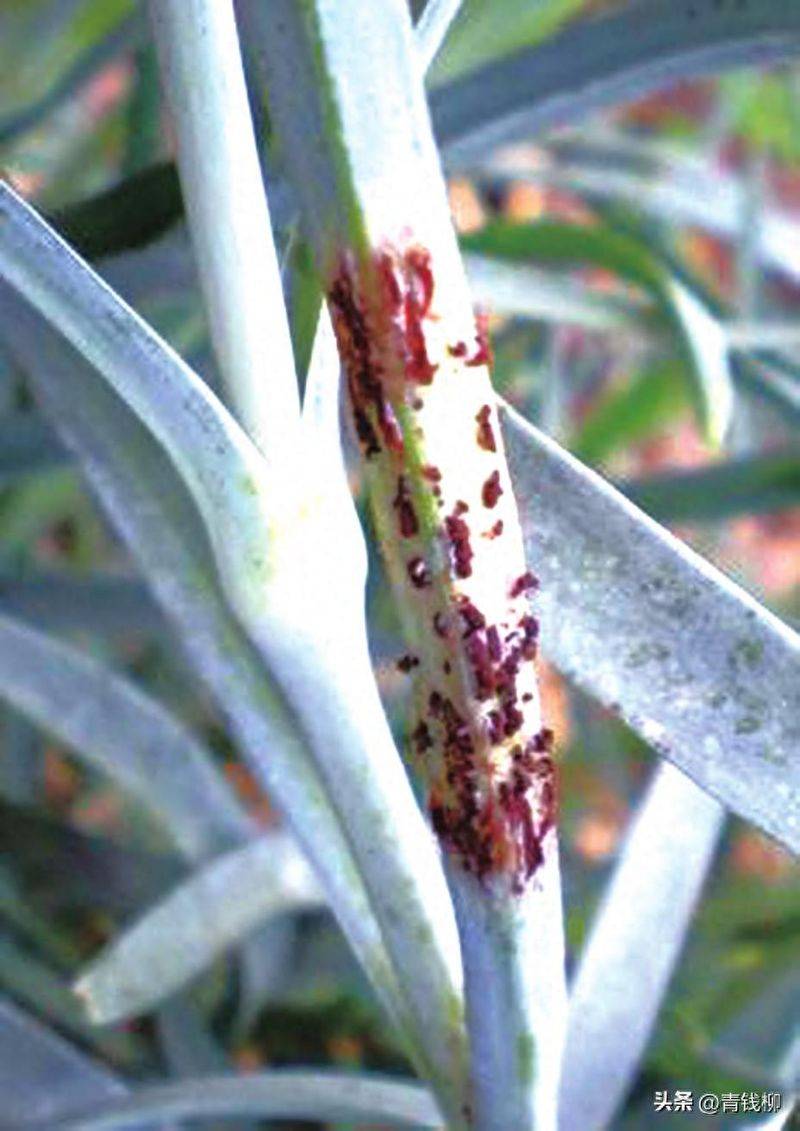
Rusty disease
Plug-in. Plug-in time, except for the hot summer, is available for all seasons, with the highest activity rate in february. It is appropriate to choose a mother-plant with a good variety, strong, flowering, good quality, disease-free and insect-free range of 6-9 cm. The blades should be cut together and care not to damage the mother strain. The piping matrix can be inserted into the ash-filled garden soil, and the piping can be washed with water and inserted into the soil at a depth of about 2 to 3 cm, with a distance of about 4 cm. It is then watered and covered with shades. Temperatures are maintained at 15 °c ~ 20 °c, with live transplants for 20-30 days。
The pressure, which took place in august-september, took long branches, cut the skin with a knife in the part of the ground, and put the earth on. After five to six weeks, you can have roots。
Upstream management
When the seedling grows to six to eight centimeters, it's too late to grow. Carnations are sunflower flowers, which should be grown in a sun-rich environment, with wet, fertile and well-watered land. Plantation should be carried with earthy seedlings at the time of planting, which can increase the rate of survival。
A proper amount of water will be poured into the water once, and then when the soil is dried, the water will be poured into the water in due time. Carnations are intolerant and, apart from increasing water use during periods of boom, flowering and summer, generally water is not too much water, soil is kept to a certain degree of moisture and flowering is overdrying. Air moisture is maintained at around 75 per cent and proper water is sprayed and humid before flowers, which prevents the pre-opening of flowers。
Rationally fertilizing carnations and fertilizing with sufficient base weight. Organic fertilizers, such as fertilizers, composting and bone powder, are used to improve the physical properties of cultivated soil. The principle of fertilization is applied in the form of thin weight, which is usually applied once every 10 days or so, and which increases the number of times during two growth peaks。
Accommodatives are cool, growing at between 14 °c and 21 °c. The temperature is high during the day, and leaves are narrow, small and poorly divided, and the temperature is too high at night, which can cause abnormal reactions to weak, small and colours. The summer temperature is above 35 °c and the winter temperature is slow to grow at below 9 °c and ceases to grow when severe。
There's plenty of sunshine, carnations, but there's no need to worry about the harmful effects of strong light. Carnation is also a cumulative, long-day-light plant. The longer the solar light accumulates, the more it helps to divide its buds and, in turn, to grow early, increasing the degree of alignment and cut flowers. The use of auxiliary light not only promotes inter-plant extension and inhibits side branch growth, but also increases the crown diameter and colorful beauty. In long-term light conditions, leaves, branches and hairs become thin and fragile and cause disease. In the middle of summer, carnations are in semi-sleep, and care should be taken to avoid exposure to the sun。
When the baby is 12 to 15 centimeters high, the first one can be taken, usually with 6 to 7 sprouts below. The second choreography takes place when the sprouts are 10-12 cm high, and the second choreography must take place by mid-august. It can be picked up repeatedly, and lastly the plant has 12 to 14 branches. There's only one beret at the top of each branch during pregnancy, and the lower armpits are all removed。
Pest control
Paradoxic diseases mainly affect the roots of young seedlings near the earth's surface, decomposing the base, constricting it and causing it to fall. The diseased leaves are pale, decaying, and lastly they die. Methods of prevention and treatment: at the beginning of the disease, the seedlings were rinsed with 200-300 times the seedling spirit or 70 per cent of the methyl tobuzine 700-800 times. One or two times a week and two or three times a week。
In the early stages of the disease, the lower blades of the plant lose their green accompaniment and spread upwards. The tubers were softened, often showing the symptoms of “distortion”, and then the strains were strewn and eventually all died in gray and white. Method of prevention: 25 per cent of the benzene powder can be used 200-400 times the liquid or 50 per cent of the ammonium desen emulsion 800 times the spray. Sprayed once every 7 to 10 days, three to five times。
Rusty diseases are mainly harmful leaves, tubers and flowers. In the first instance, there was a light-coloured, small strangulation of herpes, and tan stains were dispersed from the skin, resulting in the death of leaves and strains. Lately, they form black and brown winter dumplings, plant shrunk plants, and the leaves roll out early. Prevention and treatment methods: timely removal of strains, leaves and weeds to reduce the source of infection and indirect host. Take care of moisture management, control temperature and improve ventilation. In the early stages of the disease, 800 times the sodium dichloride can be sprayed. Sprayed once every 7 to 10 days, three to five times。
Leaf spots, also known as stasis, mainly affect areas such as leaves, tubers, buds and petals. The disease began in the lower leaf, with a small, light green water spot on the first leaf, which gradually spread to brown, purple or elliptical spots, with the centre slowly dying and turning white. Most of the diseases on the trachea are grey and brown, with irregular long stripes, which often occur at forks and wounds. When the disease is surrounded for a week, the upper branch dies of atrophy. The condition of the bud is similar to that of the leaf blade, and the petals are not normally open or deformed. Method of prevention and treatment: timely removal of strains and leaves and attention to ventilation. In the early stages of the disease, 75 per cent of the bacterial clean-up, 70 per cent of dyson manganese zinc or 80 per cent of dyson zinc humid powder can be sprayed 500 times, and 1 per cent of bordeaux can be sprayed。
Ashy disease happens more on petals and buds. At the beginning, the petals were immersed in light brown water, which was followed by brown spots and decay. If the temperature is higher and the humidity is higher, there will be a powdery gray cortex on it. A bud-sensitization disease produces irregular water stains and then rots, resulting in the normal opening of flowers and the generation of powdery gray molds. Methods of prevention and treatment: timely removal of sensory plants, increased ventilation and avoidance of water membranes on petals. At the beginning of the disease, 75 per cent of the bacteria can be sprayed 500 times as wet as powder. Sprayed once a week, two or three times a week。
The lumber plagues the buds, the curvature of the fragrance, the inability to bloom, the appearance of a part of the petals that becomes light brown, the dissecting of the buds, the internal tea and brown, and most of the petals of the fragrances become soft and rotting. Method of prevention and treatment: cutting and centralizing the disease. In the early stages of the disease, 50 per cent of the methiosulphate humid powder was used 1,000 times the fluid, 50 per cent of the polysulphine humid powder 500-800 times the fluid, 50 per cent of the degenerative special humid powder 800-1,000 times the fluid, 12. 5 per cent of the amthol humid powder 1,500-2,000 times the spray. Sprayed once a week, two or three times a week。
Black spots endanger leaf blades, tubers, flowers and petals. The leaves were initially immersed in little oily spots, which were expanded with long elliptical tea brown spots, and the old ones formed black powdered caricatures, causing the leaves to be withered in severe cases. Method of prevention and treatment: 800-1000 times the liquid methio-sulphus filamentable powder, 800-1000 times the spray spray for the early onset of the disease. Sprayed once a week, two or three times a week。
The stasis is an attack on the roots of the plant, on the top of the ground and on the leaves. The area of the disease is brown, the leaves are yellow from the bottom, the top of the ground is dry and the marrow is brown and rotting. Method of prevention: 50% of the powder of powder of powder of powder of powder of powder of powder of powder of powder of powder of powder of powder of powder of powder of powder of powder of powder of powder of powder of powder of powder of powder of powder, 80% of powder powder of powder of powder of powder powder of powder, 12. 5% of powderol of powderol. Sprayed once a week, two or three times a week。
In the early stages of the disease, individual roots and sturgeons spread gradually to the main roots, and after the main roots of the disease, early strains are not shown symptoms. As the levels of decomposition of the roots increase, the upper blades grow atrophy before and after midday, and they recover at night. The severe conditions of atrophy cannot be recovered during the night. At that point, the skin was brownened and separated from the marrow, and the whole body died. Methods of prevention and treatment: 40 per cent of corrosive smog is sprayed with 1,000-fold fluid at the beginning of the disease, or 80 per cent of the cream is emulsed with 1,000-fold root. Sprayed once a week, two or three times a week。
It rots from the tip of the bouquet to the base. Method of prevention and treatment: 70 per cent of dyson manganese zinc or 80 per cent of dyson zinc wettable powder can be sprayed 500 times during the initial period of the disease. Once a week, two or three times a week。
It's a horse that's infested with insects and a leaf-backed juice. In the period between july and august, 20 per cent of the mirex, 40 per cent of the seven-star emulsion, or 40 per cent of the oxen fruit, 800 to 1,000 times the fluid, or 50 per cent of the pine, 1,000 times the fluid, or 25 per cent of the hygienic powder, 400 times the fluid were sprayed. Sprayed once a week, two or three times a week。
Red spiders are prone to drought at high temperatures, be careful to check the leaves. Method of control: when pests are found, 20% of dicofol is sprayed with 800 times the liquid or 40% of the lactation of olego. Sprayed once every 7 to 10 days, two to three times in a row。
The aphids are concentrated on buds, leaf leaves, stinging juice on the branches, spreading the honey, causing coal pollution, etc. Method of prevention: 400 - 600 times more liquid can be killed or 400 - 600 times more liquid sprayed. Sprayed once every 7 to 10 days, two to three times in a row。



