


As temperatures fall, vegetable production will be affected by adverse weather conditions, such as low-temperature oligartens. In order to guide a wide range of vegetable producers in their efforts to produce vegetables in autumn and winter, the beijing city agricultural technology extension and facility veterinary innovation team provides the following technical guidance to strengthen guidance and improve productive capacity and contribute to higher productivity。
I. Procurement of vegetables in the ground
Some of the fields are now being harvested in the field, mainly in the fields of cabbage, radish and onions; the solar greenhouses, which mainly include melons, eggplant fruit, leaf vegetables, etc., are now in production stages; and the plastic sheds, which consist mainly in the fields of eggplants, leaves and vegetables, are gradually entering the clearing period。
Ii. Strengthening the management of vegetable production in the field
01
Plant vegetables
1. Extreme weather response
There is now a need to protect against wind, cold, oligarchy and snow。
The first is the timely renovation and maintenance of agricultural facilities. (b) sound membrane management, with timely repairs such as thermal or adhesive patches, while tightening the membranes and membrane moorings in order to avoid the tearing of the membranes by the wind, closing the vents of the membranes, closing the entrances to the facilities, and, in the case of the relatively wet air, over-larged sheds, allowing for brief ventilation at the top of the wind in the morning or at noon, subject to manual supervision. In order to avoid the impact of the wind on the coverage of the external cover, the east-west side will be tied to the wall at nightfall, with heavy pressure on the front foot. Fire safety, clean-up of the exposed electrical circuits, removal of flaming materials from the perimeter of the shed, and eradication of the open fire. In case of snowfall, shed areas should be cleared in a timely manner and old greenhouses strengthened。
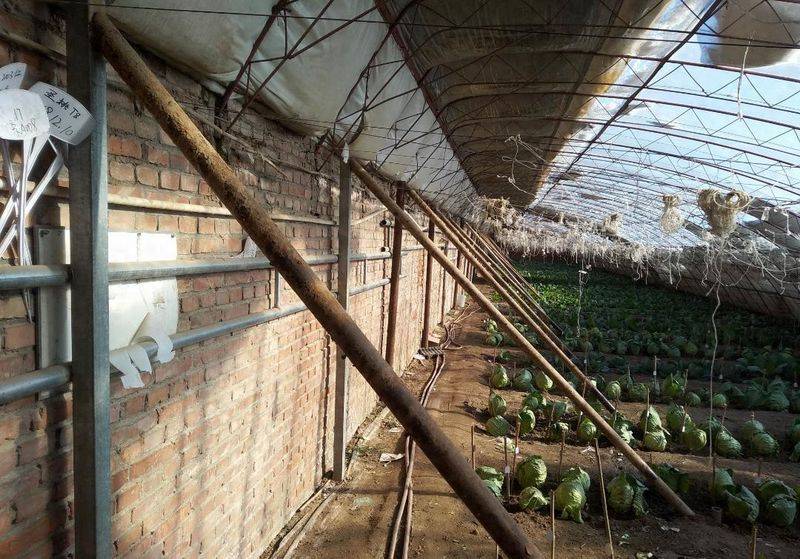
The second is to increase temperature protection and emergency response. The solar greenhouses will be equipped with timely repairs to the temperature protection and rollers, which will be followed by additional perimeters at the entrance, additional nematodes at the front foot, extreme cold weather, and a safe and effective means of emergency heating; the plastic shed will be sealed from the north-south side of the door, with the conditions to cover a line of straw curtains around the ceiling, a roof covered by a black sunnet, and, if necessary, a small arch shed and two curtains。
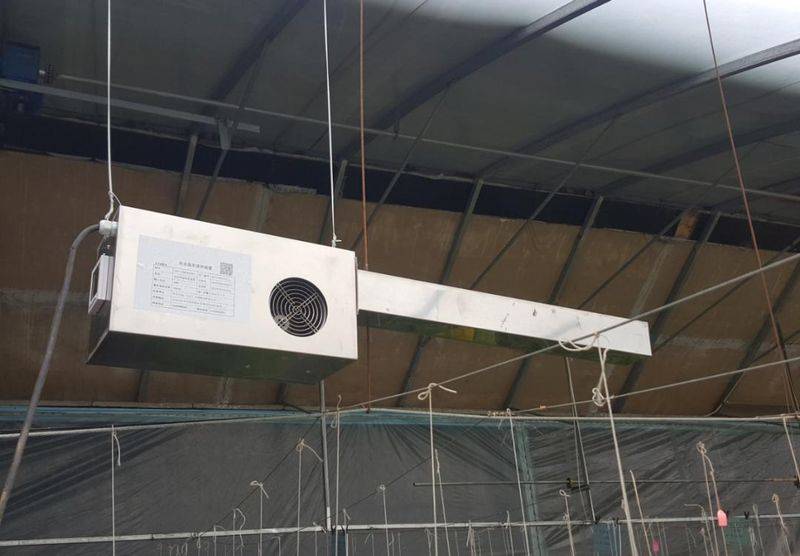
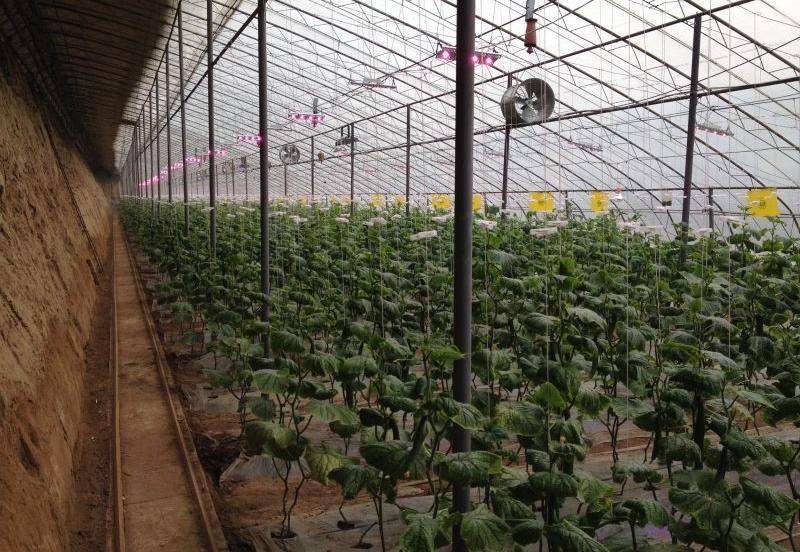
The third is to maintain a high rate of light across the facility. Keep the shampoo clean, clean the shampoo in a timely and reasonable manner, and keep the shampoo permeable. The application of reflectors to enhance the light on the north side of the greenhouse, which can improve to some extent the light in the northern part of the greenhouse, but it is forbidden to hang on the back wall and can hang on the back slope at the angle of the rear slope and in the direction of the extension; in order to cope with the likely continued oligarchic weather during the winter, the conditioned sheds will need to be equipped with agricultural sodium lamps and led patches in advance for emergency light。
2. Strengthening field management
One is temperature management. Based on weather conditions, the above-mentioned measures have been applied in an integrated manner to house temperature management. Heated vegetables, such as cucumbers, beaks, tomatoes, peppers and eggplants, are kept at 25 - 32°c during the day, 10 - 12°c during the night, which cannot last less than 10°c during the day and 8°c during the night. In order to ensure temperature indicators, it is necessary to have a scientifically reasonable venting, which is reduced to 28 - 30°c when the temperature is above 32°c at the plant's growth point and is closed down at 28 - 30°c at 20 - 22°c in the evening. Horticulture crops such as kale, celery, radish and fast-leaf vegetables can be maintained at 15-20°c during the day and 5-8°c at night。
The second is moisture management. The higher humidity of the sheds is susceptible to disease, and emphasis is placed on ventilation and scientific water-water management, in addition to surface cover, water-saving irrigation, heating, wetting and pest fumes, dust control. At the end of the day, a three-part venting method was used in the high humidity of the shed, the first taking place at 15°c in the morning, when the temperature was raised from 15°c to 15°c; the second taking place at noon, during the high temperature period, when the temperature was determined; and the third taking place before the temperature was set at around 10-15 minutes。
3. Fertilizer management
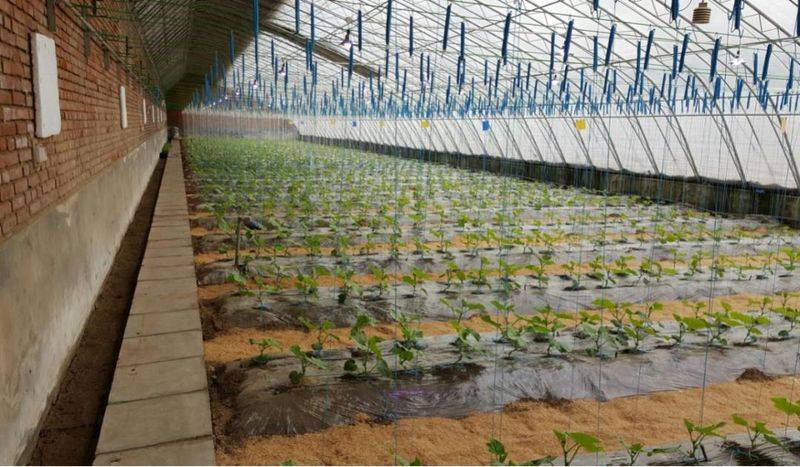
Water and fertilization is carried out in a one-size-fits-all manner, based on the principle of “no-no-no-no-no-no-no-no-no-no-no-no-no-no-no-no-no-no-no-no-no-no-no-no-no-no-no-no-no-no-no-no-no. Vegetables such as melons and eggplants are usually given a day of 10-15 days to obtain one fattening, with an acre irrigation volume of 10-15 cubic metres, with a drop of potassium water soluting 8-10 kg/acre; fast-leave vegetables are not required for fatting and are irrigated flexibly according to weather and crop growth; and other vegetables, such as kale, garlic and radish, are fertilized with water drops 2-3 times at 5-8 kg/acre during the production of their organs。
Plantation and fruit management
High-scaved crops, such as cucumbers and eggplants, should be removed in a timely manner from the old leaves, sick leaves, deformed fruit and side branches, tomatoes should retain functional leaves of about 16 pieces and be removed in full from the leaves below the ears of white ripe fruit, tomatoes should be kept in 35 to 40 leaves, peppers should be guaranteed to be above 40 pieces, cucumbers should be maintained with 12-15 pieces of functional leaves and not below 1. 5 metres at the level of fall. Crops such as tomatoes are selected with safe plant growth regulators to assist with pollination, removal of excess buds and excess fruit and timely harvest during the optimal commodity period。
5. Management of the hypothermia period
Products can be harvested and farm operations such as irrigated fertilizers, plant adjustment can be stopped in the field, with 6,000 times more than the pre-temperature foliage and 2-3 per cent potassium phosphate used to increase crop temperature tolerance; pest prevention should be based on aerosols, dust agents, bionatural enemies, sexual inducements, and insect palettes, etc.; after the weather has improved, one application of phosphate potassium or amino acid, algae algae leaf fertilizers can be applied in conjunction with pest control, preventing disease, increasing crop resistance, supplementing crop nutrient requirements, and re-irrigation based on weather and soil moisture, with preference for microbes, amino acid, algae acid, and corified acid fertilizers; and appropriate shades in periods of light after weather breaks。
6. Strengthening disease and pest control
Facility vegetable production is currently prone to early disease, asymptomatic diseases, asymptomatic diseases, as well as diseases such as aphids, powdered lice, leaf moths, tremors, tea octopus, etc., with priority given to biopesticides or low-toxic and efficient pesticides at the beginning of the disease, with good formulations of aerosols and strict enforcement of safety intervals to ensure safe choice of products on the market for the treatment of ailments such as 0. 6 per cent of ailments, stasis, stasis, root causes and root diseases, 47 per cent for the control of bacterial diseases such as carbide, natural enemy applications and temperature and humidity control, 72 per cent for the control of froste, disease, disease disease, etc., and 22. 4 per cent for the control of ethyl ethylene ester and 60 grams of ethyl ethyl mollothrin。
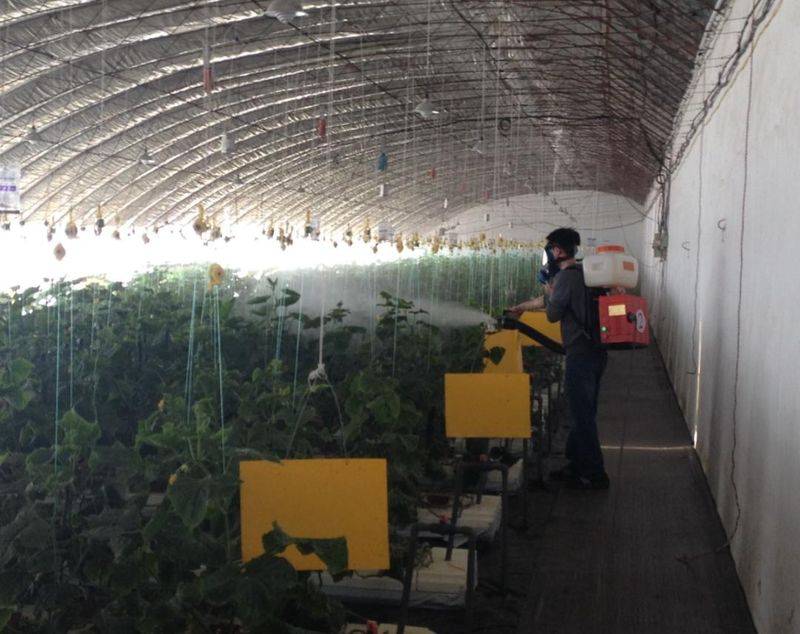
02
Lute vegetables
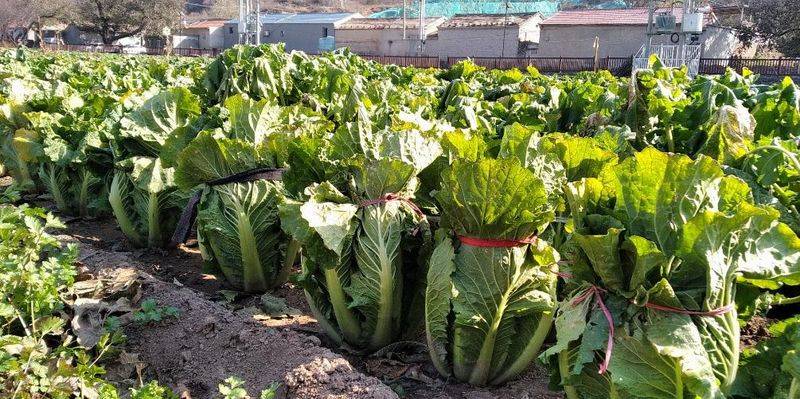
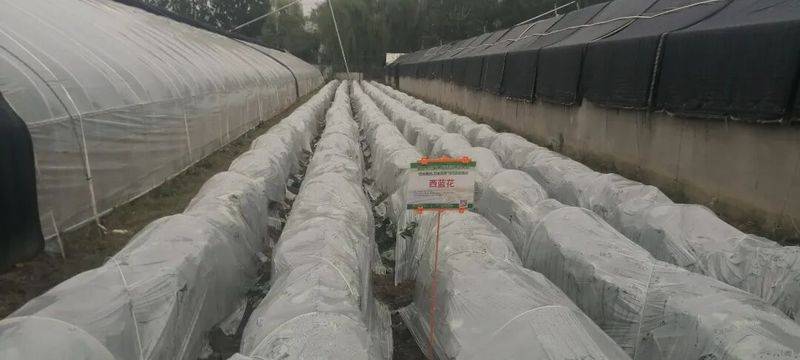
In the near end of the harvest, such as the field, the field, which is dominated by cabbage and radish, has to be marketed in a timely manner; if the market is delayed, attention is to be paid to weather changes, and “beautiful of 6,000 times the fluid + 2 ~ 3 per cent of potassium phosphate” to increase crop tolerance and supplement nutrient demand; in small plots, cabbage may be considered for artificial bunding to increase heat tolerance, promote heart, western blue flower, radish, etc., may be considered for garnishing small caps, with three key points, one being the absence of visible droplets, the other being 10 centimetres below the top, and the third not being too tight。
Source: agricultural and rural directorate, beijing
Agricultural technology extension station, beijing



