As a common taste on the table, tomato is both an appetite for food and a nutritious fruit that not only has a sweet taste of sour and sweet, but also has a beautiful appearance that has always been appreciated。
I. Biology of tomatoes
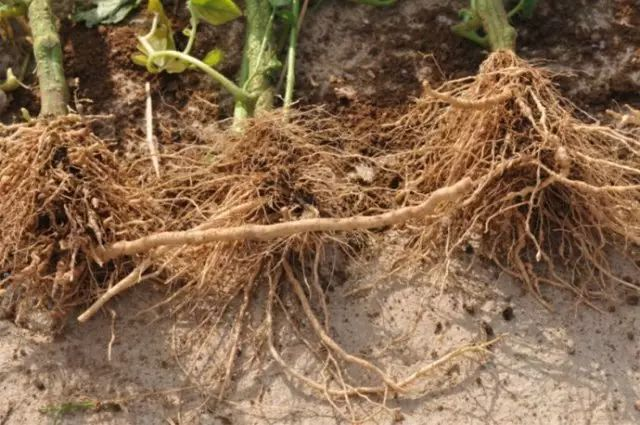
Roots: the roots are strong, widely distributed and deep, with the primary roots of the ferocious period reaching more than 1. 5 metres deep in the soil, and the roots stretching up to 2. 5 metres, most of them in the 30-50 centimetre crop layer. Roots have a strong regenerative capacity and are prone to variable roots on the penis, so that adhesive reproduction is easy to survive。
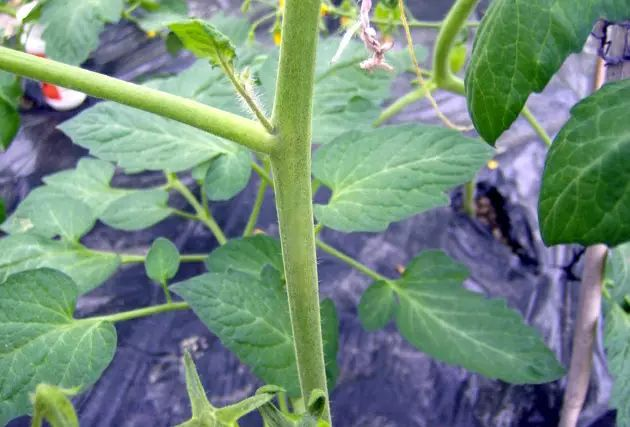
Tube: half-lined penises. The seedlings can stand up at times and need to be mounted at the end of the medium term, with a few species standing up. The branch is strong, so it needs a whole piece. The growth of the tubers is divided into self-capped types and infinite growth types。
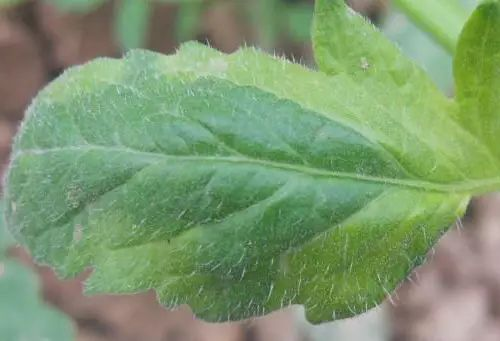
Leaves: molecular leaves, real leaves. The real leaf has hair on its surface, and it has large cracks, drought-resistant leaves. The pre-cooked leaves are small, the late-literate leaves are large, the field is bred deep, the facilities are small, the low-temperature leaves are purple, the insides are covered with high temperatures, the leaves are covered with hair and acretic glands, special odours are distributed, and fewer pests are sequestered。
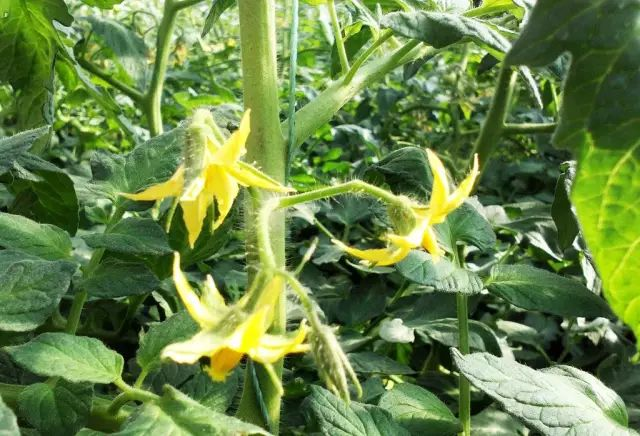
Flowers: the number of flowers in each sequence is typically 5-8, more than 20, and pollinating. Under adverse conditions, especially at low temperatures, they are prone to deformation, deformation or fall. Individual or some varieties can be pollinated under certain conditions, with natural mixing rates of 4-10 per cent。
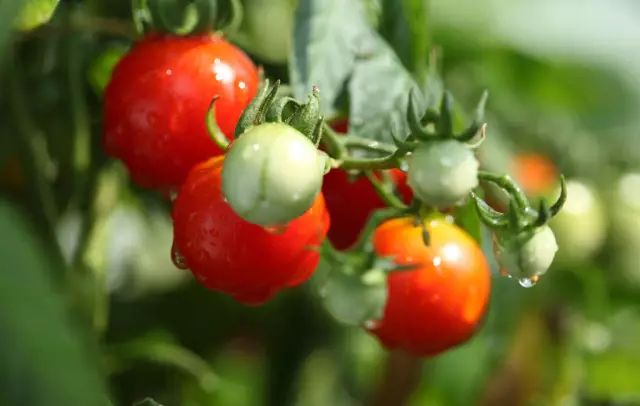
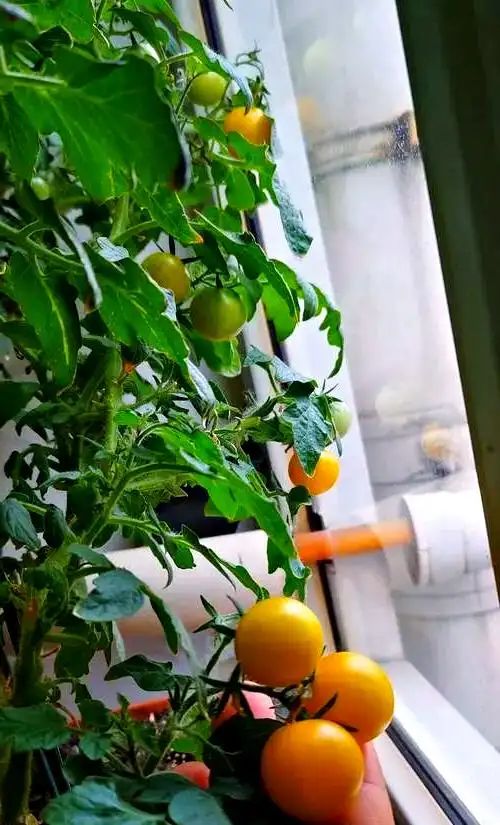
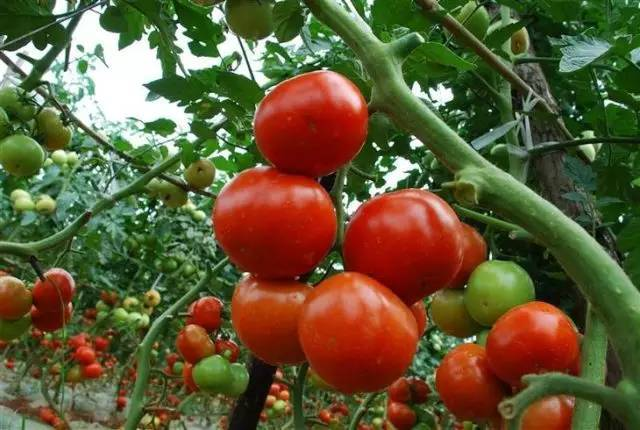
Fruits: the shapes of the fruit are diverse, ranging from sphere to flat, pear to long garden. Fruit colours vary from red, pink, orange, yellow, green, white, etc。
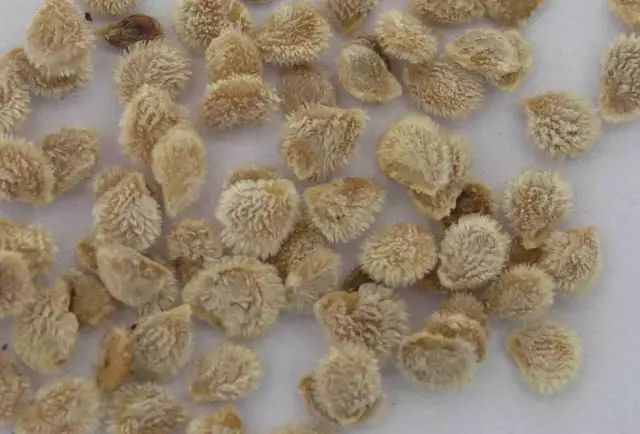
Seeds: kidney, 3 ~ 3. 3 g in thousands, with a life span of 4 ~ 5 years, producing new seeds of between 1 and 2 years。
Ii. The birth cycle of tomatoes
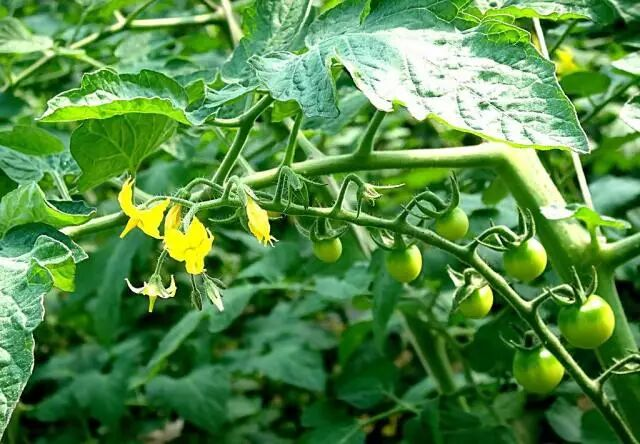
In the tropics, tomatoes are multi-year herbivores, while in the hot and frost areas they are grown as a one-year plant with some staged and cyclical growth, broadly divided into gestation periods, nursery periods, flowering seasons and four outcome periods。
Episode: from seeding to the first leaf, it takes 6-9 days at normal temperatures, and the nutrients required for its growth are supplied by the seeds themselves。
Euphoria period: refers to 45-50 days at normal temperatures from the first leaf to the first bouquet. This stage is a turning point in the transition of tomatoes from a dominant growth of nutrients to an equivalent growth of reproduction and nutrition, directly related to the formation and production of product organs。
The flowering season: the first bouquet is now formed to the first fruit, about 15-30 days. This period, during which fruit and tumble grow at the same time to resolve the conflict between good nutrition and reproductive growth, is a key priority。
Outcome period: 40 to 60 days from the first chord to the end of harvest. In addition to continuing to divide and develop buds, growing nutrients during this period have also been strong, with the appearance of increasing stocks and growing leaves. Thus, the relationship between nutritional growth and reproductive growth is to be regulated at this stage in order to be fully nourished, to be thick, to be thick and to have deep roots, to avoid growth, to prevent flowering and to delay flowering。
Iii. Environmental demand for tomatoes
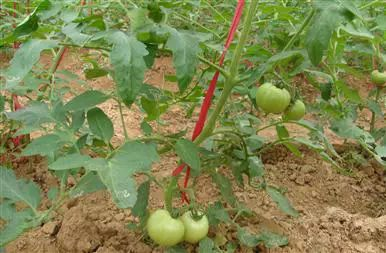
Temperature
Tomatoes are thermogenic vegetables, generally adapted to tomato growth within the temperature range of 15 ~ 35 °c, with the most suitable temperature in the long term being 20 ~ 30 °c. Tomatoes grow at the lowest temperature of 20-23°c and the roots stop when local temperatures fall to 6°c。
Premium age: 20-25°c at maximum temperature and 10-15°c at night. Too high or too low temperatures during seedlings can easily lead to weak seedlings, flower sprouts, stunting, declining quality of flowers, and falling fruit during flowering。
Flowering period: sensitive to temperature reaction, maximum temperature 20-30°c during the day and 15-20°c at night. In the flowering period, when temperatures are low or higher than 30°c, pollen plume and pollen tubes are poorly stretched, fertilized and prone to falling fruit。
Outcome period: temperature 24-26°c during the day and 12-17°c during the night。
Colouring period of fruit: the most suitable temperature is 20-25°c and the colour of over 30°c is not good。
Light
Tomatoes are short-lived solar crops, but most varieties are not strictly required for sunlight and do not require specific light cycles。
Episode: no light。
Precipice: the stringent requirements for light, the delay in splitting the buds due to the lack of light, have led to an increase in the bouquets, a decrease in the number of flowers and a decrease in the quality of the buds。
• flowering period: insufficient light and prone to flowering fruit。
Outcome period: under strong light, with many sitting fruit, large single fruit, low single fruit rate, reduced single fruit weight, and prone to empty and corrosive fruit。
Water
The top leaf of the tomato field is thick, evaporating more strongly, with a evaporation factor of around 800 and more water. However, tomato root is highly developed, water-absorption capacity is strong, water requirements are semi-dry-resistant, and the relative humidity of air is appropriate at 45-50 per cent。
Premium age: faster growth, soil moisture should not be excessive in order to avoid growth and disease, and water injection should be properly controlled。
Before the fruit of the first sequence: the soil is over-watered, giving rise to the growth of the plant, the growth of the roots and the resulting fall flowers。
After the first bouquet swelled: the demand for moisture increased significantly。
Fruit expansion period: 1 to 2 litres per day per tomato, with appropriate watering, depending on soil evaporation, small water draught and 5 to 7 days between fertilization。
Soil
Tomatoes are less stringent for soil requirements, and it is advisable to opt for a deep, well-drained, organically fertile border。
Iv. Technical aspects of tomato cultivation
Seed processing
Sterilization: the selection of appropriate disinfection methods is based on common local conditions, and there are two methods commonly used. The treatment is effective in combating diseases such as ulcer disease and folic disease. 2 sodium phosphate impregnated, with seeds immersed in constant temperature water for 3-4 hours, followed by an appropriate dose of sodium phosphate solution in the clean water to continue immersion for about 20 minutes (at a concentration of 10 per cent) and finally the seed extracted for cleaning, which can effectively combat viral disease。
Drumbs: seeds after disinfection are immersed for another 6-8 hours, then the seeds are purified and given seeding in an environment of 25°c to maintain the appropriate temperature and humidity。
Preparations
Feeding facilities: appropriate nursery facilities are selected according to local seasonal and climatic conditions, and the most common facilities include: solar greenhouses, plastic sheds, greenhouses and hotbeds. In addition, appropriate anti-worm and sun-shield facilities will be installed during the summer and fall。
(b) nutritional home-formulation: factors for planting, such as field type, fertilizers, grass-grain and ash, are configured in accordance with the basic principles of local adaptation and are prepared in proportion to the design requirements for subsequent use。
Seeding
The planting period: the optimal planting period is determined on the basis of local seasonal and climatic conditions and selected seedling indicators。
Seeding methods: more than 70% of seed seed can be sowed after the appearance of white, and seedlings in the summer and fall can be sowed directly with sterile seeds。
The seeding is preceded by the irrigation of sufficient bottom water, which is wet enough to reach more than 10 cm deep in the bed. After full water seepage, a layer of nutrient soil is sowed, the bed is levelled, then the seeds are evenly sowed and then covered with a layer of nutrient soil。
In order to prevent sudden onset diseases, multibacterium and earth must be sowed in the nursery. Winter and spring festivals require a membrane cover on the bed surface and straw cover on summer and fall beds。
Shrimp management
Environmental regulation: temperature: sun and cooling in summer and autumn, while appropriate management methods are applied in winter and spring; light-added measures in winter and spring, and light-covering measures in summer and autumn; and moisture, with sufficient water for saplings, with appropriate water based on seasonal factors, etc。
Saplings: move the seedlings to the nutrients after they have been fully developed. The soil-use programme for trophic conflicts is to mix perfunct soil with cortisol fertilizer at a ratio of 7:3 with appropriate additions to ammonium phosphate, grass-wood ash and polybulcin。
Increased area of nutrients: sapling distances are increased when the number of saplings reaches 3 to 4 pieces, and the gaps in containers are filled with mud and wet and warm。
Fertilizer management: the main tasks of the seeding period are water and fattening, and biostimulants are available when the number of sapling leaves reaches 3. 4。
Refrigeration: in early spring, the day temperature of the seedlings is strictly between 15 and 20°c and at night between 5 and 10°c. During the summer and autumn, sunshield facilities are gradually withdrawn and water is effectively controlled。
(b) growing seedlings: for spring and summer seedlings, the plant is 25 cm high, the tubing is 0. 6 cm thick, and there is a graze. For planting seedlings in the summer and autumn, the plant is 15 cm tall and has a hair length of 0. 4 cm, which is developed within 25 days。
Zhang
Whole area fertilization: base fertilizers are dominated by high-quality, decomposed organic fertilizers, with 2500 to 3000 kg per acre, and are quantified with appropriate weights depending on, inter alia, the maturity of tomato varieties, periods of cultivation, etc。
Per acre, calcium phosphate 25-30 kg per acre, potassium sulphate 15-20 kg, plus about urea 10 kg。
Lately refined varieties are more appropriately controlled for nitrogen fertilizer。
The membrane covers the distribution of nitrogen fertilizer for tomato cultivation and is generally considered appropriate in terms of base and half-tracking。
In addition to phosphorus fertilizers, full layer fertilization can be introduced, so that the fertilizer is evenly mixed with the paddy soil, so that it can collide with soil. Calcium perphosphate is fully mixed with organic fertilizer and is applied in the den to reduce soil fixation of phosphorus. When tomato seedlings are drained into the established den, biostimulants are applied to stabilize the seedlings. In addition, a small amount of boron fat can be applied to sowing roots for normal growth and sugar。
The planting time is 25 days after the planting has been completed and the number of leaves of seedlings is set at five。
Waste management in the field
Fertilizer management is the most important component of tomato growth, and 7-10 days after planting, a combination of watering and acre application of 500 kg of faeces was applied。
When the first fruit starts to swell, it is combined with urea application 10-15 kg. The first fruit is nearing harvest, and the second and third fruit expands, the plant enters active life, chasing about 1,000 kg of manure per acre or fast nitrogen fertilizer, preferably three times in succession, for the purpose of strengthening, preventing early decay and improving the quality of the fruit。
In addition, in the middle and later stages of tomato growth, the growth of the leaves began to slow, with good effects on the growth of the fruits in order to achieve intermediate and later yields and prevent early decay, as well as the spraying of the leaves on the face。
Integrative trim
Tomatoes grow so strongly that they are sprouts at every node of the pole, and every sprouts grow into branches and flowers. If they are left to grow, they result in a sprawl of leaves, a strain of disorder, and a high consumption of nutrients, resulting in a flowering fruit, a smaller shape and a lower yield and quality. As a result, the whole branch, swirling, leafing, etc. Are constantly used to regulate the growth of tomatoes。
Pest control
The most common diseases of tomatoes are early disease, late disease, spongiosis, grey disease, leaf disease, bacterial spot disease, viral disease, dysentery, etc. The main pests are larvae, white ticks, aphids, cotton bells, etc. Attention should be paid to the use of drugs in a timely manner, prevention in particular and integrated management。