


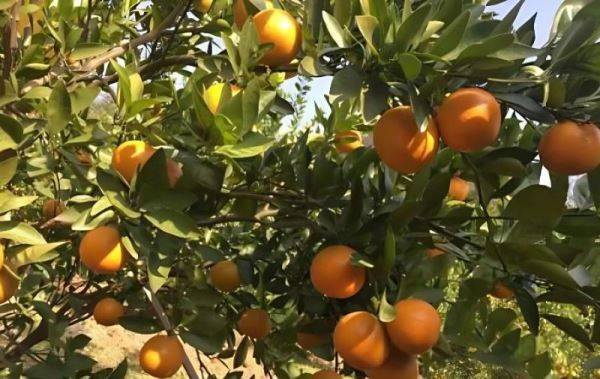
What are the main planting points and management methods in the kyomong
How do you plant it
1. Seasons are important and general planting seasons: mostly in winter, spring and autumn can also be grown, depending on the circumstances (ground preparation), weather, labour, etc.; they are usually freshly ripe for cultivation before the bud, and must be chosen for the season。
2 there are also planting specifications: 2. 5 x 3 m range and 80 ~ 100 acre species, as specified。
3. Methods of cultivation: paddy fields should be sorghum and planting pits. The earth is 30 cm tall and 50 cm wide. Drylands must be laden, fed with base fertilizers, planted with slurry roots and slurryed with root water, after which it should be wet daily to live。
I. Post-plant management
1. Early tree management. Young tree management is mainly based on plastic surgery, and it needs to be noted that in one or two years the tree is laid four times (spring, small stubble, small summer and white tart); in three years the tree (first birth) is laid three times (spring, summer - summer stub, white stub); and in more than four years, the branches are fired two to three times (spring, fall or spring shooting, small piles added in late summer)。
2. Landing methods. At each length of 15 to 20 cm, the top is promoted and the branch is upgraded, with two to three left each, without the subsequent top。
3. Results tree placement. There is a need to focus on the cultivation of high-quality fruit branches, which, in principle, are laid on trees of more than four years ' duration, by the criterion that more than 70 per cent of all orchard branches start to move and can be released. The method is to artificially erase early hair and sporadic new buds and stay early in order to boost the growth of more, more organized and robust, usually mature in november and december。
Ii. Proper application of fertilization in due course
1 young trees (1 - 2 years). Implementation of the principle of hard-working fertilizer. It's three fats (sprouts, fats, greens). The summer greens, winter soils and fertilizer applications, green fertilized soils, and breed soil intensity。
Outcome tree. (c) re-apply the “big cold” (pre-facing) and pre-cooking (pre-facing) fertilizers to supplement the fertilizer, fertilizer and fertilizer. Fertilization should be based on the age of the tree, the size of the canopy and the number of adrenaline fruit. Autumn fertilizers are usually applied at a rate of 0. 5-1 kg per fertilizer and 0. 25-0. 5 kg per fertilizer, depending on the strength of the trees and the number of fruits。
Technology and management methods for kimpon cultivation
I. Gunging technology
1. The whole earth and the rise of earth
This is done by entangling the ground ploughs first, then crushing or erecting earth mounds along the line. The earth is 100 cm wide and 30 to 40 cm tall, and then the earth is extended。
2. Construction of drainage ditches
To construct irrigation and drainage ditches, a level-iii irrigation system must be in place, starting with a deep ditch one year after planting, reaching 40 cm-50 cm deep within three years; the round garden is 50 cm wide and 50 cm-60 cm deep。
3. Sapling requirements
The seedlings come from disease-free parent trees, are strong, have strong trees, have green leaves, are 35 cm tall and above, and have three branches; oranges or cyanide are grown and grown; and there are no quarantine pests and the quality of the tree meets the requirements of gb/t9659。
4. Plantation time
If planting time, it should be in the bud before the next sprouts. Three periods of spring, autumn and winter planting. By month, spring planting was established in february-april, in october-november and winter planting from december to early january。
5. Plantation density and methods
Cultivation density and methods must be understood, with 80 (350 x 230 cm), 100 (330 x 200 cm) or 110 (300 x 200 cm). Cultivation requires the display of the matrimony interface, a stretching of roots, crushing the ground, and showering with water, with new roots within about 20 days。
Ii. Methodology management methodology
1 for larvae management
On the principle of hard work, two fats at a time, and on the day before the bud's onset, around 10 days before it began, fattening was mainly nitrogen fat. They cut themselves and fatten themselves. In spring and summer, water accumulation must be eliminated in a timely manner, drought in the autumn and winter must be irrigated in a timely manner and covered with wet cover; water should be carefully managed after three years of tree ripening in the autumn, so as to contain the winter sprouts and promote the separation of buds。
2. For canopy management
In order to form early and productive head crowns, it is necessary to have a rational intracting and balanced development of the canopy, and to control the top edges by pulling the line and removing the control。
3. Soil management
Use of green bean grass in open areas to protect water from erosion. Weeding covers the conservation of water in the autumn, removes the weeds from the trees and covers them in the early summer and early autumn, after which winter soil is planted in the third year. The hills orchard completes full-scale land conversion within five years of planting. This is done at the end of the autumn more often than in november-march, when the roots are broken and the water for flowers are cut. The method is to expand each of the original dens by a hole of one metre, 0. 5 metres wide and 0. 4 metres deep, with layers of green, earthy or decomposition fertilized fertilizers, wheat curry, etc., and lime. The direction of rotation is expanded once a year, with the cave level expanding year by year。



