How can heavy buildings be grown to combat pests
What are the main illnesses in the heavy buildings? What are the pests in the heavy buildings? How do we deal with the pests in the heavy buildings? A brief introduction is provided below for the information of netizens。
I. Major health prevention
1. Rebuilding causes of corruption
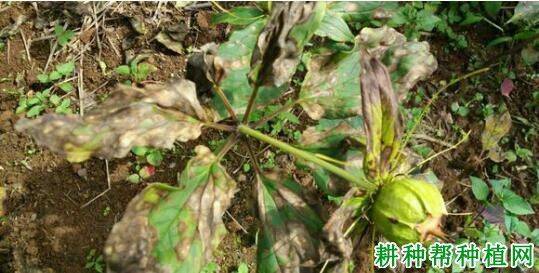
Symptoms of the disease are the decomposition of the roots from the point of infection, the early non-performance of the strain, the gradual erosion of the function of absorbing moisture and nutrients at a later stage as the degree of decomposition of the roots increases, partly on the ground due to the lack of demand for nutrients, and the atrophy of the upper blade of the plant at night when the light is strong and the evaporation is high around noon. Finally, the whole root rots and the earth's plant is decaying and dying. The main causes of morbidity are the high humidity in the fields between june and july, water accumulation, high temperatures and trauma to the roots, and vulnerability to pathogen infections。
Method of prevention and treatment: after seeding in heavy buildings, treatment with a mixture of 200 mg/l and 25 per cent m. V. Powder 250 times more fertilizable; 1 per cent of iron sulfate or ash is disinfected at the onset of the disease。
2. Emergency sickness
Symptoms of the onset of the disease are disease from the stem (and also from the central part of the tuber), first in the form of water stains, rapidly spreading, constant or tanish, rapidly developing, pre-green leaves, and falling from the base of the tuber (or from the central part of the tuber) to the surface, with odour in the parts of the disease. The disease tends to start with only isolated cases of seedlings, with these strains being at the centre of the disease when appropriate, spreading rapidly around them and forming a single area. The causes of morbidity are mainly soil-borne bacteria, which accumulate water。
Methods of prevention and treatment: 300 times the liquid spray of 25% of the mercuric humid powder at the beginning of the disease, or 50% of the more than 500 times the liquid spray, once every seven days, two or three times in a series?; after the outbreak, the strain is removed in a timely manner and the zone is ploughed with 500 times the acid。
3. Heavy building anthrax
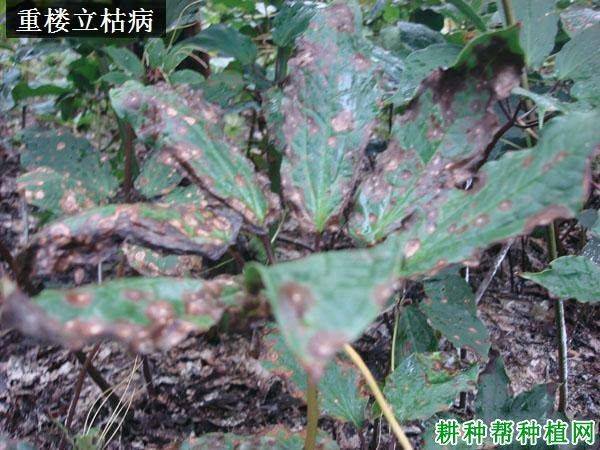
Anthrax is caused by anthrax, which produces spot, near circle or irregular brown spots on the leaves, light brown or grey spots in the centre, black dot entities when they are wet on top, dark edges on the edges of the disease, multiple tracts of the leaves linked in severe cases of disease, yellow deaths, the fungus winters in the sick parts of the soil, temporary invasion of the health strain during the second year of the rainy season, and breaking through the host's surface through the production of spasm plates, causing the effects of wind on their plates, repeated infestation by rain in the fields, high density cultivation, poor drainage, heavy rainfall and years of repeated field disease。
Method of prevention and treatment: a timely elimination of disabled organizations in the field. Annual crop rotations with crops such as walnuts or legumes, with rational planting. In the first three cases, 50% debacterium (trifluorum), 75% enzyme, 80% anthrax filamentary powder, 800 times the fluid, 40% thorium (fluorinated silicate) 3,000 times the fluid, 10% high (polyether sulfide) water dispersible granules, 2000 times the fluid, and 30% trifulin (fluorium) wet powder, 1,000 times the fluid spray control centre strain。
4. Black spots in heavy buildings
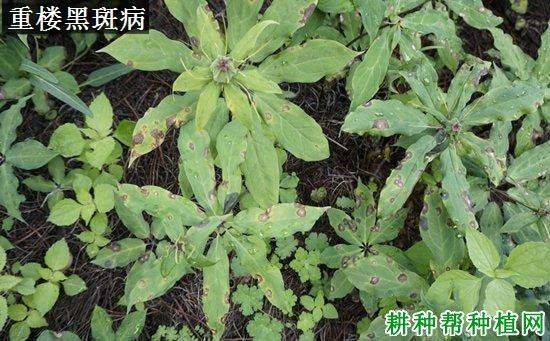
The disease begins at the tip of the leaf or its foundation and produces circular or near-round disease spots, sometimes spreading to the axles, resulting in leaves and decay。
Method of prevention: pay attention to drainage, reducing air moisture and reducing morbidity. In the early stages of the disease, 5 per cent of the fungus water purification agent or 50 per cent of the methyl sulphate sulphate suspension was sprayed。
V. Rebuilding and death
Paraquat is a disease of young babies, with severe cold and heavy rains in the months of april to may, early in the onset of the disease, the seedlings showed yellow water stains on the base and spread around the base, causing the seedlings to decay and in severe cases to die。
Prevention and treatment: improved nursery management with adequate ventilation. At the onset of the disease, 65 per cent of the 100 bacterial wettable powder was sprayed 600 times lessreluent, 60 per cent of the dysentery zinc wettable powder 500 times lessreluent or 62. 2 per cent of the frosty water agent 600 times lessreluent, with an interval of 6 to 10 days and 2 to 3 treatments. 3. Timely removal of disease strains and adjacent soil。
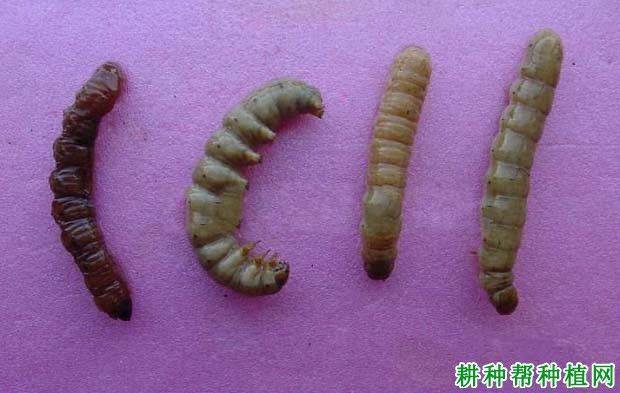
Ii. Heavy building pest control
The main pests currently found in production are gold turtles and tigers. The tiger is the victim of injury, and it eats the roots of the heavy buildings and causes them to fall or become an irregular cavity. The method of control is to sow 20 kg per acre of trichlorfon 50 - 70 grams of fine tidal soil or to be baited with 50% of the thiophos-methyl emulsion 0. 5 kg of fresh leaves and spread 5 kg per acre. The gold turtles bite the blades, causing an engraving, empty hole, and at severe times eating the blades, leaving only the veins. The method of control is to kill 800 to 1,000 times the fluid or 6 per cent of the enemy with an enemy, with one blow in three to five days and three in a row。