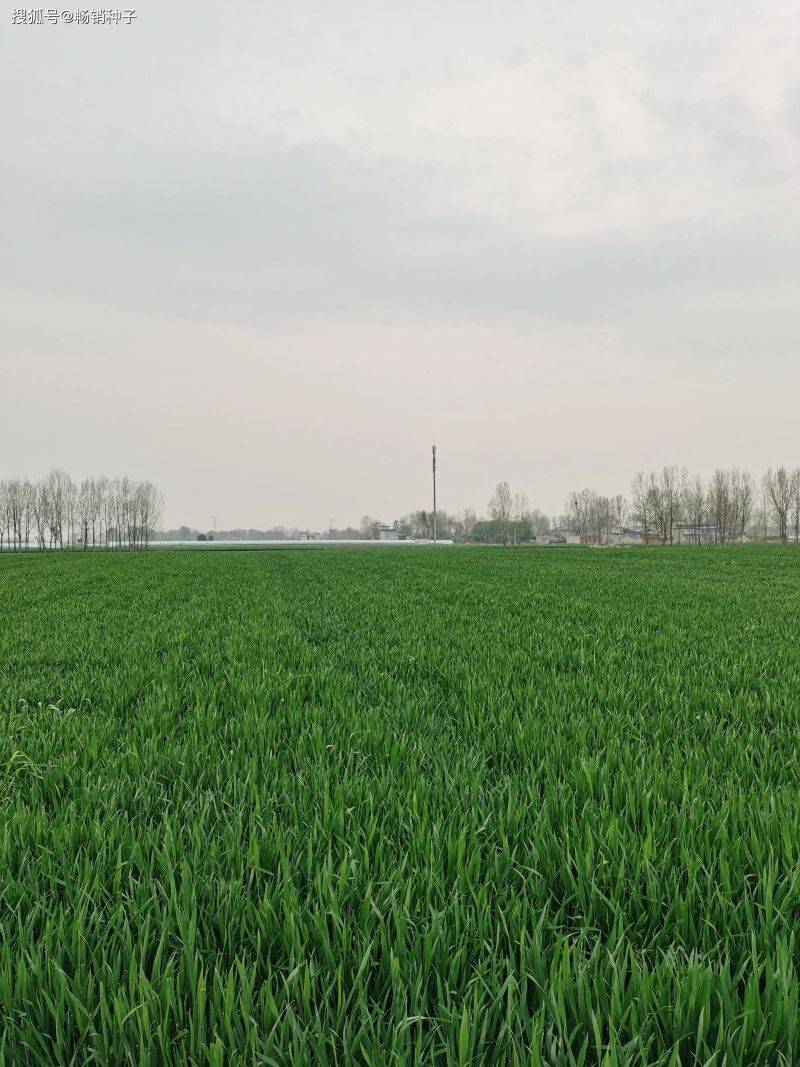
In the autumn of 2024, our city set its target of continuously increasing the large area of single production of food and oil crops, focusing on the potential for increased production of wheat and furthering the implementation of single production upgrading. In order to improve the quality of autumn broadcasts, the main varieties and technologies will be promoted, agronomic integration and application will be enhanced, the quality of silting will be improved and the field will be improved, seeded at the appropriate time, counter-resilient measures will be put in place, new models will be promoted using the “1+6+n” model, innovative service guidance models will be introduced, and the technical guidance for the production of autumn broadcasts will be fully captured, with a view to laying a solid foundation for the fruitful harvest over the next summer。
Optimizing variety layout, highlighting regional advantages
There is a need to scale up the introduction, demonstration and dissemination of good species, to actively promote and promote good quality varieties that are suitable for local cultivation and that meet market demand, to strengthen policy guidance and support, and to promote the development of order farming models, where appropriate, in order to scale up the scale of small-scale production of quality varieties. (c) rationally optimize the layout of the regional varieties, which are mainly concentrated in the lower and middle rivers, and along the rivers and hills, in combination with the cultivation of strong varieties. The medium-sized and strong wheat crop is based on high-yielding and steady-yielding wheat 12 and young-mei 25, and combines the cultivation of jan-mei 23, barley 15, barley 18, with the demonstration of jan-mei 39, lactation 17, barley 77, lactation 13, and the demonstration of jan-mei 33 and nin-mei 13, with the main focus on weak wheat。
I'm going to plant it in the right amount
Improving the quality of seeding is key to ensuring a full seedling and growth and is the basis for achieving the high-yield goal of “shoes, increased grain weight”. It is necessary to catch up with the weather, speed up the fall harvest, move forward early on, and do everything possible to contain late and late air. My city wheat seeding usually ends around mid-november, with the best season on october 25th. On 5 november, seeding was carried in a precise and semi-precision manner, based on the principle of "chip seed " , with a seeding volume of 7. 5 to 10 kg acre, later than the applicable period, with an appropriate increase of 0. 5 to 1 kg per day, up to 12. 5 kg by 15 november, and in december, with the priority given to late-scattered fields, such as yingley 25, which is generally contained within 20 kg, with an appropriate increase depending on the actual situation. At the same time, seedlings need to be adjusted appropriately in the light of factors affecting seedlings and seedlings, such as soil inflammation, slurry restoration and soil mass。
Catch critical technology and improve the quality of the fall
(i) persisting on seeding to prevent scavenging
Soil seedlings are appropriate (with a relative water content of 70-80 per cent) for mechanical operations, for improved land preparation and sowing quality, and for the timely release of seedlings after planting. In the event of a lack of affection, seeding or timely replanting should be carried out in a manner that promotes seedling. When the soil is wet or in the midst of a rainy weather, the principle of “better to rot” is understood, and before seeding is taken, drainage and precipitation measures are taken to create suitable conditions for soil incubation and to avoid scavenger cultivation, resulting in a shortage of seedlings (defunct seedlings) and rigidity. Drought when soil is suitable (relatively 70% - 80%) wheat seeding is controlled at depths of 3 to 4 cm, and paddy wheat is controlled at around 2 cm; it is slightly deeper in drought and slightly lighter in wet. Prevention of deep seeds, seedseeds, bush seeds and improvement of seed quality。
(ii) stifling to improve the quality of the field
The availability and quality of rice silts in the field is a key factor in determining the quality of seeding in wheat. The first is to put in place a piece of grass-ploughing, with the option to use or add a straw-cracking and dispersing device, with 10 cm high and 10 cm long tow to harvest. If the length of the straw shredding is too long or the height of the harvest is too high, a dedicated straw shredder should be used as soon as possible after harvesting (the difficulty of crushing after drying). Second, when the field is of high quality and suitable, it is chosen to be a “deep (or till + drill/swing) + medium-sized sowing machine”, with rice straw swung deep or tilled back to the field, tilling or drowsing the soil to sow, sowing it in mechanically evenly, sowing it in a single-time manner, sowing it at depths of 2 to 3 cm, well controlled at 2 to 4 cm and drought at depths of 3 to 4 cm. Thirdly, the quality of seeding should be improved, and a one-time operation should not be used in the form of rice straw, and a deep-scattered operation should be added to ensure the quality of seeding, and if a one-time operation is to be carried out outside the field, it should be soaked. In the case of soil wetting, this can be done in the form of “boarding + medium-sized large seeding machines” and in the case of soil overwetation in the form of “boarding + small seeding machines”。
(iii) sustained application of base-based fertilizer and rational fertilizer preparation
The first is the application of base-based fertilizer, agronomic measures combined with the application of base-based (floor) fertilizer to sowing, wheat is usually applied 45 per cent of the acre-based compound (mixed) fattening 30 to 40 kg, and the slurrying of large fields is appropriately increased by the application of nitrogen fertilizer; and late and late transmission increases should reduce the use and proportion of nitrogen in base-based fertilizers, as appropriate, to supplement the fertilizer. The second is the early application of urea per acre before winter, which is used for the three-leave per acre urea, which promotes winterization, reduces the application of wax fat or returns to chrissakes, and prevents high growth and discourages the application of fertilisation. Third is the rational handling of nitrogen fertilizer, the subsequent movement of nitrogen fat, the base fat of conventional nitrogen fertilisers, the fertilizer = 6 and 4 and the promotion of double application and increased fertilisation in high-yield fields。
Implementation of counter-resilient measures based on disaster prevention and mitigation
(i) implementation of good seed treatment, prevention of disease and seedlings
Combination not only prevents the occurrence of diseases such as wheat strewnness, stasis and swirling, but also increases seed yield, enhances seed processing of wheat, and selects the appropriate agents for effective seed wrapping and mixing. The amount of blended medicine shall be strictly controlled and overdoses shall be prohibited; seeding shall be done immediately after planting, and shall be readily available and shall be completed on that day. Early seeding of wheat is also available as a control agent (multiple episode) to promote root, hair and seedlings。
(ii) implementation of gavage matching and drainage
“the wheat field is a ravine from seed to harvest”, which is very important for building resilience. It requires the timely opening of the ravine after the sown, the completion of the giraffe, the deepening of the girdles, the girdles, the giraffes, and the connections between them, and the nurturing of deep and dynamic roots. The fields are required to have a gap of 3-4 m, 25 m deep, 40 50 m wide and 30 m deep. The trenches need to be fully connected to the trenches, if conditions are met, and to the extent possible to the trenches. The opener digs into the fields and pays attention to the smooth spilling of the dirt over wheat thaws, the reduction of seed and the protection against freezing of seedlings。
(iii) implementation of mechanical repression and protection against freezing
Repression before planting can be very important, so that seeds and soil can be connected, the earth's seams can be bridged, the temperature protected and the seedlings promoted. Repression by seeders is not of high quality, and it is appropriate to suggest that it be carried out separately. In the event that post-broadcast dampness is not suitable for repression, early repression should also be chosen before winter or early spring in the light of the weather. In the event of a boom, moderate repression can also take place before winter and in the early spring。
(iv) implementation of scientifically sound weed removal and strict control
Chemical weeding should be based on a “predominantly sealed, sealed, scientifically based” strategy, with a focus on sealing herbs and sealing the weeds in time for the pre-sprouts. In the pre-winter season, weeds reach standard fields that are unsealed or less than satisfactory, and after the first cold run, the clear weather of the cold tail is timely, based on the herb phase and the superior herb species, selects the herbs, spray them, and seal them off. Fields that have reached the targets for prevention and treatment of herbs after spring must be warmed at the end of the barley season and at an average daily temperature of 8°c or more (generally from late february to early march) and avoid the use of medicines within five days of the onset of the cold to prevent the occurrence of the cold。
(v) implementation of timely control and protection against corruption
The main measures to prevent reversals include the selection of high-yielding species that are resistant to fattening, dwarves and inverted, the rationalization of basic seedling numbers, the improvement of the quality of the ground, seeding, and the rational application of promotional measures, such as fat water, in order to make individuals strong and to rationalize the group structure. If it is found to be booming, it should be suppressed before winter or early spring, and large groups of fields may be exposed to foliage without repeated spraying by using growth regulators such as short, strong or alkyl or americ acid. High-yielding fields typically use “dualization control” techniques to prevent inversion, i. E. A one-time pericardial spraying of the three leaves, with both strong and growing seedlings, and a one-time spraying before the euphoria, which can significantly improve their resilience and increase the application of late-stage fertilisation and production。
Strengthening technical guidance to ensure that measures are landed
(i) enhanced technical guidance services
A combination of technical strengths, such as the university of the cantons, the formation of expert groups and service guidance teams, ongoing efforts to provide guidance on the sub-segregation, through various forms of training and technical guidance, improved availability of key technologies, proactive and innovative training in technology, new forms of training such as live webcasts, cloud classrooms, remote counselling, etc., combined with traditional approaches such as on-site field mentoring, production of technical material, and paper to ensure that key measures are in place。
(ii) continuous refinement of the “1+6+n” model
Further enriching the “1+6+n” model, continuing to refine the “1+6+n” model in the form and concrete initiatives, upgrading the “6” pilot demonstration slot and role level based on the consolidation of the “1” (the municipal core base), undertaking a full-scale integrated innovation, refinement and extension of the main crop varieties and advanced appropriate technologies, and working to create a city-wide portfolio of high-yielding and productive rice-year rice-years-long rice-years-long rice-year-long rice-year-long rice plume, with a sustained increase in the number and quality of “n”。
(iii) actively implementing super-high-yielding border construction
With the goal of fully integrating financial resources around the 1,500 kg of rice-year-old acre and the increase in the level of single production, research has been carried out to develop complementary policies. Sub-regional efforts have been made to build a high yield of 100 acres of wheat at a sub-regional level, to build more than 3 large areas of wheat in the northern, high mail and lower river areas of jiangdu, and to produce more than 650 kg of targeted acreage, to work for more than 700 kg, to establish more than 2 large areas of wheat acreage along the river, to produce more than 600 kg of targeted acreage, to reach more than 650 kg of wheat, to establish more than 2 areas of the hill, to produce more than 550 kg of wheat, to reach over 600 kg, and to lay a solid foundation for raising the level of rice-year acreasing and single production。
(iv) careful advocacy guidance
Increased advocacy of dominant varieties, thrust technologies, high-quality agricultural techniques and policies for the benefit of farmers, mobilization of the productive motivation of growers, full utilization of the potential for the enhancement of monolithic farming lines, and efforts to improve the availability and coverage of key technology models. Support is provided to a wide range of service providers to provide specialized services around large-scale single-production upgrades, to summarize and promote a number of replicable and easily replicable case studies and mature models, to develop a number of food and oil-scale growers and high-yielding models, to enhance advocacy, and to work towards creating a favourable climate for high-yielding households and high-yielding seasons, with a view to boosting the large-scale single-product balance。