


Germany is situated in the central part of europe, with a temperate climate, a rich water resource, a confluence of large and small rivers, with annual precipitation of 500 to 1,000 mm, and a mild climate, a rich water resource, which provides good natural conditions for agro-pastoral production. In 2016, 1. 67 million hectares of german agricultural land, or about half of the land area of germany, comprised 1,822,000 hectares of agricultural land, 70. 7 per cent of agricultural land, 4. 69 million hectares of grassland, or 28 per cent, and the rest of it was orchards, vineyards, etc。
German agriculture has changed dramatically for over 100 years. In 1950, less than 10 per cent of german income was spent on food and food; in 1950, 5 million people worked on farms in germany, compared to less than 1 million today; employment in agriculture accounted for 38. 2 per cent of total employment in 1900 and fell to 24. 3 per cent in 1950, compared to 706,000 today, or 1. 6 per cent; agricultural GDP also declined from 29 per cent in 1900 to 11. 3 per cent in 1950 and 0. 8 per cent in 2016. In 1900, a farmer could feed four people, while now a farmer could feed 150 people. While agricultural shares are declining, they are very high in economic terms. This is reflected in the fact that there are 750,000 agribusinesses in germany, employing some 4. 5 million employees and generating a value of euro41. 2 billion. The trend towards internationalization of german agribusiness is evident, with one third of food and agricultural production being exported. The average size of german farms is 55. 8 hectares, but the size of east-west is very different. The number of german farms is decreasing year by year, but their size is increasing。
German agriculture is well developed and mechanized, and is one of the largest agricultural producers in the eu. Bioenergy, organic farming, digital agriculture, and agricultural sustainability are currently receiving considerable attention in germany and are growing rapidly。
I. Characteristics of german agricultural development
(i) implementation of the eu common agricultural policy (the common agricultural policy; cap). Currently cap includes two pillars: direct payments and market support, and rural development policy. Within the framework of cap, germany has established, through negotiations in the eu, more than 80 per cent of the agricultural requirements; and germany's direct payment policy for agriculture, taking into account the national context, guarantees the income level of farmers, promotes green agricultural development and enhances the international competitiveness of agriculture. About half of the income of german farmers comes from direct payments。
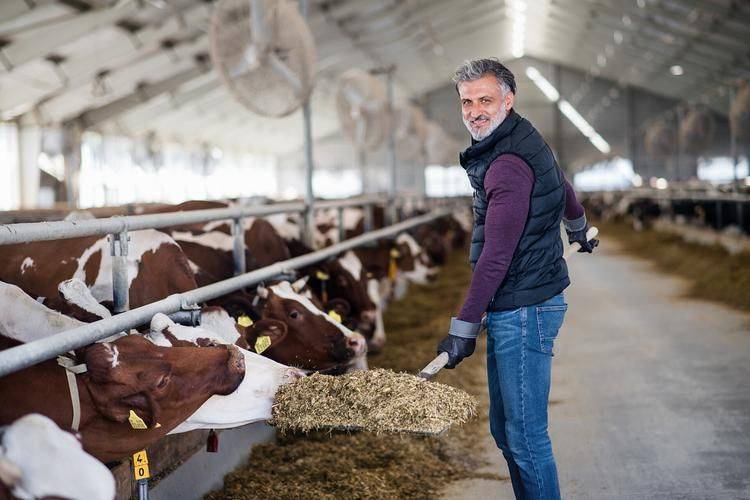
(ii) agricultural industries are dominated by livestock. German rain is abundant, low sunlight, large mountains and marshlands, suitable for pasture or fodder crop production, and well-developed livestock production are important sources of income for most german family farms. Livestock is mainly for milk and meat. In terms of livestock production, german milk and pork production is the highest in the eu, followed only by french beef production and ranked second in the eu. In terms of output, the main ones are milk (44. 3 per cent of the country), pork, beef and wheat, which account for 19. 2 per cent, 17. 7 per cent, 14. 7 per cent and 17. 2 per cent of the eu, respectively。
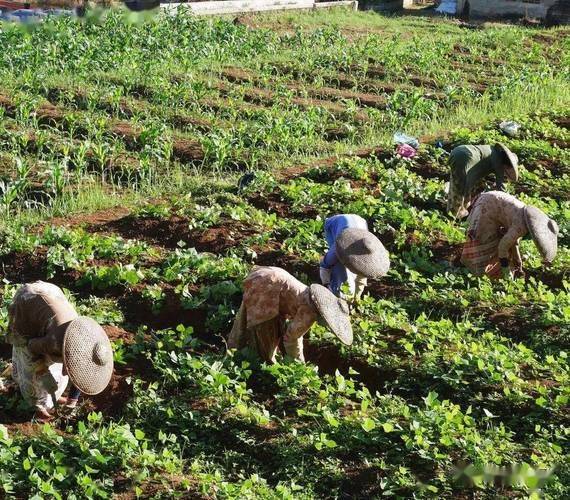
(iii) growing industries are well developed. German crops such as black wheat, barley, oilseeds, potatoes and beer flowers are among the highest in the eu. In 2015, germany planted 6. 52 million hectares of grain, yielding 48. 9 million tons, about 16 per cent of total eu production, after france. German grape cultivation has a long history. The upper rhine, the mid-range and the regions of the rivers mein, nica, the lower morsere and the upper elbe are well-known grape-producing areas. Grape cultivation in 2017 was 103,000 hectares and wine production was 8 million litres, the fourth highest in the eu (after italy, france and spain). The largest area cultivated was the commander of white grapes mine (riesling)。
(iv) the business model is dominated by small and medium-sized family farms. The average size of small and medium-sized family farms is 10 to 50 hectares, and 70 per cent of businesses operate on less than 50 hectares. As agricultural productivity and science and technology levels have increased, the number of farms has been decreasing and expanding through continuous consolidation. The number of agricultural enterprises in the country dropped from 389,000 in 2005 to 280,000 in 2013, and is decreasing by 1. 6 per cent per year。
(v) a high level of specialization among practitioners. All german farmers are licensed to take up employment with a minimum of three years of vocational training. Statistics show that 69 per cent of managers of agricultural enterprises have received vocational education, of which 59 per cent have advanced vocational education and 31 per cent have secondary vocational education; 22 per cent have a professional qualification or teacher's certificate。
(vi) high level of mechanization of agriculture. Germany is the world's largest exporter of agricultural machinery, as well as the largest producer of agricultural machinery and the second largest consumer in western europe. The value of the machine industry is about 10 per cent of the world's total. The western european countries accounted for about one quarter of the total, with a export rate of 74 per cent. Advantage agricultural machines are mainly harvesters, green feed machines, bundles, plant protection machines, sowing machines, etc. Agricultural mechanization is very high, from seeding to harvesting。
(vii) significant development of organic agriculture. Due to the importance attached to food safety, organic agriculture in germany is fast. Germany is the largest market for organic food consumption in europe, where the value of organic food consumption is more than half the value of organic food produced or imported in europe and is growing at a rate of over 10 per cent per year。
In 2016, the area under organic farming in germany increased significantly to 1. 25 million hectares, an increase of 14. 9 per cent over the previous year, representing 7. 5 per cent of the country's agricultural land; the number of organic farms grew to 27132, an increase of 9. 6 per cent over the previous year (compared with 7353 in 1996). Both are the highest in history. At the same time, the number of organic product processing enterprises increased by 2 per cent to 9499. There are currently 41,200 enterprises operating in organic products, an increase of 7. 7 per cent over the previous year。
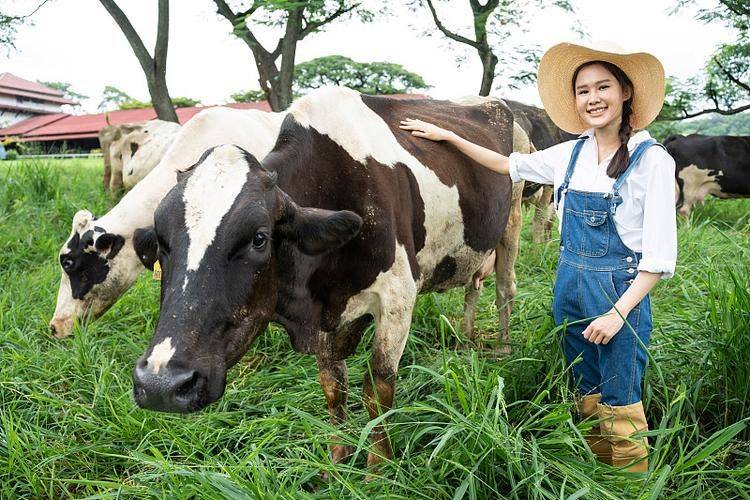
In addition to conventional agriculture, organic agriculture has become an important pillar of the german agricultural and food economy. The objective of organic agriculture development in germany is to use 20 per cent of agricultural land for ecological cultivation to meet the growing consumer demand for organic food in the country。
(viii) fisheries are dominated by capture fisheries. Ninety per cent of german fisheries are marine. The north sea is the most important fishing area in germany. Germany's catch in the north-east atlantic, which accounts for about 90 per cent of total catch, has a significant impact on the stability of german fisheries. Inland farming is dominated by salmon, trout and carp。
(ix) high forest cover. Germany attaches great importance to forestry. Germany is the most forest-rich country in the eu, with a total forest area of 1. 1 million hectares and a forest cover of 31 per cent。
(x) strong agricultural exports. Germany is the third largest exporter of agricultural and food products in the world. Germany's food exports account for one third of its total production, and the food economy generates one third of its exports. Agriculture and food exports have created employment and economic prosperity in rural areas, providing about 320,000 jobs。
In 2016, german agricultural exports amounted to 70. 5 billion euros, for the first time exceeding 70 billion, a record high of 5. 8 per cent of total exports. Agricultural imports amounted to euro77. 1 billion, or 8 per cent of total imports. Germany is a net importer of agricultural products. The agricultural products of which germany has a more obvious export advantage are dairy and baked foods. The main agricultural imports are fish, fruit and vegetables, alcoholic beverages and coffee, tea and tea; the imports of other major agricultural products are similar。
Seventy-eight per cent of german imports came from eu member states and 77 per cent of exports went to eu member states, mainly for duty-free, transport and cost-free reasons. Its trading partners are mainly the netherlands, france and italy。
Ii. Sino-german agricultural cooperation
(i) cooperative mechanisms. In october 2014, the first chinese-german ministerial dialogue was held during the third chinese-german government consultation, during which the minister of agriculture, han chang quan, formally established a ministerial dialogue mechanism (3 to date). This marked the establishment of a cross-cutting communication mechanism between the two parties at the ministerial level, the chinese-german agricultural board (established in 2006) and the directorate-level working group (established in 1981) at the ministerial level。
(ii) china-german agricultural centre cooperation platform. The chinese-german agricultural centre is the only global bilateral agricultural centre established by the german ministry of agriculture abroad jointly with partner countries, and the only bilateral agricultural centre established by the chinese ministry of agriculture and partner countries in china. In march 2014, during the visit of president xi jinping to germany, the ministries of agriculture of the two countries signed a framework agreement for the establishment of a “chinese-german agricultural centre” in china, aimed at consolidating resources and jointly building a unified platform for agricultural cooperation in china. In march 2015, the chinese-german agricultural centre was officially opened, with its headquarters in beijing, and was jointly operated by the centre for foreign economic cooperation of the ministry of agriculture of china and the german agency for technical cooperation, respectively, entrusted by the ministries of agriculture of the two countries. In january 2017, the ministers of agriculture of the two countries jointly issued a joint statement on the extension of the centre to october 2020。
In november 2017, the third china-german agricultural cooperation project exchange was held in kyoto. The meeting provided a systematic and comprehensive overview of projects under the umbrella of the mid-german agricultural centre. Over the past three years, the activities of the centre for chinese-german agriculture in a number of areas, including policy dialogue, business exchanges, academic exchanges and demonstration of technology, have effectively contributed to the practical development of chinese-german agricultural cooperation. In the area of policy dialogue, key practical hotspots for the development of the “three farmers” are selected each year, through exchange of expert visits and extensive in-depth discussions and exchanges, and through chinese-german agricultural policy dialogues, resulting in policy reports and policy recommendations for policymakers. In the area of vocational education and training for farmers, three successive projects have been carried out to build the capacity of young mid-germans in agricultural practical skills, a european study tour for organic agricultural farmers and the establishment of a vocational education and training network for chinese-german agriculture. In the area of scientific dialogue, seminars on integrated management of the chinese-german fin-flyed fruit fly, seminars on “organic agriculture”, memorandums of understanding on cooperation between the chinese agricultural institute and thünen-institute, the establishment of a database of experts, projects and research institutions, the holding of a seminar on “food and nutrition — strategies and research”, etc. In addition, a series of activities have been carried out, including a dialogue of chinese-german agri-food enterprises and an open day for demonstration projects on chinese-german crop production and agricultural technology。
There is greater potential for cooperation in agriculture, technology development, agro-machinery, breeding combinations, land power, environment and landscape protection。
(iii) trade in chinese-german agricultural products. In 2016, chinese-german agricultural trade totalled $3. 9 billion, an increase of 12. 15 per cent over the same period. Of this amount, i exported $1. 72 billion of agricultural products to germany, a 2. 87 per cent decrease over the same period, and imported agricultural products from germany of $2. 18 billion, an increase of 31. 76 per cent over the same period. Of these, my top four agricultural exports to germany are: aquatic products (3/4 of cod), livestock products (70 per cent of which are intestinal clothing), vegetables (garine, mushrooms, mackerel, etc.) and nuts (pines and white melons); my main imports from germany are livestock products (mainly pork, pork and powdered milk) and drinks (80 per cent of beer)。



