


At the beginning of 2016, staff of the twin attacks offices at the municipal level visited the zhang family's maushan peaches growing professional cooperative to hear from the head of the cooperative and the members of the cooperative about the development results of the cooperative, the difficulties it faces and the solutions it addresses。
I. Development results of professional cooperatives
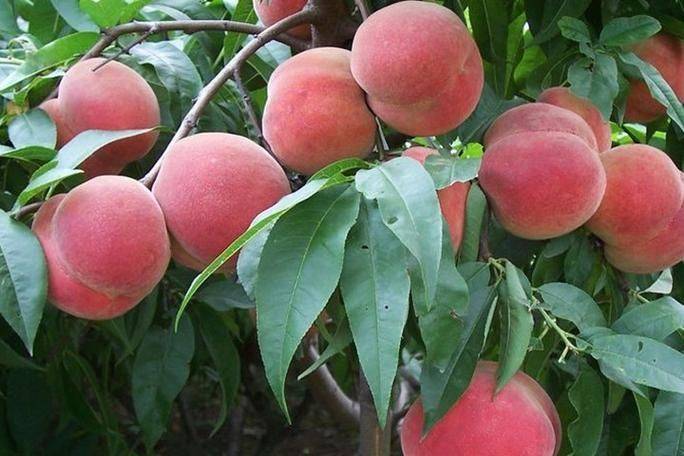
The zhang jiahang mau shan peaching professional cooperative, a relatively early industrial development in urban areas, was established in the context of a successful industrial restructuring of the village of chang mo shan in 1994 and diversification, but found that peaches were suitable for local development in the field, which was successfully tested in 1998, started in 2008 and was officially established in february 2009, and was named the provincial model society for professional cooperatives for practical farmers by the provincial council and the provincial government in 2011. The cooperative was founded in a community-based manner, with legal representatives acting both as sponsors of the cooperative and as managers of village-level organizations. At the same time, it developed along the lines of village-scale development. The village council provided support for construction services around the development needs of the cooperative. The starting point was the establishment of an overall objective around the idea of the “extreme spears” — the establishment of peach blossoms, poachers, peach nuts, poachers, cucumbers, etc. — and coordinated development. The cooperative now has 10 full members and, by raising $130,000, becomes the original shareholder of the cooperative. Over 96 per cent of the villagers of chang mo shan were enrolled. The enrolment rate of growers is 100 per cent. The cooperative began with 780 acres grown by its members, producing 350 tons of fresh peaches per year and earning 1. 7 million yuan in sales. After seven years of development, the average acre income and per capita income from cultivation have made significant progress. At present, zhang's maushan peaches farming professional co-operative has grown to 2,500 acres, with 1,300 tons of peaches produced in 2015 at a value of 7. 5 million yuan, with average acre production (in terms of area per acre per year) ranging from 0. 55 to 0. 6 million yuan, with a per capita income of 145,000 yuan。
The cooperative forms a city-wide development pattern driven by radiation at the centre of mount everest. The strategy of “rebuilding a mau shan” has been implemented in the mau shan area, which is linked to the water of the mau mountain, and the second phase of the 300 acres of walnut cultivation project is being implemented through the flow of more than 50 farmers and villagers' collective land, which has led to the establishment of a professional cooperative of zhang jia ominshan fruit farmers, whose members are currently investing nearly $3 million in the production of 150 acres of fresh peach-rich slices, along with the eco-farming of pigs and small pottery. In the village of nookang, the village of aoi and the village of pao, which are also linked to the mountains, hundreds of acres of peaches have been developed and professional cooperatives have been established. In the area of yongjong, yong jia, and 100 villages, the size of which has grown over the past three years, the size of the property has grown to thousands of acres, with a relatively large number of growing sites in sang-sik, tzuli and wuyung, such as near 1,000 acres in the village of south samsai, the village of nakang, the village of kambashi, the village of luang, the village of san zheng, the village of qinglong creek, the village of liu zhang qiangang, and the village of chen xiaomong, the village of san zhang zhang zhang zhang qi, the city is expected to grow more than 15,000 acres for almost two years。
In recent years, at least 1,000 people visit the cooperative each year for study and learning purposes, through support training courses. The cooperative also organizes regular or occasional training activities for its members, engages experts in field lectures and visits to the country's famous peach-producing areas. Members of the cooperative, such as pingya and chengdu springs, which have the names of the country's three country's peaches, have also organized exchanges of experiences with each other at the radiation-enabled bases. For example, activities such as the live interactive study of the quetzuan gardens management in shei jia yuk po village in the ning ding district have contributed to the upgrading of farming techniques in the mau mountain peach growing professional co-operatives, as well as increased confidence in industrial restructuring among a large number of farmers ' friends who have come to study locally and have embarked on the path of fresh peach industrial development。
In recent years, the development of the peach industry has resulted in the optimization and transformation of the entrepreneurial path of the villagers and members of the cooperative in the village of long mauyama, with more than 50,000 visitors per year to peach blossoms and peach gardens alone, as well as activities to harvest fresh peach fruits, which have expanded the entrepreneurial position of fruit farmers to include catering, accommodation, etc., and increased income generation. With the gradual improvement of the infrastructure of cooperatives, it will be beneficial for members to develop industries other than peaches, optimize the industrial structure, increase employment and increase farmers ' incomes。
Ii. Possible issues
While the mau mau pea industry has led to the development of rural tourism, there are pressing problems in development:
(i) varieties are mixed and single varieties do not have the size. The current basic size of the full membership of the cooperative is widespread, with single-member households producing on their own and having more than three varieties per household, some of which have no relative production, and, while meeting the market requirements of zhang's tourist territories, the situation of insufficient supply of goods to the off-site market, such as the current availability of single items in changsha, cannot be organized in large and medium cities around guangdong and chongqing. Owing to the gradual expansion of the area under cultivation, it is expected that internal and external drought will occur in the next two to three years, and that its development will discourage fruit farmers and constrain the construction of new socialist villages in the region。
(ii) science and technology training is weak and brand competitiveness cannot be highlighted. One is that the current membership structure of cooperatives is dominated by middle-aged older persons, with an average age of about 58 years, members ' own cultural background and weak capacity to be trained to absorb, affecting the full implementation of scientific cultivation. The second is that cooperatives are at an early stage of development, with limited funding sources and difficulties in rural mountainous areas, transport, catering, accommodation, etc., which result in higher costs of training and the inability to hire highly qualified specialists and professors to direct production. Thirdly, there is a vacuum in technological research, and there are many processed products used by peach trees, such as flowers that can be used for tea, medicine, beauty, fruit and fruit, and rotten peaches that can be used for peaching, which is dead, and defunct trunk branches that can be used for handicrafts。
(iii) the poor geographical location of cooperatives and the lag in infrastructure development. The funds raised by cooperatives are largely used for infrastructure development, such as roads, water, etc., and there are still large gaps in funding, such as physical control and the deployment of refrigerated vehicles, fruit selection facilities, etc。
(iv) lack of capacity in cooperative management. Co-operatives are currently a model for members to benefit from, and are generally characterized by a low level of staff culture, which is not adapted to the needs of internet+ mass entrepreneurship and mass innovation, in particular a serious shortage of high-level management of cooperatives and marketing brokers。
(v) cooperative-led effects are less visible. Despite the rapid growth of the area under cultivation, led by cooperatives, it is a form of primitive, low-level and blind development, lack of mastery of peaching techniques, poor knowledge of market conditions, low levels of development, low levels of land circulation, precision orchards and size, low levels of access to the industry by owners of enterprises with capital, and a low level of compatibility with government-supported industries, resulting in a lack of natural momentum for the development of orchards, which has led to the urgent need for a fundamental reform。
Iii. Responses to difficult problems
(i) responses to infrastructure bottlenecks
First, the strengthening of infrastructure, such as roads, water, electricity and orchards, is a key constraint to the development of the peach industry, and demand is high. Huang tao, head of the shanghai cooperation organization, suggested that it should be addressed through cooperative applications, government-led organization funding and project development support。
The second is to address the issue of the acquisition of storage equipment, physical control equipment, transport equipment and fruit field equipment, the construction of marketing sites and the construction of farm houses. Huang tao recommends that contracts be made in the form of awards, cooperatives are committed to building and the government is committed to supporting them。
Each cooperative aspires to achieve branding, but many are unable to do so for reasons such as premature conditions, and the product cannot be branded to meet market demand。
(ii) response to branding operations
One is issues such as trademarks, green, organic food certification, which find it easy to obtain a certificate, but it is difficult to get a market recognition. Therefore, owners recommend market-oriented mechanisms, evaluation incentives, consumer supervision and regulation in the business and food security sectors, and incentives for doing well and meeting market requirements to influence markets。
The second is the exclusive marketing and marketing of shop-based businesses, which are invested in such activities, but whose impact on the market is evident in the promotion of branding and its impact on the brand. This is a problem that cooperatives cannot manage to solve。
(iii) measures to improve quality production
Improving the quality of peach products is the most critical element in the production process, and many of the fruit farmers have worked hard, applied too much fertilizers and used banned pesticides, causing consumers to suffer. The solution to this problem is not simply a question of the political thinking of cooperatives as a fruit farmer, but rather the establishment of risk protection mechanisms, the strengthening of technical guidance, the safeguarding of consumer interests, the safeguarding of the basic interests of cooperative members, and the introduction of marketing incentives such as peaches to gradually improve quality production by resolving contradictions and difficulties in order to promote greater economic efficiency in the business of the professional peach-growing cooperatives throughout the city, bringing the vast majority of fruit farmers out of poverty and making them rich and able to fully build a small and healthy society。



