


Save the leaves and fatten them
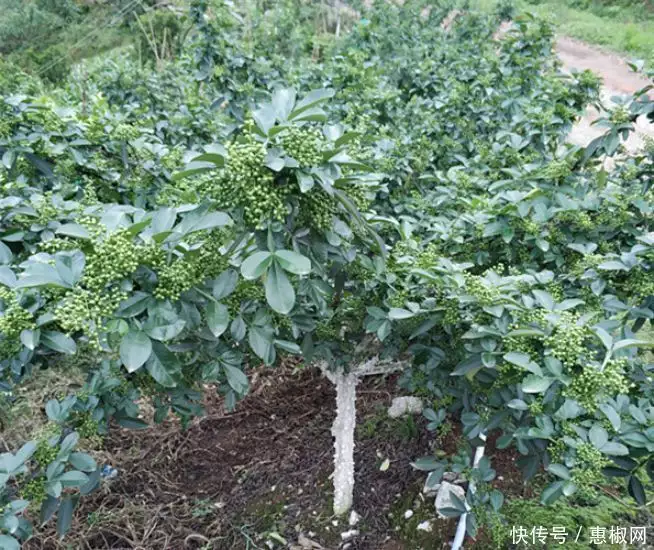
Once flowers are blooming, the ability to produce high-quality peppers, and the availability of high-yielding ones, is very important for the protection of the leaves of the year. In the last year, the plant trees accumulated and, after flowering, long leaves and fresh hairs, were almost consumed between late april and early may, they entered the nutrient conversion period. The so-called nutrition conversion period is the conversion of the previous year's stock of nutrients to the current year's nutrition. Nutrition in that year was derived from the light co-operation of the leaves, so that the protection of the leaves would ensure the normal development of the fruits of the year。
This year's fertilizers are the basis for production next year. Cultivation requires an adequate supply of nutrients, and it is essential to catch up at the right time, but it is more critical than in the case of fall-based fertilizer. After autumn, the precipitous fusion of precipitous leaves peaked, and the earlier the application of base fertilizers increased the number of unnourished nutrients converted into organic nutrients, providing for the expansion of fruits and the separation of buds. Growing up in the age group, over-consumption of pepper trees and under-application of fertilizers in the middle of the year have made it difficult to form buds, with no production in the following year. Thus, in the management of the paprika tree in the autumn, the protection of leaf blades and the early application of base fertilizers is a guarantee of production in the current year and a basis for production in the following year。

Discovery: old people who lived for 85 years, not by exercise and sleep, but by "it."
Musical organisms advertising x
The roots are trimmed to boost the tree
The root here is trimmed, not by a direct shear, but by cutting some of the roots through fertilizer. Appropriate root shearing can also serve to enhance the position of trees, especially the weak old trees, with greater emphasis on root shearing. The paprika roots are trimmed in a timely and appropriate amount and can recover and even exceed the growth of the original root system in the short term. The dynamism of the whole system can be greatly enhanced by the formation of a large number of new embedding roots。
Autumn-based fertilizer-induced break-ups, due to the rapid re-emergence of new roots at high temperatures, do not affect the whole tree, but can inhibit autumn growth. If the above-ground leaves are intact and there are enough photolytic products to be delivered to the root, they will provide adequate nutritional supplies for the recovery of the wounds and the occurrence of new roots, quickly rejuvenation the roots and increase the absorptive capacity for the nutrition of minerals such as calcium and phosphorus. Roots have a storage function, with a large number of new roots being produced, which can increase the “stories” of the nutrient reserves of the tree body, but do not promote the fertilization of the roots of the spring, which can waste the nutrients that are stored。
No water, no trees, no light
A moderate water supply is the basis for sustaining tree life and yielding. To the extent that it adapts to the biological properties of the tree, the water is watered and the water is controlled. It is difficult to obtain proper water because of the inadequate water conditions in most precipitous areas, and it is therefore wrong to expect that, once the water is seized, the pelicans are used to the big water and the practice is expected to be saturated at once. Overwatering during the growing season is one of the main causes of the growing branches。
The solution to the problem of light conditions, which is conducive to high productivity and steady production, has been emphasized for many years by the apricot farmers, who have been able to fix the problem of light. With regard to light and moisture, in accordance with the “twenty-eight law”, inputs for the application of fertilizers account for only 20 per cent of the contribution of pepper trees, with 80 per cent of the contribution coming from photocooperative uses. Failure to address the problem of light is tantamount to wasting non-costed natural resources。
Room tremors, little touch of two things, a lot of people can't control it
. Advertising x
The leaves grow from the roots, the roots grow from the leaves
The roots of the flowers are closely related to the leaves, and the root causes can be found in various diseases such as the leaves on the leaves, the yellow leaves, the focal leaves and the falling leaves. The symptoms on the leaves, for example, are charred on the edge, which must be the root of the ground. Thus, the most fundamental approach to dealing with foe diseases is to provide a good growth and development environment for root systems. The roots are strong and the ability to absorb nutrients is strong, and leaves diseases are rare or non-existent. The root system is provided with a good growth and development environment, which in essence addresses soil physicochemicality, with rational fertilization being the most immediate means of addressing soil physicogenicity. As a result, organic, inorganic and biobacterium combinations are promoted for fertilisation in the ground, the longer it lasts, the more serious the damage to the soil, and the greater input of organic fertilisation, the greater the use of biobacterium is the direction of fertilisation in the ground。
The roots of growth require nutrient consumption, which is derived mainly from the light co-operation of leaves. The two-stage exchange capacity between the long branches and the roots is strongest in the branches of the paprika tree, and the optics of the long branches contribute most to the roots. When the tree does not grow long, the roots are stunted and the tree is weakened. It is therefore not a good thing that it is necessary to maintain around 10 per cent of the long strips on the trees。



