


It's not easy. It's famous chinese medicine. Many people see its value and want to plant it themselves. However, it is possible to find its temper, that is, the conditions for planting, and to know the right way. Now we're just going to talk。
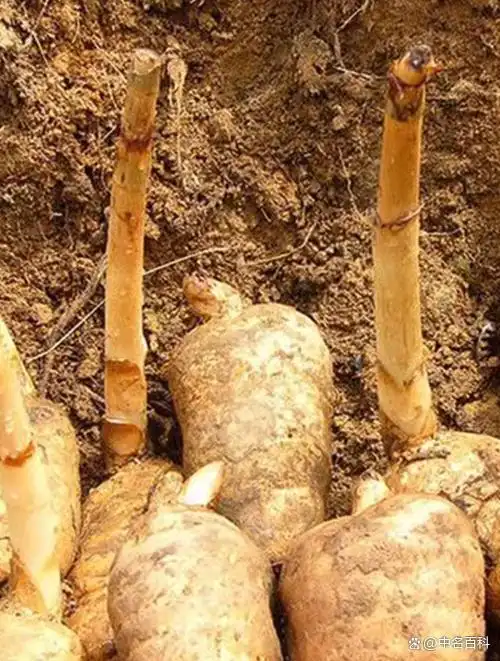
Conditions for the cultivation of tianma
Climate conditions
Temperature: teen mit prefers a cool climate, with stricter temperature requirements. The demand for temperature varies from stage to stage during the growth cycle of the avalanche. During the hibernation period, which is winter, it can withstand cold temperatures, generally - at about -5°c, but can freeze if it is under -10°c for a long period. By spring, the temperature rises to 10 - 12°c, and the tumbles start to grow; 15 - 25°c is the most suitable temperature for the growth of tumbles, which grow rapidly and accumulate more nutrients. If the temperature exceeds 30 °c, the growth of cynics is inhibited and may even stop。
Humidity: synthetic growth requires a wet environment, but not too wet. Soil moisture is maintained at 50-60%. If the humidity is too low, the plume loses its water dryness and affects growth; the moisture is too high and the soil accumulates water, which can cause diseases such as root decay and decomposition. As in some mountainous regions, the air is relatively wet, and with proper drainage, it is quite suitable for tima to grow。
Soil conditions
Quality: the plaster is suitable for growth in abated, ventilated and well drained soil. The sandy border is a good option, which is larger, air-transmitting, and allows the root to breathe. A sticky soil can't do it, it's easy to tie, it's bad for air and it's hard to grow in。
Ph values range from 5. 5 - 6. 5. Perric acid or alkaline soils affect the absorption of cynic nutrients, which in turn affects their growth。
Light conditions: teenagers are different from plants in general, they are free of chlorophyll and cannot be used for photocooperative purposes and therefore do not require a high level of light. Throughout the growth of cynics, there is basically no need for direct light. Especially in the summer, strong direct light can increase the temperature of the soil, and water evaporates too fast, to the detriment of the growth of the sis. It is better to choose where there are certain shades, such as under the forest, in the back of the mountains, when planting sis。
The method of cultivation
(b) selection: the gestational species have white hair, rice, etc. As the main species used to produce pheasants, white plasters, which are fresh, full, disease-free and non-mechanical, weighs about 10 - 20 grams. Mimma, although small, has a strong reproductive capacity and can also be used to scale up cultivation。
Preparation of fungus: temosat is indistinguishable from honey circulus, which can provide nutrients for gestation. The fungus are generally selected for tree species such as shellwork, lumber, etc. Cut the selected trees into 60 - 80 centimetres long and cut a fish trap every 10 - 15 centimetres deep into the wood. Then you put the cut-off bacteria in the cold ventilator for 10 to 15 days, so that the wound heals and is vaccinated against the meringue. At the time of the inoculation, the fungus species are spread evenly at the fish table of the fungus, and the fungus are stacked up, covered with plastic sheeting, at 20 - 25°c, with a humidity of 60 - 70%, approximately 40 - 50 days, so that the fungus can grow well on the fungus, which is then used。
Methods of cultivation
Cave planting: 30 - 40 centimetres deep and 60 - 80 centimetres wide in selected plantations. A layer of 5 - 10 centimetres of corrosive soil is laid at the bottom of the cave, followed by a layer of treated bacteria, with an interval of 2 - 3 centimetres between the bacteria. Placing of vasectomy at the mouth and at both ends of the fungus, the seedling shall be evenly placed and the bud shall be raised. After planting the vasectomy, a layer of 5 - 10 centimetres of corrosive soil is covered in the fungus, which is light-pressed, and is eventually covered with leaves or grass, which acts as a wetting and shade。
Box planting: if it is indoor or in limited condition, it may be used. 60 - 80 centimetres, 40 - 50 centimetres wide, 30 - 40 centimetres high. On the bottom of the wooden box is 5 - 10 centimetres of corrosive soil, which is then, like a cave-plant, plastered with fungus, seeding, then covering the corrosive soil, and finally covering leaves or grass。
Field management
Temperature management: temperatures are generally more appropriate for the growth of cynics in spring and autumn. But in the summer heat, you have to take measures to cool it. A sunnet could be built around the planting grounds to reduce sunlight and water could be spilled around the planting grounds or wooden boxes to remove heat through evaporation. In the winter, if the temperature is too low, it must be kept warm, for example by covering the field with a thick grass curtain or by raising the temperature around the den。
Water management: water is watered according to weather and soil moisture. In times of drought, water must be poured in time to keep the soil wet, but water cannot be accumulated. The water can be sprayed in a way that allows the water to penetrate the soil evenly. In the event of a rainy season, drainage is done to prevent the planting of water. A drain can be dug around the plantation and rain can be drained in time。
Insects and pests control: the main diseases of cynics are root and tuber diseases. Prevention of diseases, soil disinfection, treatment of soil with agents such as polybacterials before planting. The strain was found, which was to be removed in a timely manner, and the den was disinfected with raw lime. Insects of the fertilizers, such as lumbers, are the main ones that bite the fertilized tubers and bacteria. Perthion granular agents can be dispersed around the planting grounds for soil treatment and can be lured into insects with black light to reduce the number of pests。
Harvest: tianma is generally collected between 1-2 years after planting. In autumn, in 10 - november, after the local part is dead, it can be dug. When digging, be careful to dig with small shovels and gently excavate the plaster from the soil and try not to damage the plaster. Excavated plaster, removed soil and impurities, can be processed. Processes are usually washed first and then boiled or steamed, boiled or steamed for a period determined by the size of the sis, usually 5 - 10 minutes for small sis, 15 - 20 minutes for large sis or steam, and only if boiled or steamed until it is white. After cooking or steaming, drying or drying at ventilation, drying temperatures are controlled at 50 - 60°c, so that processed sis can be preserved and sold。
Despite the complexity of planting, high-quality sterma can be grown by meeting its conditions and by mastering its methods, from seed selection, preparation of bacterial materials to field management and harvesting. If there's a problem with the planting, let's figure it out。
Xinqing yunnan shan's first three or seven years without a cut
150
There's no reason for the king's 99% rating to be replaced at the official store
Purchase



