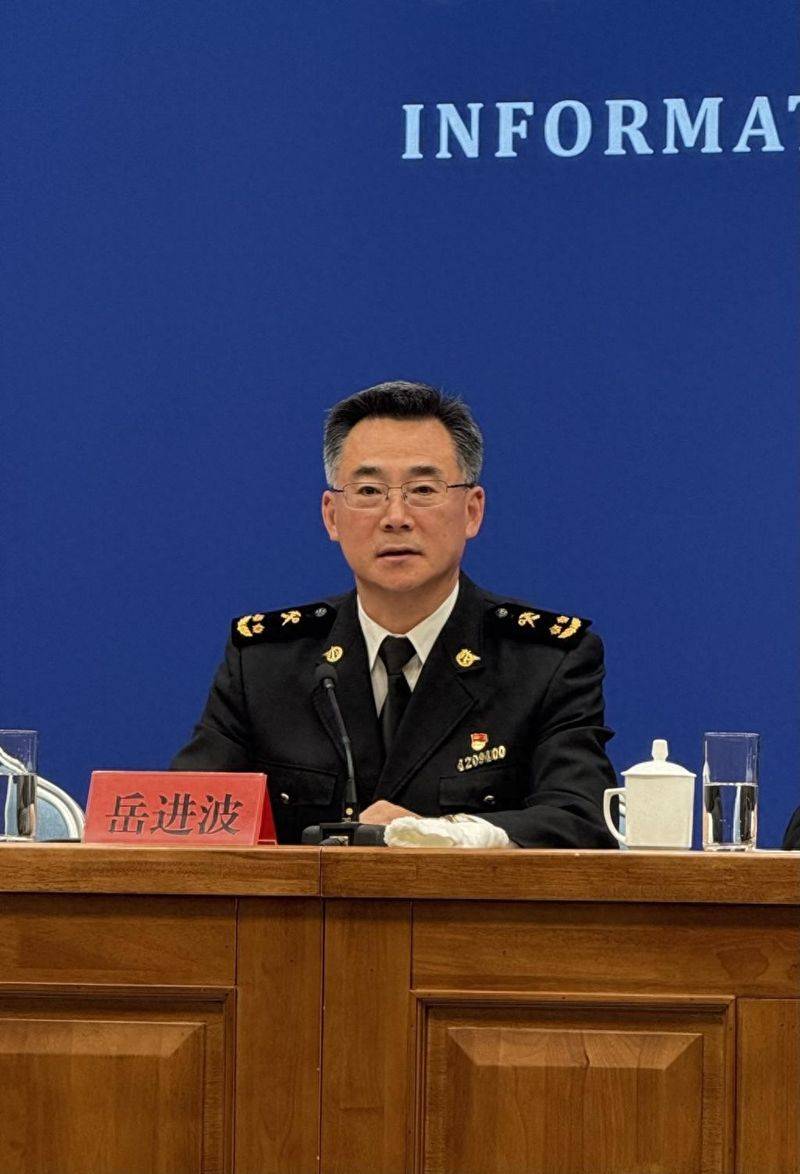
On 24 april, at a press conference of the city of qingdao on “strengthening the application of intellectual property rights and building innovative industrial systems”, the qingdao customs second-level inspector in-bo said that, in recent years, big data and smart identification had been widely used, that qingdao customs had deepened the construction of “smart customs” and had made a comprehensive contribution to the information, digitization and intellectualization of intellectual property rights, and that a scientifically efficient customs protection system for intellectual property had been initially established。
Smart law enforcement continues to strengthen. The first is the deployment of the tort risk smart screening model online at the national customs level to achieve 100 per cent second-grade risk screening of import and export declarations. The second is the refinement of the trademark smart identification application, which will allow for the identification of trademarks, the direct distribution of photo points to the mobile end of the new generation of control systems, for the benefit of 42 direct customs, more than 800 sites, and more than 5,000 identification agents. The project will be selected as the first examples of intelligent customs-building and cooperation models, and will be presented on the world customs organization's “wise customs” cooperation platform, the “wise customs” model network of brics countries. The third is to improve the intellectual property knowledge base, with a wealth of 65,000 articles, covering the types of knowledge, such as laws and regulations, policy documents, typical cases, identifying points, filing information, etc., and providing digital empirical support for law enforcement. On this basis, qingdao customs combines the knowledge points of the knowledge base with the ai assistant “digital customs officers” to provide law enforcement knowledge support for the identification and processing of cases by customs officers。
Smart services are easier. The first is the completion of the visualization of the filing process for the customs protection of intellectual property system, the addition of a number of features such as nodal queries for the filing process, automatic delivery of audit results, early warning of the expiry of filing deadlines, and a significant improvement in the sense that rights holders have timely access to the filing process and effectiveness of intellectual property rights. The second is the addition of a new module, “counterlines for priority monitoring”, whereby rights-holders provide their own identification and photographing points of intellectual property rights, which are available simultaneously at the national customs level, significantly reducing the cost of communication between rights-holders and improving the efficiency of enforcement, including the identification of powers and the handling of cases. Third is the pre-recognition system of intellectual property status of qingdao customs. Territorial customs officers enter pre-acknowledged data on the status of intellectual property rights through the pre-accreditation system, and port examiners can use several e-plugins to check the comparison of customs declarations with pre-acknowledged intellectual property rights, significantly reducing the clearance time for legitimate goods and improving the enterprise's sense of access。
(all media in the peninsula)