It's a low-salvation technology
It's a low-salvation technology
Yang linfang
1. Biological properties of the pyre
The root of the avalanche, a plant that has been growing for many years, is completely degraded from the soil, and leaves are highly degraded, almost in the form of plasters, do not allow for photocooperative use, and therefore do not have the capacity to feed themselves, with its life history as a seed – a round tuber – and a nutrient platter – a mime-prey. The seed is small and is structured with only one layer of skin-covered embryonic cells, free of embryonic milk, and therefore does not have the capacity to develop naturally。
2 days and days
The wild distribution of tianmama in the qinba mountains is concentrated in the mountains between 600 and 1800 m above sea level. It is generally distributed under mountain forests with a density of 0. 6 or more, and it is grown on a leafy soil or on a perfunctory soil rich in decomposition. Surface forests have a cool and humid environment conducive to the growth of sis. The soil is generally suitable for humidity of 50-60 per cent and the temperature is too high and too low to have an adverse impact on the growth of the sis. When the soil contains less than 30% water, the honey circulus ceases to grow; when the soil contains more than 60% water, the bacteria are susceptible to decay。
At temperatures below 14 °c, the plume enters hibernation, and above 30 °c, so that 14 ~ 30 °c is the temperature suitable for growth, with the fastest growth at 20 ~ 25 °c. The seed of cynics needs to undergo low temperature springs in order to develop healthyly, such as low temperature times, low growth of gestation seeds, or the fact that they are not fertilized or embryonic after planting; low-temperature gills can also be found in the second year of reproductive growth。
3. Sexually active cultivation methods
Ember cultivation has been based on the sexual reproduction method, i. E., the acquisition of small steroids from the wild and the acquisition of commercial sembling after artificial cultivation. However, the amount of seeds obtained by this method is limited,3 and the production and quality of commodities declined after generations. Artificial pollination can be used to obtain cylindrical seeds, followed by honey circulus and fungi, which means that a large number of commercial cylindrical and zero-generation seeds are available. The technology has received a second prize for scientific and technological progress。
3. 1 location
It can be cultivated in the mountains or even indoors. Mountain cultivation is generally carried out on slopes above 1,200 m above sea level, and below 900 m above sea level, or on slopes between 900 and 1,200 m half-m. The slopes are planted in a manner that tends to be covered by trees, and water is easily released in the event of rain. The flat field is growing sterility and must be planted and dug deep above 30 cm to prevent the water from swollen and build a sunnet in the summer to prevent excessive water evaporation。
3. 2 soil selection
Two conditions are required for the choice of soil for sterilizing the avalanche: ablution of air and ablution of moisture. The preferred black corrosive soil is also coarse sand with a particle size of more than 1 mm. The soil of the han-china region, although it contains a large amount of mud, is well-structured, so that the aerobics do not accumulate water。
3. 3 bacteria selection
There is generally a sexual reproduction of 1 incubation per nest. The fungus mushrooms are the first choice for the fungus. Whatever bacteria are selected, it must be white, non-sterilized and non-differentiated. Bottled honey circulus should be selected for a growing, cone-rich, more entangled and more integrated strain。
3. 4 cultivation of honey circulus
3. 4. 1 supplementary materials shall be prepared in advance for planting. A stem leaf of 0. 5 kg, branches of 25 mm in diameter, and 10 rods of 500 mm long are generally required。
The logging takes place during the fall of the frost to spring, when leaves fall and nutrient flows return. The thickness of the stick varies according to the purpose of cultivation. If a zero-generation seed is to be extracted in that year, a section with a chest diameter of about 50 mm is to be selected; if a section with a chest diameter of 80 to 100 mm is to be planted for one and a half years, it is to meet the nutritional needs of the second year of cynics. The rod shall be immersed in the rim of the round rod or in the pelt of the stick, so as to be immersed in the rim. Accomplishments such as leaves, branches and sticks should be collected and dryed, pre-planted with water soaked that they contribute to the growth of bacteria and honey circulus and to the growth of the seed seed of cynics。
3. 4. 2 artificial pollinating sterilisation shall be performed by artificial pollination. Every year, early in march, the seed is planted in an indoor plastic basket, which is set at 10 cm thick and 10 cm sprouts at the bottom, and is then covered with 10 cm sand. In case of early spring or low temperatures, indoor temperatures are increased to more than 20°c and flowers around 50 d. The pollination shall be performed within 6 h after the flower bloom, 3 d, in order to avoid the degradation of the quality caused by proximate reproduction. In general pollination 16 d the consequences are ripe, and when the skin is torn, the seeds can spread as easily as flour as they are a sign of maturity。
3. 4. 3 the acquisition of seed fruit shall be harvested from 1-2d prior to the fissure. It is desirable that seeding be taken on the same day, and that those who cannot sow on the same day be placed in a cold, ventilated environment of 2-5°c, so that the seed can still be kept alive 5-8 d。
3. 5 cultivation management
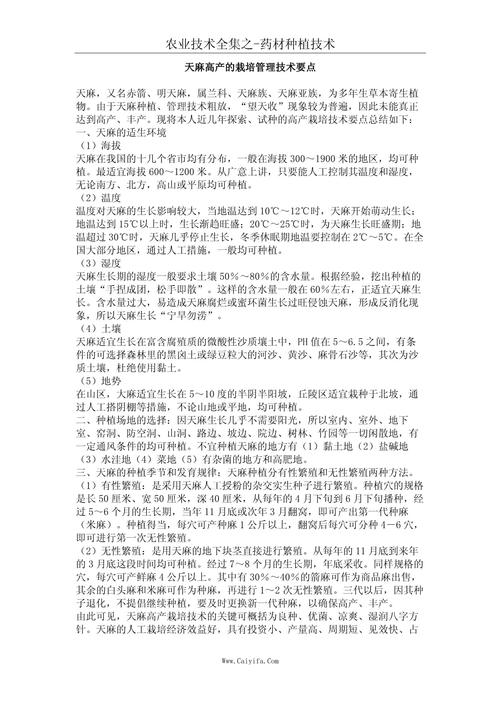
In order to ensure steady production, double-layered farming is generally used, with the following specific steps。
3. 5. 1 digging pits generally dig deep 150 mm and wide 700 mm to plant sterility. Water-prone plots can be stacked, i. E. Directly planted after sand is laid on the ground. When water is scarce in early spring or drought, the bottom of the plant should be wet。
3. 5. 2 the fertilized seed is grown indoors in accordance with the standard of a bag of 10 cyanobacteria per nest, torn apart by the cyanobacterium, and the small seed in it is evened and repeated with the bacterium。
3. 5. 3 cultivation and insect resistance spread a layer of wet leaves 20 mm thick at the bottom of the planting pit, where 50% of the thiophos-methyl cream is sprayed with 1000 times the fluid to prevent the underground pest. Then the seed seed is spread quickly and evenly on the leaves. Owing to the greater volatility of octhion and its vulnerability to uv decomposition, it should be sprayed to prevent human poisoning or photolysis。
3. 5. 4 the placement of rods and honey circulus is evenly distributed at a distance of 30 to 50 mm. The rod shall be split up in the face in order to prevent the soil from being planted with insects or fungus contamination. Gemococcal species are set aside at both ends of the stick and at the mouth of the fish, and branches are placed between the rods according to the word “by”. Then bury the stick. The sand shall be flat and solid, and when it is buried, the surface shall be levelled with a stick. In accordance with the above steps, a second layer of sand can be planted on the levelling。
3. 5. 5 when the second layer of cover and leaves is planted, there will generally be a need for cover, with high summer temperatures below 800 m, soil water evaporation, high surface temperatures and burning of the surface, so that the burial depth will be above 100 mm and the high altitude area 50 mm, but more leaves will be added in the summer to prevent excessive water evaporation. In order to ensure the required humidity for early onset, it would be preferable to cover 30-45 d with film, which is very useful for early spring drought to ensure abundance。
3. 5. 6 control of the temperature and humidity following the care of sterilisation. In recent years, it has been economically efficient to grow cymbals, mainly because of the control of small local environments. Three areas of management are required for open-air cultivation of impregnation: firstly, soil moisture, which normally does not include 20 mm of effective rainfall, requires manual recharge, and it is recommended that water be filled with spraying after 18:00; secondly, photolytic management, which should reduce water evaporation and cover more than 70 per cent during the period between voltage and the eleventh; and thirdly, enhanced drainage management during the rainy season to prevent the accumulation of water. In winter, the cylindrical springs of the open winters are covered with 30 mm thick leaves, which are then overlayed in order to protect the lumber, anti-frozen and increase the effective temperature, and remove the film from the light the following year。