On march 5th, the results of the launch and the 1st festival of quixuan in guangzhou were presented in the village of sihuang, in the southern region of guangzhou, highlighting two new varieties of green meat from the agricultural and rural academy of sciences of guangzhou. These two varieties have outstanding advantages of cold resistance, early maturity, quality and high productivity。
As a qingnan specialty vegetable, it carries the memory of a generation of taste buds and is one of the key items in the “basket basket” project in the bay of hong kong。
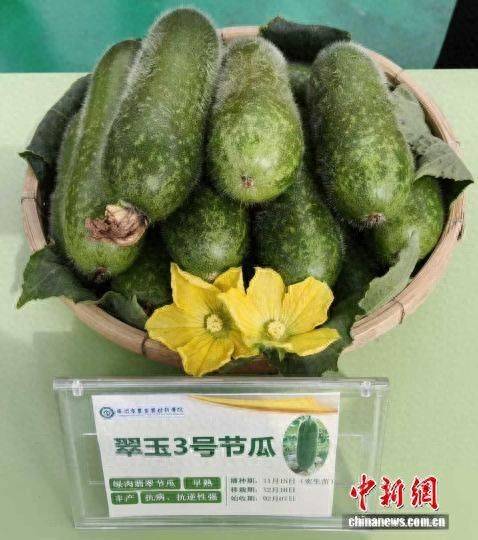
"the jade 3" festival. Agricultural rural bureau of guangzhou
On the occasion of the launch, the promotion of the jade 3 and the jade 4 brought on board agricultural technicians, growers and representatives of cooperatives and agricultural enterprises. “this is a green piece of guacamole, and it's good to see it!” in the southern sand area, where all the big families look and take pictures. The technical staff of the guangzhou academy of agricultural and rural sciences, ho guoping, described the two varieties as solid meat, fresh food tastes sweet and fresh, and the fruits were so well organized that they were suitable for standardization and scale production。
“the `fresh' market has been a pain in industry and one of the key issues for securing a stable and secure supply of important agricultural products.” cho yan chun, a researcher of the guangzhou academy of agricultural and rural sciences, stated that the scavenger itself had a less cold-resistant character, and that after many years of effort, the institute's team had been able to innovate with the introduction of “high-efficiency conservation techniques for winter-drive cultivation” and to break down the technical challenges that constrained industrial development and explore new paths for agricultural efficiency in facilities。
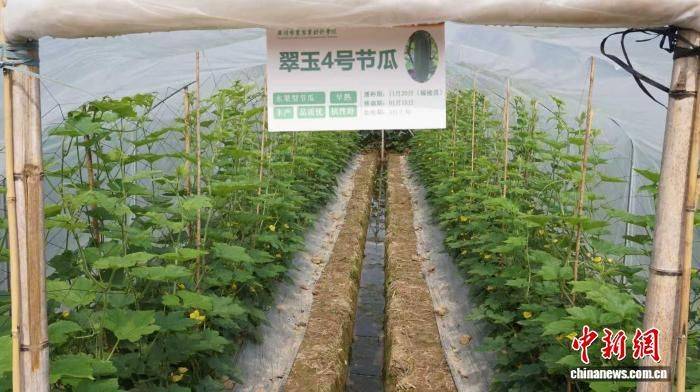
A demonstration base for melon cultivation. Agricultural rural bureau of guangzhou
The site also demonstrated the significant advantages of the improved winter-long single steel shed developed by the guangzhou rural academy of agricultural sciences, compared to traditional facilities. According to technicians, the cost of materials for the shed is only around $8,000 per acre, while the construction of traditional sheds amounts to $30,000 per acre, which can help farmers to significantly reduce their input burden. At the same time, the sheds are equipped with membrane vents, which are flexible to adjust temperature and humidity in the light of weather conditions and avoid high temperature and high humidity. Bones can be used again for 10 years at an average annual cost of approximately $1,000/acre。
In a demonstration base for guacamole cultivation in the village of nishigua, technicians showed on site the key technology for the full process of production of guacamole winter. The green and well-developed seedlings, nurtured by nursery techniques, have led to the taking of photographs and learning by farmers. In response to the issue of the winter melons, the technical staff conducted hands-on teaching farmers to identify female and male flowers and give them further insight into the timing of pollination. In addition, technicians presented scientific application techniques for pest control in the context of the integrated application of the “preventive, integrated treatment” approach and green-control techniques such as yellowboard booby traps。
Cho yan chun indicated that the production of acres could amount to 4,000 kg, an increase of more than 15 per cent over traditional varieties and fill the market gap by one or two months before the listing period. At present, the price of the early spring season is up to $6/kg, which is three times that of the regular season, with an increase of more than $6,000 in the net proceeds of the acre. (concluded)