Science, technology and innovation are important drivers of high-quality water development. According to data published by the ministry of water, during the “xivv” period, 182 standards for water technology were issued, of which 2025 standards were published more than 125 per cent higher than in the previous year, reaching a new high of nearly 10 years, and 774 current standards for effective water technology。
The deputy minister for water affairs, zou rey, stated that the country currently had the leading international scientific and technological levels in areas such as digital twin water systems, hydrological monitoring forecasting, dam construction transport, mud transfer and regulation, agro-water conservation irrigation, joint deployment of reservoirs and ecological rehabilitation of rivers and lakes。
Results conversion efficiency gains
“technology, innovation and industrial innovation are essential pathways to the development of new qualitative productivity.” the director of the department of international cooperation and science and technology of the ministry of water and water management, kim hai, described the “1450” period as a period in which the water sector had contributed to the deep integration of the water industry innovation chain, the industrial chain, the financial chain and the human talent chain in all its aspects。
On the one hand, efforts are being made to increase the supply of high-quality science and technology and to build the foundation for the integration of science, technology and industrial innovation. To continuously optimize the positioning and layout of water-related research institutes, institutions of higher learning, enterprises and science, technology and innovation platforms, to focus on the major scientific and technical issues facing high-quality water development, to strengthen basic research, applied basic research and research and development of high-technology technologies, and to sustain high-level scientific and technological achievements。
For example, a breakthrough in research and development of the cloud-rain short-range precipitation model, the distributive hydrological model, the flood evolution hydrodynamic model, the north-south midway engineering temperature ice prediction model, increased from 3 days to more than 10 days for the anticipated flood of the great river; and the self-developed ck series of engineering security monitoring automation equipment and cloud platform systems, which have been applied to over 800 hydro-hydroelectric projects, resulting in the completion of one “body safety check” in five minutes。
On the other hand, strengthening the dominant position of enterprise innovation and finding the key to integrating sti with industrial innovation. Supporting the participation of enterprises in science and technology project programmes, encouraging companies to take the lead in creating innovation consortia, leading or participating in the building of science, technology and innovation platforms such as the ministry's technology and innovation centre, co-condensing key common technology needs, undertaking joint research and research campaigns, and promoting the manufacturing and marketing of scientific and technological results, with the dominant role of business innovation becoming more prominent。
With the rich applications of the water industry, more new technologies, new products, new equipment, new materials and new processes have landed in the water industry, leading to the growth of relevant industrial chains。
In the area of water conservation, for example, the water sector has stepped up its research and development efforts in the areas of water conservation in irrigation areas, research and development of technical equipment for water conservation in urban areas, water conservation in the construction of hydroelectric projects and the use of waste sewage resources, with 15 new ministerial science and technology innovation platforms in water conservation and over 29,000 public patents in water conservation. The emergence of 156 state high-technology enterprises and 40 state-specific new small businesses in areas such as agriculture, industry and urban life has led to more water-saving scientific and technological outcomes from samples to products and industries. At present, the size of the national water conservation industry is over $760 billion。
Career development to the top
New quality productivity has developed and is helping to push water to a high end in multiple areas。
“technology and innovation provide an important underpinning for the continuous improvement of engineering efficiency in order to ensure the safety, safety and security of water supply to the north.” the director of the south water north engineering management division of the ministry of water and water, li yong, described the cumulative increase of over 87. 6 billion cubic metres since the first phase of the north-south water to the middle east project, benefiting 195 million people in 48 large and medium cities along the route, with the full economic, social and ecological benefits of the project and increasingly strategic functions。
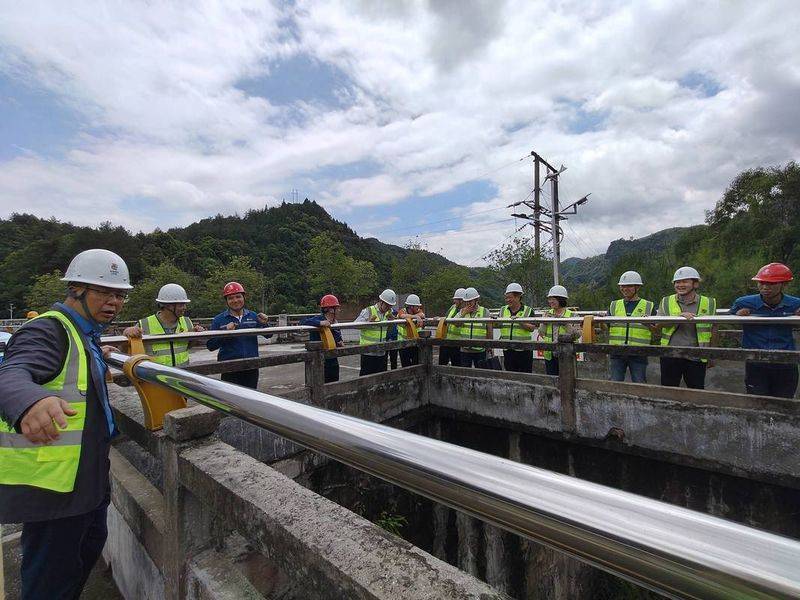
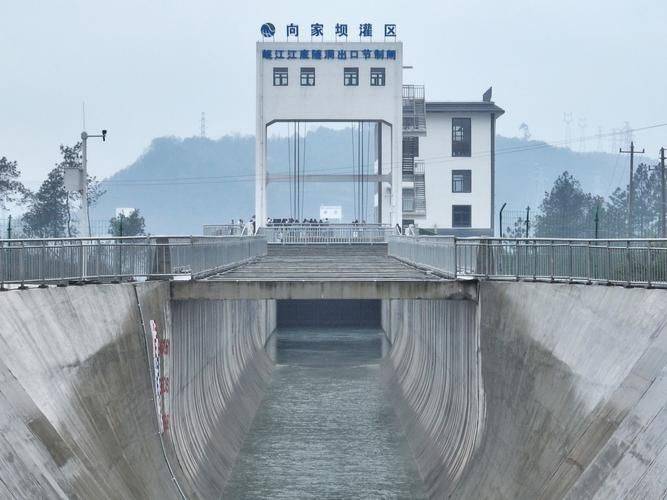
As part of the long-range water transfer project, the north-south route of the north-south mid-range project, with a high temperature change gradient, and ensuring the safety and efficiency of water deliveries during the winter ice period are major challenges to the operation of the project。
“the scientific movement of engineering and safety and security capabilities are systematically enhanced through initiatives such as the establishment of ice monitoring sensor systems and the refinement of digital twin platforms.” li yong said that, over the past three years, the north-north-up ice supply had exceeded the planned water supply by 500 million cubic metres。
With technology, disaster prevention and mitigation are more efficient. The deputy director-general of the hydrological division of the ministry of water and water, yang jianqing, fully applied the rainwater monitoring forecasting system consisting of meteorological satellites and rain radar systems, rainfall station networks and hydrological station networks, providing chain-wide precision monitoring and forecasting early warning of rainfall, production flows, remittance flows and evolution, providing precision decision-making support for watershed flood control, scientific defensive storm floods, effective response to local flash floods, and human migration avoidance。
The project “creation and application of the technical system for drinking water security” received the first prize for scientific and technological progress in 2023. The project addressed a series of key technical challenges in the world's most complex water and water supply conditions, addressed key technologies such as ecological restoration of water sources, purification of water plants, transmission of quality assurance, and created a decentralized to centralized rural water supply safety and security system. The results have been applied to over 1,400 projects, benefiting more than 200 million people。
Sound and improved innovation chain
Since the fourteenth five-year plan, the ministry of water has been pursuing a strategic orientation towards the world's scientific frontier, the main economic field, the vital needs of the country and the health of the people, and has systematized its scientific and technological innovations to develop new water productivity, as appropriate. During the “fifty-five” period, hydro-development entered a critical phase in the fundamental modernization of the water sector and in its full operation, and there was an urgent need for hydro-technology and innovation to take the lead。
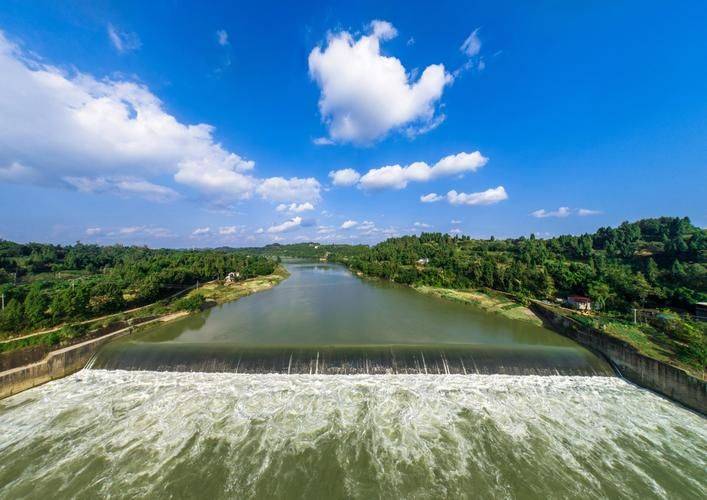
“we shall anchor the goal of building up advanced and functional water science and technology support systems, strengthening critical science and technology clearances, building platforms for water science and technology innovation, building capacities for water science and technology strategies, deepening the transformation of education science and technology, improving the innovation chain for productive research and development, and providing strong support for the promotion of high-quality water development and the security of water in the country.” zubai said。
A set of original, leading scientific and technological results accelerates output. In the area of basic research, the study of basic water laws, basic theories and basic methods is being deepened to produce more landmark original results. In the area of applied basic research, addressing key technological needs, breaking water bottlenecks from sources and bottoms constrains the challenges of science and technology. In the area of research and development of high-technology technologies, technological research and development is being strengthened to accelerate the need for modern water networks, digital technology and deep integration of water operations, with technological innovations driving the incremental upgrading of productivity。
In terms of building scientific and technological capacity, a system of hydro-scientific science and technology innovation platforms covering hydro-prototype observations, physical modelling experiments, mathematical modelling simulations was built. For example, the field science observation research station of the department of water sciences, which conducts long-term, continuous and stable data observations and accumulation, enhances data convergence and excavation; strengthens the theoretical study of physical modelling construction fundamentals, as well as the development of intelligent construction techniques and equipment, measurement and control systems; and deepens the application and research of hydromechanical models and strengthens the development of specialized water models。
Science, technology and innovation depend on the building of a workforce. During the “1455” period, we selected and trained 35 hydro-collars, 30 hydro-young technologists and 150 hydro-young elites, and supported the construction of 15 ministerial-level innovative teams and 20 training bases。
Zhuray said that the next step would be to actively promote scientific research institutes, universities and enterprises to build collaborative innovation coalitions for productive research and development, to strengthen the role of the leading force in basic water research and human capacity-building, and to strengthen the position of major players in science, technology and innovation. Supporting young technologists to take the lead in major science and technology projects and encouraging scientists to write innovative papers on the land of the country. At the same time, there is a need to develop integrated mechanisms for productive research and development and to strengthen the application of medium-term testing and demonstration of scientific and technological results, which should be applied in a timely and effective manner in water treatment practices。