


High-impact cherry cultivation technology in a big shed
Ying hung and others
Traditional field cultivation has limitations in responding to climate change, disasters and market demand. Facility planting techniques provide viable solutions for fruit trees to cope with changes in the environment during production, instability in production, etc. Facilities such as greenhouses are able to fine-tune conditions such as temperature humidity, light and fattening, optimize the fruit tree growth environment, extend the supply period and improve the commodity nature of fruit products. Large cherry cultivation is vulnerable to such problems as low-temperature frosts, bouquets, fruit fissures, high fluctuations in field production and low yield rates, as well as concentration on the market, which can lead to imbalances in supply and demand and reduce the earnings of fruit farmers, and can effectively avert the above risks. Therefore, the present paper presents the construction of facilities, the screening of varieties, planting techniques, etc. Of large-scale cherries, and provides the fruit farmers with a programme of science-based cultivation, which helps them to achieve efficiency gains in terms of reducing their productivity and guaranteeing their growth and the regional agricultural economy。
1 shed construction
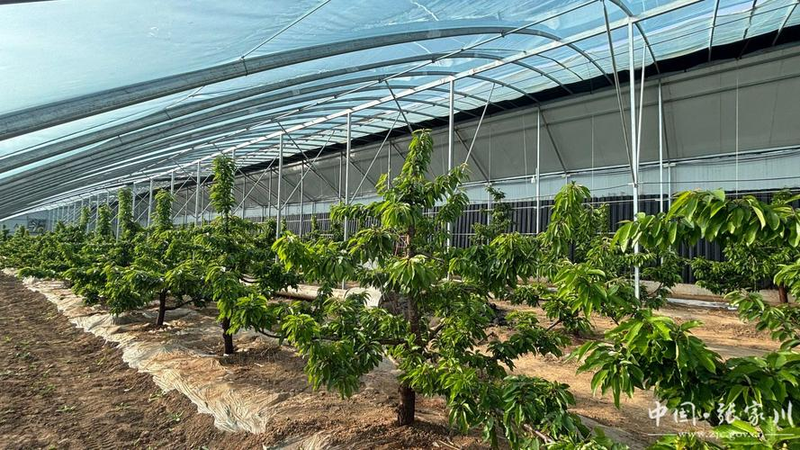
The area of the shed is suitable for control at 600-1200m2, and the general shed is often in the form of a one-side slope, with a good east-west orientation, in order to obtain sufficient natural light to meet the needs of fruit tree light. Second, the north-south walls of the shed are often made of clay-coated, with an overall structure that is relatively closed and warm, except for vents, to maintain temperature in the shed during cold and to mitigate the negative effects of low temperatures on fruit trees; the height of the wall is generally set at 3 m, with a maximum of 3. 5 m, making the interior space more accessible and operational. Working doors and ventilation windows are reasonably installed in the walls, approximately 1. 5 m from the ground, which is conducive to air circulation and prevents wetness from causing disease. Most of the internal support is based on the use of bamboo as the main pillar framework, which is both solid and economically viable. The north-south wall is connected to the bamboo column, and a 50-cm-long square support system has been built to enhance overall stability and stress resistance。
2 species selection
The large cherries allow for the selection of small, compact tree-covered varieties, which are easy to manage and facilitate trimping, and which enhance space utilization and concoction patterns. The selection of varieties with shorter fertility cycles, good productivity and high productivity potential can significantly increase productivity stability and reduce the volatility associated with climate fluctuations; it is particularly critical that the fruits of this type are mostly of excellent quality, full of abundant and good tastes and match the market's needs for high-quality fruits. The main cherries suitable for planting in the northern areas are the large purple, red lights, rabins, italian early red, etc., which are excellent in cold resistance, adaptability and the appearance of fruit and are well adapted to the conditions of the shed. The colour of the red light fruit is brightly red, and the consumer is green; the particles of the "big purple" fruit are large, and the "rabins" are widely recognized for highlighting resistance and excellent taste. When selecting varieties, farmers need to take into account the actual climatic characteristics and soil conditions of the areas where the sheds are located. In addition, the cold winter in the northern region is such that, although the sheds have a certain capacity to keep warm, they still have to choose the varieties that are strong enough to withstand the cold so that they can survive safely and enjoy success. Economic efficiency should be enhanced by combining pre-, medium- and late-cooked cherries with market demand, with a phased supply and a longer cherries sale cycle. Rational selection of varieties enhances the effectiveness and quality of cherry cultivation and fruit, as well as the competitiveness of the industry, and is a central element in achieving high production of fruit trees in facilities。
3 elements of cultivation technology
Cultivation density is a necessary condition for the healthy growth of fruit trees and the acquisition of high-yielding and high-quality fruit during the cherries cultivation process. Cherry is a fruit tree that needs greater light, moisture and nutrients to grow, and if planting density is too high, the strains will become space-poor, light-deficit, leaves will be hidden from each other, both to reduce the efficiency of cooperation and to trigger tree madness, long, poorly ventilated and radiant conditions, thus increasing the likelihood of disease and infestation. Second, growing plants over-competently compete for water and fertilizer resources, leading to fruit trees that are undernourished, leading to a smaller and less quality of fruit, and even a lower rate of fruit; if planting density is too low, it leads to idle space within the sheds, reduced land-use efficiency, difficulties in improving overall production, and the production potential of the shed facilities cannot be fully exploited. In the actual production process, scientific measurements and determination of the appropriate planting density are required, and the grower is required to have full authority to develop suitable planting or rare planting programmes based on the size of the shed, the height of the shed, the ventilation conditions and the characteristics of the tree size, canopy form of the chosen large cherry variety. They grow large-scale cherries with small and medium-sized trees, or with short beryllows, which are small in size and are more suitable for dense planting, and which can boost unit area output. In addition to this, scientific encirclement reduces the result cycle and accelerates the emergence of economic benefits. However, during the course of implementation, care should be taken to maintain the right range for mechanical operation and manual control, so that the light reaches all crops equally. For density adjustments, testing and data collection are critical, and the fruit farmers need to use small-scale planting experiments and multi-year observation practices to map the best concentration values for the climate in the region, the condition of the shed and the species planted. In the northern region, where winter temperatures are low, despite the good temperature protection of the sheds, once the plants are too dense, become more humid, and have a negative impact on the disease, it is necessary to be flexible in order to optimize planting density, based on healthy growth and good growth of the fruit trees, and to actually achieve the productive and efficient purpose of the sheds。
Cultivation patterns, in the facilities of greenhouses, big cherries, opt for science-based cultivation models that are important for the growth and quality of production of the roots of fruit trees. Cherry is a fruit tree that requires both adequate moisture and impregnable water. If the soil is oversaturated for a long time, the root system rots for lack of oxygen, ultimately affecting the whole tree until death. There should be no low-intensity cultivation in the environment because of the low levels of water that accumulate, which result in poor soil aerobics and can easily cause root causes. As a result, the use of high-dry or high-dry cultivation is preferred, a model that significantly enhances soil permeability and air permeability and prevents the long-term immersion of roots in the water. In practice, growers should improve soil fertility and structure by fully mixing the surface soil, the mid-soil and fully fermented organic fertilizers in the sheds, and then composts, mostly at altitudes of 20-30 cm, prevent the accumulation of rain or irrigation water, and create more relaxed, ventilated growth space for root systems. In addition, following the completion of the planting of the big cherry trees, the roots of the large cherry trees are distributed in the shallow soils, which can significantly reduce the frequency of flooding and ensure the absorption of the roots to water fertilizer. High-precipitation cultivation improves soil temperature, especially in the early springs, with a faster temperature on the roofs, boosts the early budding and flowering of large cherries, increases the length of the fruit supply, optimizes fruit tree growth conditions and increases the commercial value of fruit. Land management and mechanization are facilitated by high temperatures or high-strength cultivation. Irrigation can be carried out using ditch or drip irrigation, so that the water is evenly permeable in the guillotine, saving water resources and preventing local dry and wet imbalances caused by uneven irrigation, with a more concentrated absorption of nutrients, thereby enhancing the growth of fruit trees。
Temperature and humidity control should be maintained at 5-28°c, which is too low to prevent lumbering and fruit expansion, and too high to cause lumber to fall early or to deteriorate fruit quality. Heating devices such as hotlines, heating stoves, etc., will be used to raise the temperature in the shed and to ensure that the large cherry can survive the winter safely and flourish successfully. Humidity management is also crucial, with the high cherries growing at 60-80 per cent humidity of the air, which disrupts the pollination process and results in a decrease in fruit rates; and the high vulnerability to diseases such as grey and brown spots. The sheds will be equipped with automatic monitoring and regulation devices, which will allow for automatic wetting or ventilation based on humidity conditions, and will allow the environment within the sheds to remain in the appropriate range. During the flower opening phase, the adverse effects of drought on pollination can be effectively averted with proper moisture regulation, thus improving the quality and taste of fruit. The sheds need to be warmed and cooled during high temperatures. When the temperature is too high in summer sheds, air can be exchanged through ventilation windows, work doors and top vents, with grass curtains covered with no drip membranes, lower direct light and inhibit heat accumulation to prevent excessive temperature rise in the sheds. In the spring, attention should be paid to the gradual increase in the temperature, with a moderate extension of the flower's opening, both to the successful fertilization of the flower and to the prevention of later frost from damaging the bud. The application of scientific tools to regulate the temperature and humidity can create a stable growth environment for the large cherry trees, as well as improve the rate and quality of fruit and produce, allowing the supply cycle to be extended, thereby allowing the farmers to gain higher economic returns。
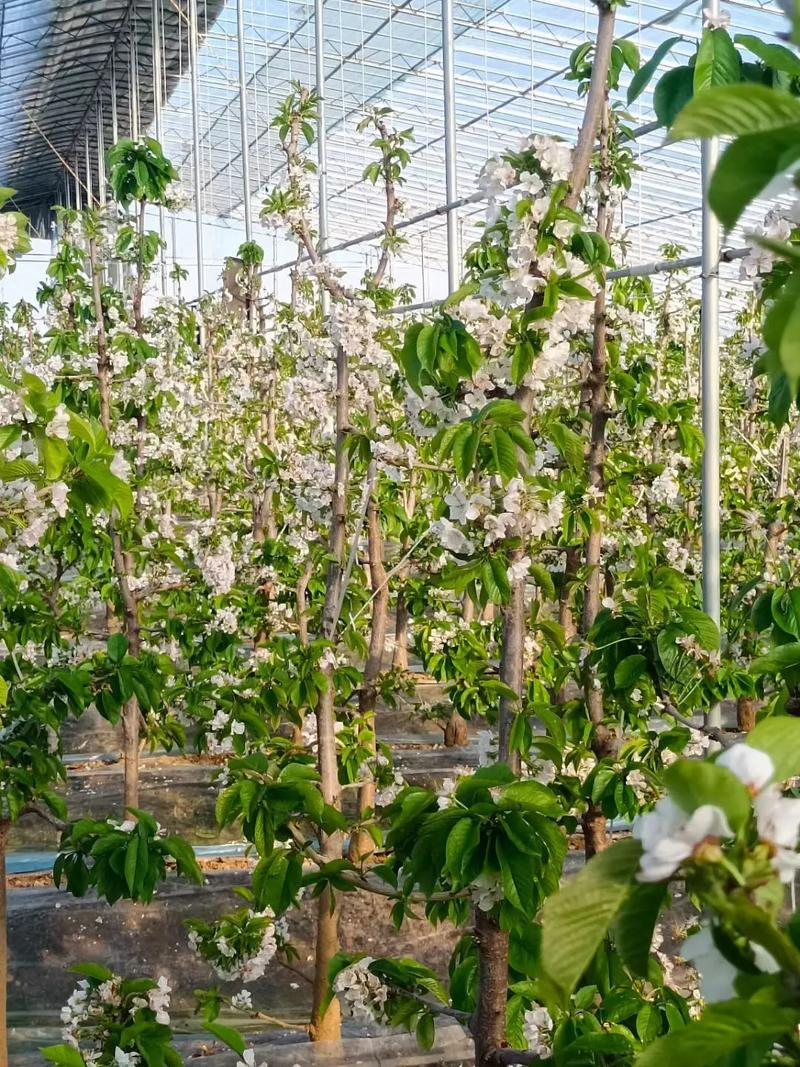
Irrigation and fertilization in the management of cherries, irrigation and fertilization play a decisive role in the growth, production and quality of fruit trees, which, when combined in a scientifically sound manner, can meet the physiological needs of the cherries at all stages of their growth, while significantly increasing their commercial value and economic benefits. In terms of water-water management, there is a difference between the quantity of water required during the growing years of the cherries and the mode of management. From budding to flowering, irrigation plays a key role in meeting water requirements for planting and flowering, reducing soil temperatures, prolonging flowering periods and resisting night cream. The rapid growth of the cherries during this period and the booming growth of the fruits during the 10-15 days after the bouquets, at a time when the water demand is extremely high, is likely to lead to poor development of the fruit nucleus and willow fruit, with adverse effects on yields and quality. This phase of timely irrigation can reduce the incidence of raisins by almost 38. 7 per cent. Sufficient irrigation is required 10-15 days before the harvest to boost the rapid expansion of fruit, increase the quality and sugar content of single fruit and optimize the taste of fruit. Timely irrigation can increase production by 20 to 30 per cent, but late irrigation can delay harvest periods and undermine market profitability. During the flowering phase, irrigation should be kept in the right range, wetting the surface with small currents and preventing excessive moisture from preventing normal separation. Fertilizer control should be adapted flexibly to the age and growth stages of the tree. Autumn fertilizers usually end by november, with the option of fully decomposed manure, human and animal faeces or impurities to add soil organic matter and improve soil structure. Second, the cherries are relatively small in the early years compared to the early years, with a single application of 3-6 kg of animal urine or 10 kg of corrosive weight; the adult tree needs to increase the application of fertilizers by applying 6-8kg of animal urine or 20kg of corrosive weight to meet the nutritional needs of the high-yielding period. The application of fast-solvable nitrogen fertilizer before the flower is opened or during the first rapid expansion of the fruit is required to promote the growth of the branches and the increase of the leaf blades, to establish a good foundation for the sprouts, to spray 0. 5% urea + 0. 5% boron, or to spray 600 times the potassium phosphate, and to increase the ratio of pollination fertilization to fruit. The fruit harvest will need to be followed up immediately, helping the fruit tree to recover its strength, increasing its nutrient reserves and contributing to the thawing of the flowers the following year. It's based on the age of the tree and the size of the canopy. Decorated bean cakes 2. 5 ~3 kg may also be used for ammonium sulphate 1. 5 kg or urea 0. 5 ~ 1 kg, combined with fertilizing the leaves to increase absorption efficiency. The scientific and rational management of water fertilizers can contribute to the healthy growth and quality development of the cherries, while increasing the efficiency of water fertilization and reducing production costs。
The management of flowers is an important part of increasing the commodity properties of fruit and the combined economic benefits of the cherries, which can effectively reduce nutrient losses and substantially improve the physical matching of fruit with sales. The amount of cherries is generally large and grafting is necessary during the flowering period, otherwise excessive bouquets may spread the nutrients of the tree, resulting in poor fruit rates and uneven growth of fruit. The removal of short, double and deforming flowers has resulted in a concentration of tree nutrients for healthy flowers, thus improving overall flowering quality. It's about two weeks after the flower, and when the physiology drops to the end, it's a matter of picking up the fruit in time. Detached from abnormal, pathological and nuclei, allowing the retention of fruit to obtain sufficient light and nutrients to improve its quality and taste. The implementation of frowned fruit can both prevent excessive loss of nutrients and effectively increase the homogeneity and market value of the fruits. In order to enhance the effectiveness of the fruit, complementary means such as artificial pollination are needed, which can significantly increase pollination performance and guarantee the size of the fruit. Spraying of trophic fluids on the bouquets can facilitate the growth and extension of pollen tubes and further increase fruit rates. In the later stages of fruit growth, the key is to promote fruit fertilisation. The light is a key factor influencing the appearance and quality of the fruit. It can increase the light range of the fruit by removing parts of the leaf, shifting the leaves to the back of the fruit, placing a reflection film inside the tree canopy and in the back wall position, and enhancing the reflection effect of the light, thus contributing to the homogeneity of the fruit, making it colourful, outward-looking and competitive in the market. In addition, addressing the problem of cherries in the sheds is a major challenge in management, and the fragmentation of the fruits reduces the value of commodities and harms the farmers ' economy. In order to reduce the rate of fissures, “small quantities” of irrigation should be used to prevent fissures caused by excessive over-ingestion of water in the short term, the application of calcium-containing formulations such as “gulfol calcium” on the face of the leaf, the thickening of cell walls, the strengthening of the resilience of the fruit and the reduction of the rate of fisssures. In sum, flower fruit management, which involves a variety of measures, such as berries, increasing the number of fruit, coloring the aided fruit and avoiding fissures, is an important support for ensuring the quality and high productivity of the big cherries in the shed。



