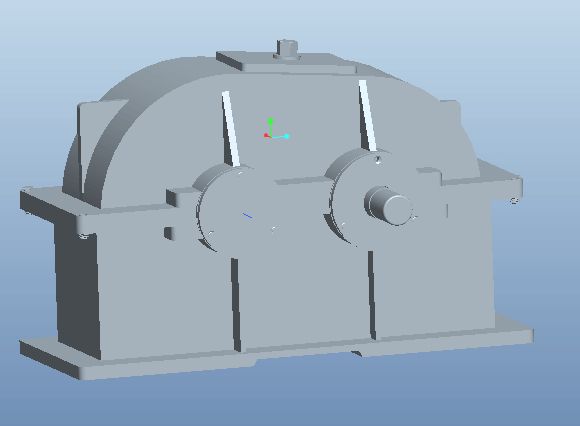
The proe course is designed with drawings i and the pedagogical targets course is designed to provide students with basic mapping skills through the use of proe to produce two-dimensional drawings and three-dimensional models, to develop a degree of engineering and graphic literacy and to lay the foundation for subsequent professional courses. Basic operation of proe software. Understanding basic concepts of 2d drawings and 3d models. Knowledge of engineering graphics. To be able to do basic 2d drawings independently. It is possible to model 3d using proe software. Appropriate drawings can be adapted and optimized according to design needs. The goal of emotional attitude values: to develop students ' interest in engineering drawings and to increase their motivation in learning. (c) fostering a spirit of teamwork and communication among students. To develop students ' awareness of innovation and their ability to solve problems. Ii. The teaching content of the course consists mainly of the basic operation of proe software, the drawing of 2d drawings, the creation of 3d models and basic knowledge of engineering graphics. Basic operations of proe software: knowledge and operation of interfaces, management of layers, switching of view, description of dimensions, etc. The drawing of two-dimensional drawings: basic drawing commands, line setting, editing of drawings, input of text, etc. Creation of three-dimensional models: creation of basic body matter, construction of complexes, editing and optimization of models, etc. Basic knowledge of engineering graphics: the specification of the frame, the application of the scale, the configuration of the view, the specifications of the label, etc. In order to enhance the learning interest and initiative of students, the curriculum will be taught in a combination of teaching methods. Teaching methods: to equip students with the basic concepts and theories of the curriculum by teaching basic operational and engineering drawings of proe software. Case analysis: by analysing actual cases, students are made aware of the practical application of proe software in engineering. Experimental methods: to equip students with the skills to use proe software through on-board operation. In order to support the implementation of teaching content and teaching methods and to enrich the learning experience of students, we will prepare the following teaching resources. Educational material: proe course design with drawings. References: relevant engineering graphics materials and manual for the use of proe software. Multimedia materials: ppt, video courses, etc. Experimental equipment: computer, proe software and its authorization. 5. In order to assess students ' learning outcomes in a comprehensive, objective and impartial manner, the course will use a combination of assessment methods. Regular performance: assessment of students ' learning attitude and motivation through classroom participation, questions and panel discussions. Operations: set up a suitable number of jobs to assess students ' level of knowledge and application of course content. Examinations: mid-term and end-of-cycle examinations are conducted to fully test students ' knowledge and skills. The teaching of the curriculum will be organized in accordance with the principles of soundness and compactness, ensuring that the teaching tasks are accomplished within a limited period of time. (b) progress of education: the content and progress of each subject is rationalized according to the content of the curriculum and teaching materials. Teaching time: reasonable allocation of time for classes, experiments and self-study, depending on student time and course needs. Places of instruction: selection of suitable classrooms and laboratories to provide a good learning environment for students. Vii. Differentiated teaching is designed to meet the learning needs of different students and the curriculum will design differentiated teaching activities and assessment methods. Teaching activities: different case analyses, pilot projects and panel discussions are organized according to the level of interest and competence of students. Modalities of assessment: different assessment criteria are applied to different levels of students, with appropriate incentives and incentives. 8. In order to improve the effectiveness of the curriculum, the curriculum will be regularly reviewed and evaluated. (c) pedagogical reflections: teachers reflect on students ' learning and performance at the end of the course, identifying problems and directions for improvement. Pedagogical adjustments: based on feedback from students and pedagogical reflections, the contents and methods of teaching are adjusted in a timely manner to improve their effectiveness. Ix. In order to increase the attractiveness and interaction of teaching and to stimulate the learning enthusiasm of students, the curriculum will try new teaching methods and techniques. Project-type learning: through grouping projects, students are personally involved in the practical application of proe software to enhance their practical skills. Virtual reality technology: using virtual reality technology to provide students with a more visual three-dimensional model presentation to enhance their learning experience. Online interactive platform: use of online interactive platform for real-time questions and answers and discussions to increase student participation and motivation. X. The interdisciplinary integration course will take into account the interconnectedness and integration of different disciplines and promote the cross-cutting application of interdisciplinary knowledge and the integrated development of discipline. Combining engineering practice with theoretical knowledge: through the practical operation of proe software, students understand theoretical knowledge of engineering mapping. Cross-application of computer technology and engineering graphics: using computer technology to design and analyse engineering graphics to improve the integration of students. Xi. The course on social practices and applications will design teaching activities related to social practices and applications to build students ' innovative and practical capacities. Business visit: students visit businesses to learn about the practical application of proe software in engineering. Practical case analysis: analysis of actual engineering projects to inform students about the application of proe software in engineering practice. Xii. In order to continuously improve the design and quality of curricula, feedback mechanisms will be effective in the course. Student questionnaire: regular student questionnaires are conducted to collect student feedback and suggestions on the curriculum. Teachers communicate with students on a one-on-one basis: teachers interact with students on a one-on-one basis to understand their learning and needs。