


♪ learn to be true ♪
Author: chen gaohua (special fellow, centre for research on the chinese characteristic socialist theory system, dalian university of technology, vice-president, humanities institute)
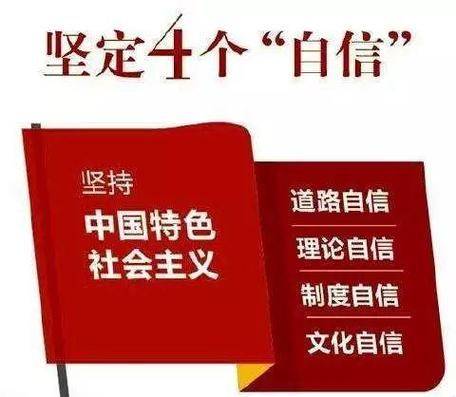
The construction of china's autonomous knowledge system of philosophy and social sciences is an inherent requirement for promoting the flourishing of chinese culture and building a strong cultural nation. In 2016, the secretary-general of xi jinping presented the important theme of “accelerating the construction of chinese philosophic social sciences” at a symposium on the work of philosophy and social sciences. In 2022, when visiting the people's university of china, general secretary xi further stated that “the construction of chinese philosophies and social sciences is accelerated and, ultimately, the building of an autonomous chinese knowledge system”. The tenth five-year programme for the national economic and social development of the people's republic of china proposes innovative implementation of the marxist theory research and construction project, the philosophy social science innovation project, and the acceleration of the construction of china's autonomous knowledge system for philosophical social sciences. Fundamentally, the building of an autonomous knowledge system is based on a high level of cultural self-confidence, an in-depth study and a systematic response to the major theoretical and practical problems facing our country's development and our party's governance, providing solid intellectual support for the maintenance and development of chinese-specific socialism. To that end, we must be firm in our cultural self-confidence, firmly grasping the values, fundamental methods and important mission of building an autonomous knowledge system, and constantly creating new conditions for the flourishing of chinese philosophic social sciences。
For the sake of cultural identity
Chinese civilization is the only great civilization in the world that has continued to develop in the form of a nation, and its more than 5,000-year history has created a unique form of knowledge system through the collection of “historics”. This academic tradition of re-energizing, re-organizing and re-engineered is the fruit of the wisdom accumulated and deposited in constantly responding to and resolving the problems of our nation's time, in contrast to the form of western knowledge systems of ancient greece, characterized by divisions. In recent times, however, western capitalist countries have pioneered the process of modernization of history, establishing the predominance of scientific culture on the basis of economic dominance. At the same time, china has been caught up in a profound crisis of national humiliation, people suffering and civilization. This historical change has led to a major cultural dilemma: modernization is difficult without the incorporation of advanced scientific and cultural knowledge from the west and a reflection on traditional cultures; but spiritual autonomy cannot be achieved without the abandonment of cultural dominance in absorption. This dilemma can only be deciphered in a dialectic of history。
The secretary-general of xi stated that “after a long period of effort, we are better placed than ever before to solve the `era of the middle west' and, more than ever before, to forge a collection of historical and transient cultural achievements”, and explicitly called for the construction of chinese philosophies and social sciences to “reflect inherited and nationalism”. This is both a profound summary of historical experience and a precise grasp of the issues of the times. Today, as the world has seen no major change, china's autonomous knowledge system has to be built on the tide of the times, with intellectual innovation, theoretical innovation, and methodological innovation demonstrating the intellectual excellence of the chinese culture of the new era, and self-responsiblely assuming historical responsibility for the continuation of china's valour. Only by building a knowledge system with chinese characteristics, chinese styles, and chinese styles can an equitable dialogue be established with western-dominated knowledge patterns, and china’s questions, questions from the world, questions from the people, questions from the times, and self-fulfilling protection of cultural subjects。
It is therefore important to be guided by a high degree of cultural self-confidence, with the adherence to cultural affiliations and the continuity of the valour as the fundamental thrust of building an autonomous knowledge system. The construction of china's autonomous knowledge system stems both from its commitment to cultural subjects and, ultimately, from its strong preservation of them. Only by accelerating the construction of an autonomous knowledge system in china will cultural fundamentals be able to gain solid intellectual support and give the chinese valour a new era of greater gabonese vitality。
It's fundamental to stick to the two combinations
The insistence on combining the principles of marxistism with china's specific reality and with china's excellent traditional culture is the fundamental method of building china's autonomous knowledge system. The construction of china's autonomous knowledge system is dependent on both marxist scientific guidance and deep understanding of china's specific realities, as well as creative transformation and innovative development of china's excellent traditional culture。
The secretary-general of xi stated that “the insistence on marxism is the fundamental symbol of the difference between contemporary chinese philosophical social sciences and other philosophical social sciences” “is the rule and necessity attached to the country's development in recent times”. These important assertions point to the leading position of marxism in the area of philosophical social sciences. Marxism not only provides us with sober theoretical self-consciousness, firm political conviction and scientific thinking, but also systematically answers questions about what worldviews and methodologies should be followed in philosophical social science research, what scientific thinking methods should be followed, and in-depth questions about why academic research is a value-oriented approach to human services. China's autonomous knowledge system must therefore be built on the basis of marxism. It must be based on a pragmatic, materialistic approach to the discovery of problems, the extraction of problems, the analysis of problems, and the resolution of problems. People must be at the centre of people's thinking, telling people the truth and building a knowledge system that is truly useful to people and useful to practice。
China's specific practical and traditional culture of excellence is a source of innovation for building china's autonomous knowledge system. On the one hand, intellectual innovation must be rooted in the development of china's specific realities, and it must constantly enrich itself in response to the real problems of china's modernity. On the other hand, it is necessary to develop intellectual resources in china's excellent traditional culture, giving new dimensions to its ancient wisdom by promoting its creative transformation and innovative development, so that the autonomous knowledge system truly highlights china's identity, chinese style and chinese spirit. China's excellent traditional culture, which embraces values such as the rule of law, good governance, good governance, good-neighbourliness and good faith, is an important inspiration for addressing the common challenges facing humanity. In this regard, it is important to continue to be guided by marxism and to take a deep grasp of the spiritual essence of china's excellent traditional culture, by refining a series of original and emblematic concepts and transforming the daily and unconscious cultural genes into chinese wisdom to effectively solve the problems of the times。
It's important to tell the chinese story
The construction of china's autonomous knowledge system not only plays an important role in leading china's social development and building the foundations of cultural security, but also in how china's wisdom moves towards the world and engages in a global dialogue of civilizations. Only with a high degree of cultural self-confidence and an autonomous knowledge system can china’s voice be truly heard, screamed, and heard back。
Good chinese stories require an autonomous knowledge system that fully explains contemporary chinese realities. In the field of natural sciences, the self-reliance of science and technology is related to the country's economic security, national defence security, etc. In the area of philosophical and social sciences, autonomous knowledge systems are directly related to the country's cultural security. The loss of self-interpretation of the state and of social development can lead to the loss of strength, direction and even error in the complex international ideological struggle. Since the reform and opening-up, china has created “two miracles” of rapid economic development and long-term social stability, which are neither a replica of the west’s experience of modernization nor an effective interpretation of existing western knowledge systems. It is rooted in the great practice of chinese identity socialism and contains original exploration in areas such as the socialist market economy, democratic politics, advanced culture, harmonious society, ecological civilization and party capacity-building for governance. This will require us to accelerate the construction of china's autonomous knowledge system, extract regular knowledge from a vast and dynamic process of reality, tap scientific contributions of universal significance and give chinese practice its original theoretical expression。
Good chinese stories require a systematic, professional and easily transmitted autonomous knowledge system. In response to the inexplicable and inexplicable dilemmas of our philosophy and social sciences at the international level, general secretary xi has pointed out in depth that “it is best to refine the concept of marking, to create new concepts, dimensions and expressions that can be easily understood and accepted by the international community, and to lead to research and discussion in the international academic community”. This requires that, in refining the concept of marking, we focus on the commons of the times, turning what we want to talk into what the audience wants to hear; that we interpret what we want to talk about in a way that is well integrated into a culture that is understandable to the audience; and that the system is constructed with a focus on logical linkages and a focus that translates what we want to talk into a clear audience. On that basis, china's autonomous knowledge system must be brought to the world stage with a credible, lovely and respectable image of china, underpinned by a solid system of discipline, an academic system of international influence and a system of well-meaning and convincing words。
The day of light (25. 03. 06)



