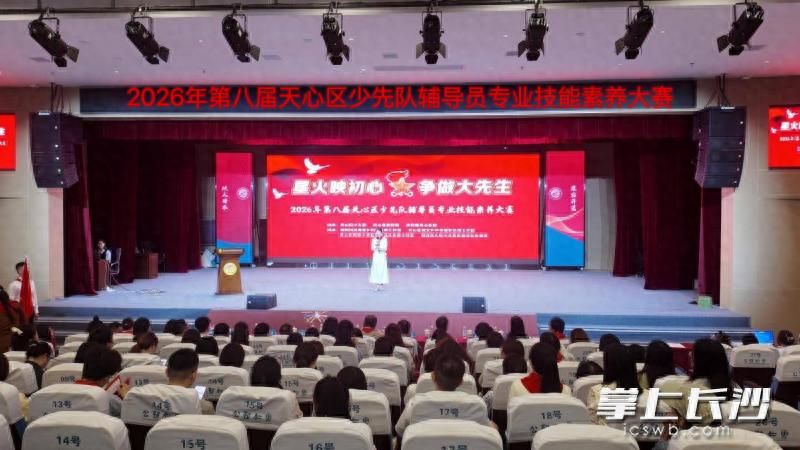
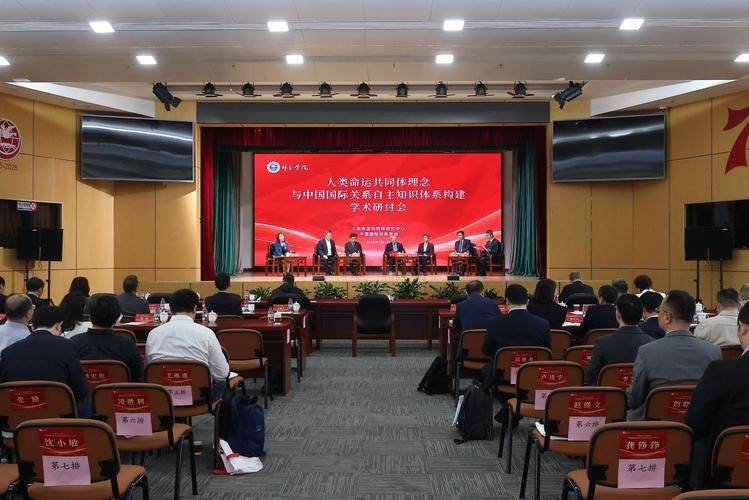
According to the author: the diplomatic academy was held on the day of the symposium on the concept of a community of human destiny and the construction of an autonomous knowledge system for international relations in china, co-sponsored by the centre for the study of the community of human destiny and the china society for international relations. The seminar round-table forum held an in-depth discussion on the further development of the systematization and scrutinizing of xi's diplomatic thinking and on accelerating the construction of china's autonomous knowledge system for international relations. It's an excellent selection of content for readers。
Developing a virtuous circle of practice-theoretical innovation
Wu zhisheng (president of the international institute for strategic studies, central party school (national school of administration)): systematization and academicization are inherent requirements and important avenues for theoretical innovation and are important indicators of theoretical maturity and the construction of autonomous knowledge systems, reflecting their integrity, logic, scientific nature and professionalism. Xi's diplomatic philosophy is an important component of china's socialist thinking in the new era of xi jinping, and further study of xi's diplomatic ideology must be systematic and scientific, so as to demonstrate strong theoretical power in a well-structured, logical and profound way。
Systematization is a process of structuring, systematization and logic of the important ideas, ideas and discourses of xi jinping diplomacy, resulting in an interconnected, intrinsically unified and logical organic body. Through systematization, from the presentation of conceptual arguments, the systematic integration of conceptual principles, to the establishment of a logical relationship between points of view, the formation of a complete theoretical framework and the construction of a well-structured and structured theoretical system。
It is a process of upgrading the rich practical experience and theoretical understanding of chinese diplomacy to academic and professional doctrine and public knowledge. It explores the nature and pattern of diplomacy, which is consistent with the fundamentals of diplomacy and international relations, with a full-scientific philosophical foundation, theoretical foundation and underlying logic. By learning to reveal the essence, to take stock of patterns and experiences, to demonstrate the rationale for theory, its intrinsic relevance, and to develop new scientific methodological and theoretical systems。
In terms of the relationship between systematization and science, the requirements of systematization call for the task of scrutinizing, providing intellectual structures and logical systems for theoretical innovation, developing new scientific methodologies and knowledge systems based on systematization, and promoting the formation and development of new theoretical systems. Through systematic chemistry, the essence of xi jinping's diplomatic philosophy, as well as his positions, views and methods, has been incorporated into the basic research and academic construction of diplomacy and has contributed to the building of an autonomous knowledge system of chinese diplomacy。
Wang xiaoqing (deputy director of the centre for contemporary world studies of the china-china joint ministry): the current “fifty-fifth five” project has launched a sail. The construction of an autonomous knowledge system of china's international relations will help create a sound external environment for economic and social development in the country, providing intellectual, original and fundamental support and highlighting its necessity and urgency。
First, building an autonomous knowledge system for international relations in china is a systematic project. The construction of an autonomous knowledge system should have its intellectual extension and content. In terms of outreach, in terms of time and space dimensions, autonomous knowledge systems should cover the whole spectrum of china's interaction with the world at different stages of history: ancient, near-modern, contemporary and especially new times. In terms of content, china’s diplomatic philosophy, major policies, key initiatives, global implications, etc. Should be covered, with particular emphasis on explaining the current state and features of innovation in the diplomacy and practice of china’s new era。
Secondly, the formation of a community of human destiny is the central idea of xi jinping diplomacy and the noble goal pursued by the new era of chinese-style diplomacy, which should be the flag of china's autonomous knowledge system of international relations. For the first time, at the central foreign affairs conference in 2023, a community of human destinies has evolved from a philosophy to a scientific system, and has been streamlined in six areas of endeavour, path, universal adherence, basic support, strategic direction, and platform of practice, focusing on the shape and dynamics of china's new era-specific major powers' diplomacy, ideas and ideas (thinking and acting), “yes” and “target” (objectives and methods). This scientific system is supposed to be the basic framework for china's autonomous knowledge system of international relations。
Liu (vice-president, china institute of international studies): what is an autonomous knowledge system? I think it has several important aspects: first, it has a wealth of theoretical knowledge, including principles, perspectives, ideas, theoretical approaches, which is a macro-level, higher-level dimension. Secondly, there is the practical dimension. For example, in order to establish an international mediation court, its rules, systems, judicial proceedings, etc., need to be improved by practice. Thirdly, there is the basic knowledge dimension. For example, the establishment of common involves the local legal system of the country concerned and how its judiciary and china's judicial processes relate to areas such as law, history and human condition, which largely require the development of regional country studies。
China's autonomous knowledge system of international relations begins with “china”. China has its own characteristics, and the knowledge system itself contains value judgements, and the knowledge built is certainly not the same because of differences in historical culture. The theory of western international relations lies in western centralism. In china's autonomous knowledge system of international relations, the human destiny community is the core concept。
Innovation is important in building an autonomous knowledge system for china's international relations. From the five principles of peaceful coexistence in the 1950s to the “third world theory” in the 1970s, from the establishment of a new international political and economic order in the 1980s to the new stage of international relations today, there are different stages of innovation that lead to our diplomatic practice and drive our theoretical development. The way forward, the way the theory follows, the way in which we continue to sum up in practice, the way in which the corresponding theory is constructed in the shortest possible time and can be used to guide our practice, creates a virtuous circle of practice-theory innovation。
To build an autonomous knowledge system for international relations in china
Hu jiping (director, international relations institute): the construction of an autonomous knowledge system for international relations in china is both an academic issue and a strategic one for the long-term development of chinese philosophy and social sciences. Whether china’s international relations science is capable of creating a stable body of disciplines, whether it is capable of creating a sustainable system of knowledge production, and whether it is important to translate china’s diplomatic practices, world change, and global governance experiences into an interpretative theoretical system。
Our theory of international relations has gone through a process of development. As developments develop, it is becoming increasingly clear that the theory of international relations cannot be equated with that of western international relations, nor can the study of chinese international relations continue in the long term to look for chinese cases within the framework of existing western theories. In recent years, there has been much discussion about the theoretical innovations in china's international relations and different perspectives have been put forward, indicating that china has entered a new phase in its international relations disciplines. The building of an autonomous knowledge system for international relations is not an alternative to closing the door, nor is it simply a rejection of western theory. The core is chinese awareness of the problem, based on chinese diplomatic practice, and aimed at changing world order, leading to concepts, propositions, methods and discourse that explain china's relations with the world。
At present, our international relations and research on international issues have taken place on a larger scale, but the distribution of the relevant disciplines is still more dispersed. For example, international relations science has long been under the class of political science, and political science has been placed in the jurisprudence category, while regional country studies, international security science have entered the cross-cutting disciplines, and some of global governance is located in the management college. These disciplines are highly cross-cutting in terms of research subjects and cross-cutting on practical issues, but lack effective integration in terms of discipline attribution, development systems, evaluation criteria and resource allocation. This pattern is justified at a certain stage in history, but after decades of development, the subject of political science, the structure of the problem and the functioning of reality have changed profoundly。
Current political science studies state power, institutional governance, national security and international politics, both for domestic governance and for the international order; they serve both the modernization of national governance and china's external strategy and participation in global governance. From the point of view of discipline, political science is beyond the reach of legal disciplines, which are closely related but cannot be replaced by one another. It promotes the progressive independence of political science from legal disciplines, which more precisely defines the respective academic functions of law and political science, and enables political science to assume responsibility for matching its research objects with its real functions。
The subject of international relations has been promoted to become a first-class subject. It is not a subject name, but rather an institutional pillar of the construction and innovation of china's autonomous knowledge system for international relations. A first-level discipline implies a clearer discipline boundaries, a more stable research agenda, a more complete talent development system and a more sustained knowledge-building system. For chinese international relations, the fundamental significance of this restructuring is to organize decentralized research forces, empirical material and theoretical exploration, and to move the building of autonomous knowledge systems from academic initiatives to institutionalization. Looking towards the future, the institutional premise of optimizing the structure of disciplines is to build upon international relations at the level of disciplines and to promote a new leap in international relations in china's academic, linguistic and academic systems。
Fu xiaoqian (president, china institute of modern international relations): in terms of academic development, both international relations, regional national studies and national security are highly relevant. Today, international relations science has not become a cross-cutting first-level discipline, and i believe that if all three disciplines were to evolve in parallel at the first level, in a coordinated and coherent manner, there would be a dynamic pattern of cross-cutting and flourishing disciplines。
Lin hongyu (vice-chancellor, chinese overseas university): china is currently facing serious challenges in the development of its international relations disciplines and has been hit by a number of other disciplines, such as national security and regional national studies, both of which are distinguished from the original international relations disciplines. So what about international relations? The new era of governance has created powerful national power and rare national fortunes. With the great development of china in the new era, the theoretical development of our international relations disciplines in the future is considered good, and the key is what to do。
In view of the fact that most of the important theories of our history in the field of international relations have come from the west and are now flourishing in the overall development of china, and that, in the old thinking, it is indeed difficult to make a breakthrough in the field of international relations, we must seize the wind of china's autonomous intellectual system. I think one important catcher — that is, an overall national security perspective. From the standpoint of positioning, the concept of national security in general is a very china-specific approach to governance in the new era, which combines two fundamental aspects of development and security and goes beyond “national security”. The concept of national security in general is also an important component of china's sui generis autonomous knowledge system and theoretically based logic. The key to the future development of our international relations disciplines and to new and greater development is to grasp the underlying logic of an overall national security perspective。
The content, logic and logic of the general concept of national security are in great harmony with the development of our international relations disciplines, and we need to build “the science of international relations of the new era” with many original ideas of the general concept of national security, so that we can reconcile ourselves with the disciplines of regional national and national security。
Community-building for human destiny through development cooperation
Huang in wei (presidency vice-president of the university of jordan and the institute of global governance): the “one way” initiative is a practical platform for the community of human destiny, which is the guiding idea of the “one way”. The ultimate goal of building a “one way forward” to build a community of human destiny provides the path to the realization of a better vision and to the continuous realization of the land. So the two have to be combined。
Over the past two to three years, significant changes have taken place in the international context and in the general environment, which have brought new challenges and opportunities to the practice of building a “one way forward” together. We would like to see that today protectionism prevails and that the world economy has undergone major structural adjustments. Traditional industrial transfers have become difficult to continue and new patterns of industrial chain supply chains are emerging。
The practice of the “one-way” initiative offers an opportunity to create china's international system of political economics. If our scholars are still consciously using the western concept of international relations to explain the “one-way” initiative, it is neither factual nor logical, and the theoretical system cannot be creatively applied。
Chai yoo (director of the latin american institute of the chinese academy of social sciences): development cooperation for the construction of a community of human destiny is an age requirement that we cannot ignore. Today, we are in the midst of a century of major changes, with the rise of the global south, the acceleration of multipolarity, the re-establishment of global industrial chains and a clear governance deficit between north and south. The relationship between china and latin america is an important issue that we have been thinking about. The introduction of the concept of the community of central latin american and caribbean destiny has created very good objectives for the further deepening of relations between central and latin american countries. In this context, china-china is a new, non-dependent, equitable, autonomous, endogenous and sustainable path of cooperation and a way forward for our future。
The region has been pursuing its own path of development, whether economic self-reliance or strategic autonomy, or pluralism and multilateralism in international relations. The west has not given more room for latin american autonomy. As a result, latin america's past cooperation with the west on political conditionalities has resulted in fragmentation, disorder and fragile sovereignty, affecting the modernization process in latin america。
On the other hand, it is difficult to explain today's situation of mutually beneficial and win-win development, whether it be western hegemonic, geopolitical or power. The liberalist, institutionalist schools highlighted the institutional dividend and ignored the right to development and autonomy. Traditional south-south cooperation focused on aid and mutual assistance, which did not cover development strategies for alignment, synergy, institutional co-existence and community of destiny, and lacked a systematic and rational articulation of such practices as china's autonomous knowledge system for international relations. Development cooperation is not a simple trade and economic exchange; it is a bottom-up logic and link built by the central l ' acquis。
Li kai-sein (vice-president, shanghai institute of international studies): the neighbourhood is the key to building a community of human destiny, which is a central component of the community of human destiny. The concept of the neighbourhood destiny community is a continuation of the concept of good-neighbourliness and friendship that has characterized the establishment of the new china and an escalation of good-neighbourliness in the process of the new era。
The neighbouring destiny community is guided by advanced ideas. In october 2013, my country held its first round table on neighbouring diplomacy. Since then, the concept of good-faith surrounding diplomacy has become the norm guiding china's foreign affairs around china and an important component of xi jinping's diplomatic thinking, providing a solid theoretical basis for the planning of neighbouring diplomacy. In keeping with this concept, china has actively and open-mindedly promoted the upgrading of external and external exchange barriers。
The concept of good-faith surrounding diplomacy has driven historic achievements and changes in our work around the country. The number and diversity of our neighbours are rare among the major powers. It is difficult to cope with such a complex situation without mature and advanced conceptual leadership. The introduction of the concept of good-faith surrounding diplomacy provides fundamental adherence to the diplomacy of the new era。
Moreover, we often speak of good-neighbourly relations that go beyond the concept of a relationship of rights and obligations between states. Frankly, if it is just mutual assistance, and if it is a win-win situation, it is either good-neighbourly relations or relations of common national interests, rights and obligations. We speak of good-neighbourliness, but also of responsibility, dedication and worth. The neighborhood destiny community that we now propose is an escalation based on the continuation of the idea of good-neighbourliness。