


The grass-roots level is the first line of resilience to natural disasters, and the grass-roots, strong-base effort has never been relaxed。
According to general secretary xi, “the system of emergency response capacity at the grass-roots level should be improved, the construction and equipment of emergency response facilities should be strengthened, and mass measurements should be secured. Increased awareness and capacity to prevent and protect against disasters for all
In recent years, various sectors have been mobilizing and relying on a wide range of people, integrating resources and efforts, effectively strengthening capacity-building for grass-roots emergency response, and constantly establishing a civil defence line for disaster prevention and mitigation。
Strengthening the workforce and improving the system of diverse forces
In may, the city of sinji, maumen, guangdong province, was wet in the countryside and rained in the countryside。
“this year there is a disproportionate number of rainfalls, and there is a high risk of severe and phased rainfall.” the secretary-general of the kyouko town and the village party, liu namfang, distributed a single printout to several village officials, repeatedly saying, “it must be distributed to people to explain!”
Liu qianfang has not been able to relax for a moment as he has been trained in three operational aspects of disaster prevention and mitigation and has been keeping a close eye on the consolidation of the slopes. Last june, typhoon butterflies brought heavy rains, and liu qianfang discovered signs of landslides during a patrol, rushing to knock on copper turns, shake alarms, play loudspeakers, house-to-house to door-to-door calls ... Party cadres moved 25 villagers to temporary settlements overnight. An hour later, a mountain collapsed in a flash and the villagers were moved in the affected areas in time for no casualties。
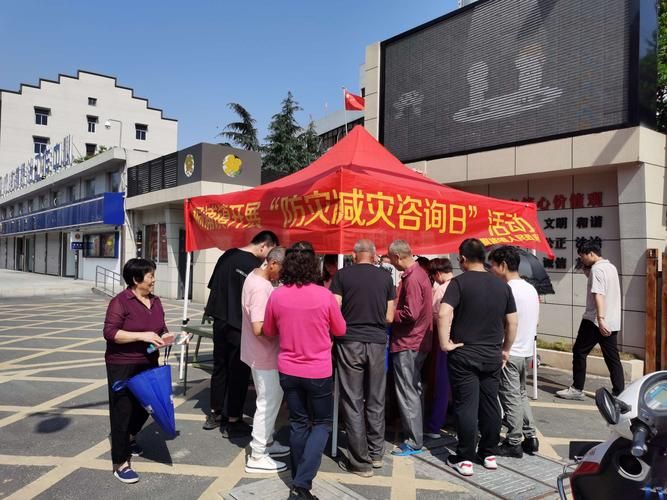
According to statistics, in 2025, there were 4. 23 million "calls" for party leaders at all levels and 2,851,000 emergency relocations. This year, during the national day for disaster prevention and mitigation and the week of awareness-raising on disaster prevention and mitigation, 12 distinguished delegates from across the country, including liu namfang, were honoured。
The relevant head of the ministry of emergency management stated that our disaster information staff, with a total of more than 1. 15 million people, had been able to protect the lives and property of the population against major disaster risks, such as landslides, floods, landslides and forest fires。
Making the grass-roots level a solid bastion against disaster risks requires a diversified system of grass-roots emergency response forces, “integrated + professional + social”, with clear lines of responsibility, strengthened synergies and a well-defined, secure and capable base-level response。
The cadres became “homemakers”. In recent days, a live training course on improving the capacity of grass-roots cadres in disaster mitigation and response in the north has been held, and technical experts have been invited to provide a series of practical training courses on early warning of weather, risk identification, preparation, early warning “call-back”, transfer avoidance, emergency preparedness, etc., for 278,000 village (community) party clerks in the north by the end of may。
There is a synergy of forces. “this mountainous area is a complex and difficult terrain, a vast area of water, and the task of fire protection and ecological preservation in the mountains is daunting.” according to wang yao, the party secretary and director of the xian regional emergency management agency of tianjin city, 24 district-level specialized relief teams have been set up in the region in the areas of forest fire prevention and drought preparedness, complementing four social emergency forces, such as the blue sky rescue team, to ensure that they reach and catch up at critical times。
Science and technology help to improve efficiency. “the town is equipped with drones, walkie-talkies, satellite phones, etc., and has also built up an emergency management intelligence platform capable of providing intelligence services such as hazard recognition, warning alerts, etc.”. The secretary of the taishi town party party, shuyong county, sichuan province, said comfortably that the floods in sichuan in 2025 had not resulted in death。
Use a well-structured approach to disaster preparedness “nets”

On 10 may, at 10 a. M., a warning was sounded in the village of mauhua, mau poe, peng poo county, shandong province, for the first time this year, an emergency training exercise on the transfer of flood hazards。
In less than five minutes, 10 emergency responders and 5 volunteers were assembled. On their backs, the search and rescue team headed towards the banks of the river, and the transfer team door-to-doord the homes of the villagers in the low-lying areas. The cordon team quickly pulled up the quarantine strip ... In less than 15 minutes, all of the 14 villagers living in the high-risk areas were safely transferred to the village council settlement along the planned route。
This year, shandong province issued a guide for the normative construction of the “seven ones” emergency preparedness of the vulnerable villages, namely, a programme for the relocation and livelihood security of the affected population, a standardized disaster reporting template, a temporary settlement, an integrated village emergency response unit, an emergency stock site, an extreme scenario emergency security equipment, a three-dimensional model of a village risk scenario covering pre-disaster preparedness, disaster disposal and post-disaster security。
“in accordance with the guidelines, 203 flash floods, mudslides disaster-prone villages in the province will be integrated with satellite telephones, mobile generator units and village 3d models.” the relevant head of the shandong department of emergency management stated that local areas could be adapted flexibly and accurately, taking into account the physical circumstances of the village, the size of the population and the type of disaster risk。
Towns (streets) and villages (communitys) are “last kilometres” of disaster preparedness response, and enhancing their disaster preparedness and response capacity is key to building the foundations of grass-roots emergency response。
In the beijing hills, five “highland forts” have been set up in two flat-size “highland forts” to provide for life, lighting, emergency power, medical supplies, etc., at least for the affected population 24 hours a day; fujian province has put in place a regular emergency response exercise, with communities organizing at least one integrated emergency response exercise every year; xian city, xian province, shaanxi province, has built 740 urban and rural emergency shelters, and over 3,000 communities (villages) throughout the city have set up emergency response teams, equipped with networked personnel, responsible for day-to-day screening of hazards and directing mass movements after disasters ..
“the number of grass-roots emergency radio broadcasts nationwide has reached 2. 84 million, covering 345,000 administrative villages”. According to the relevant head of the department of emergency management, the departments are working at the grass-roots level to improve disaster preparedness facilities, improve emergency management systems, optimize emergency response processes and promote grass-roots as the “first line of defence” for disaster preparedness。

Strengthened public awareness and awareness and capacity for disaster prevention and mitigation for all
"run high when you hear the knock. Don't be greedy!" at the end of the term, the “emergency awareness unit” was opened in the village of 8 miles of the municipality of ten villages in hubei province. More than 50 party cadres from all over the village wore red horse armor, walked into the village alleys, bowed to the door, and spoke in the usual language of the village about the flood warning signs, the evacuation route and the escape points。
In order to spread knowledge of disaster prevention and mitigation, village emergency response stations have integrated multiple resources and integrated the production of a ton-to-to-to-clause and dialect-based audio to keep the content on the ground and warm. Since the beginning of the current year, the emergency awareness unit has managed to reach more than 500 households, distribute more than 2,000 copies and conduct three exercises。
“we have organized a number of mega-flood drills, based on online interviews, inviting industry experts, cadres and rescue workers to analyze typical risk cases and to spread knowledge of disaster prevention and avoidance and self-help, so that scientific knowledge of disaster prevention can reach thousands of households.” according to the head of the hubei emergency management department。
And one man set a place of peace, and the people set it as a mountain. Everyone has become the “understander” of emergency response, and home-grown “firewalls” for disaster reduction will rally to raise the level of peace in china。
The province of jiangxi incorporated the knowledge of earthquake prevention and mitigation into the “first class” of primary and secondary schools throughout the province, where the regularization of a community of more than 1,000 people for the dissemination of science in schools; jiangsu province used the “su super” event to broadcast public service posters and open more than 1,000 educational facilities; zhejiang province's cross-border scene, pk hang chau, presented the traditional wisdom of “readiness and preparedness” in the form of an ancient dialogue on disaster prevention concepts; the xinjiang autonomous region organized an emergency science workshop on the great lakes region, with 33 candidates with 30 works in competitions with taiwan during the competition week。
The relevant head of the ministry of emergency management has indicated that the next step will be to strengthen the integration of resources and the development of educational positions, and to promote awareness-raising in disaster prevention and reduction in enterprises, in rural areas, in communities, in schools and in the family, so that a sense of safety for the entire population can take root and grow。



