01 overview of garlic cultivation technologies
The membrane-covered cultivation technology has become the preferred model for garlic cultivation, with the advantage of increasing the temperature of the ground, maintaining soil moisture and effectively curbing weeds, thereby significantly improving the yield and quality of garlic. We will then explore in depth detailed operational processes and core technical points for membrane garlic cultivation。
> selection and landscape
The roots of garlic are relatively shallow, and it prefers a fertile and wet environment, but it is not resistant to flooding. In selecting plots, therefore, priority should be given to land that is flat, deep, lax and fertile, and which is easily drained and drained at the same time. In addition, in order to avoid a possible confluence of endemic diseases, it is recommended to select plots of non-minus crops such as wheat, maize and beans。
Following the harvest of the front crops, residues and weeds should be removed from the fields immediately and tanned, with a depth of 25-30 cm, which would effectively improve soil aerobicity. The ground must be covered with sufficient base fat, mainly by decomposed organic fat, and a suitable mass of fertilizer. Typically, 4000-5,000 kg of decomposed organic fertilizers, 50 kg of compound fertilizers (15:15:15:15) and 30 kg of calcium per phosphate are applied to each acre. When the fertilizer is evenly distributed, the tillage is sprung to ensure that the soil is fully mixed. It is then made at a width of 1. 5-2 m, and the surface is kept flat at an altitude of approximately 15 cm, which facilitates irrigation and subsequent membrane cover。

> varieties and petals
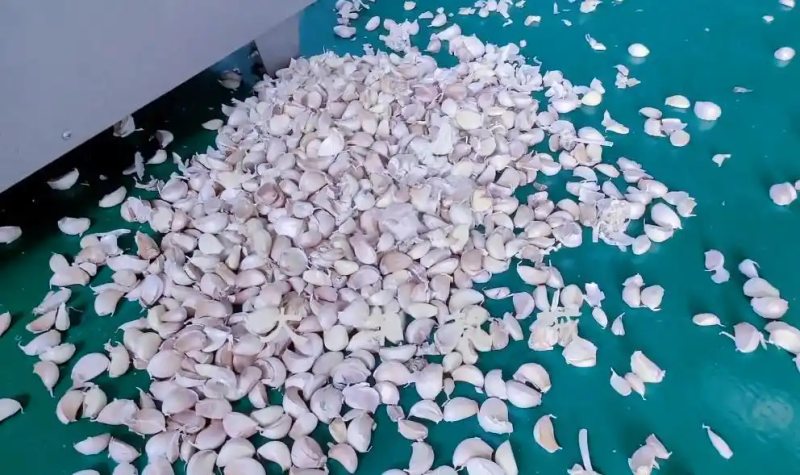
The selection of appropriate high-quality garlic varieties is based on local climatic conditions, market demand and planting purposes. In the case of pre-cooked and garlic-rich varieties, mainly for fresh food, and in the case of mainly garlic and garlic, medium-lated and productive varieties. High-quality petals should have the characteristics of full, balanced, non-destructive, non-pest-free and sprouts, with a single petal weighing 5-8 grams。
The six to eight hours of garlic dry before seeding helps break their hibernation and thus increases the gerbility rate. It was followed by a petaling exercise, the removal of garlic and a penis, and the removal of the sick and the disabled. In order to prevent a possible disease, a pharmacological mixing method can be used: sowing can be done by immersing the petals in 50% of the more than 500 times the humid powder, which is then dried up for 10-15 minutes。
> take the time to sow
The planting time of membrane garlic is crucial and cannot be too early or too late. Early seeding can lead to excessive growth of garlic before winter and thus to freezing, while late planting can affect the root growth of garlic and its ability to winterize. As a rule, we sow when the local daily average temperature drops to 16-20°c, a time that is usually between late september and early october in the north china region, where the southern region can be appropriately postponed until late october。
When we sow, we usually do it on tape or on-demand. First, a shallow ditch is dug on the surface at a distance of 15-20 centimetres, which is controlled at depths of about 3-5 centimetres. The managed petals are then placed in a ditch at a distance of 8 to 10 cm, ensuring that the buds are up and in place. The petals are then covered with two to three centimetres of fine soil, which is gently pressed so that the petals can be closely bound to the soil. Finally, a permutation to ensure soil moisture。
> dum cover
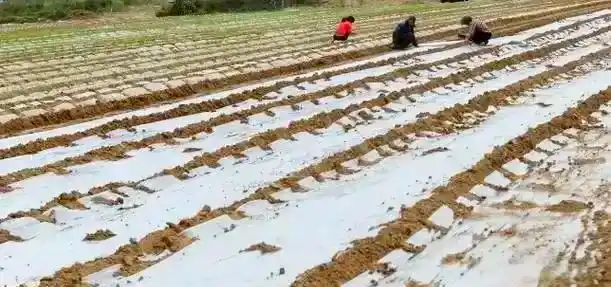
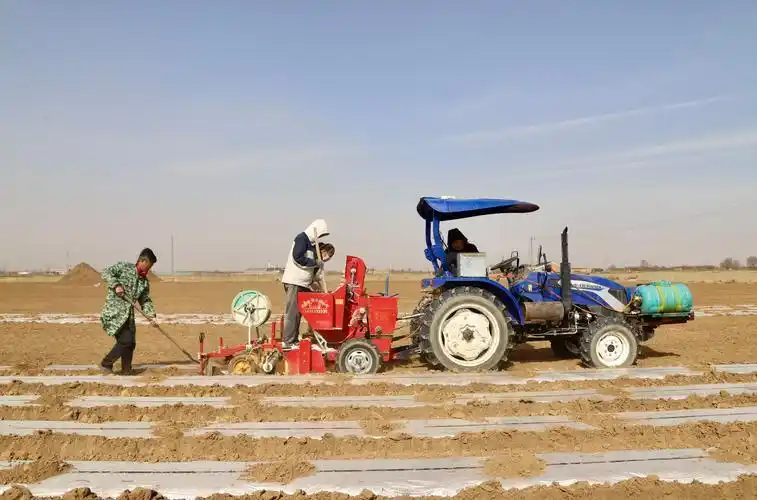
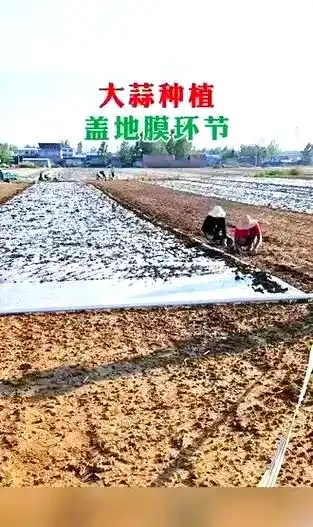
After watering, membrane cover is provided when soil is suitable, i. E. When the surface is dry and non-loose. At this point, white or black diaphragms with a width appropriate to the face should be chosen, where the weeding of the black diaphragm is more effective. During the coverage process, it is necessary to ensure that the membrane is tightened, levelled and attached closely to the face. In order to prevent the wind from blowing up the membrane, which affects its temperature-preservation humid effects, soil pressure should be applied to the surrounding areas. Integrating seeding with membrane cover can be achieved, if conditions permit, thereby further increasing the efficiency of cultivation。
> field management
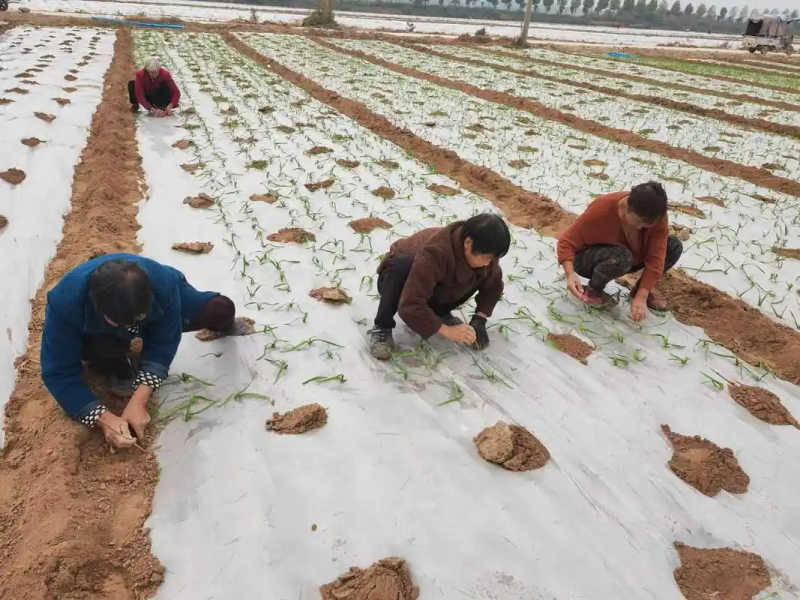
Once the garlic is released, a demural seedling shall be performed immediately in order to prevent the growth of the seedlings under the membrane. When the seedling approaches the membrane, a small hole in the membrane is opened with a knife or bamboo, which is carefully drawn out and the membrane around the hole is sealed with soil to prevent cold air intrusion. The best time for membrane seedlings is in the middle of the morning, avoiding operations at low temperatures。
Before winter, if the soil is droughted, winter water can be poured over once to increase the resilience of garlic. After the next spring, when the temperature has recovered, garlic begins to return to chrysotile, when 15-20 kg of urea per acre of water should be combined to promote the growth of seedlings. The long-term extension of garlic is the period of greatest fertilization, with 25-30 kg of compound fertilizer per acre being followed and adequate water supply ensured to maintain soil moisture. Garlic swelling allows 0. 2 per cent of the potassium phosphate solution to be sprayed on the leaves one or two times to promote garlic expansion。
Among the common diseases of membrane garlic are leaf deadness and rusty diseases, while the pests are mainly garlic mackerel and aphids. In the area of prevention, the principle of “preventives, integrated treatment” should be followed, and the resistance of plants should be enhanced through rational rotation, scientific fertilization, etc. Upon the onset of folate or rusty disease, 75 per cent of the hbw powder 600 times more or 25 per cent of the txd 1,500 times more can be administered. For the control of garlic maggots, baiting or rooting can be used, while aphids can be treated with 10% aphids of humid powder。
> harvest in due course
The best harvest time for garlic is when it starts bending at the top, and it turns white. At this point, the central part of the garlic can be seized, gently pumped up, or cut with a knife in the base of the garlic. Special care should be taken throughout the process to avoid damage to the leaves, as this may affect the growth of garlic。
Within 20-30 days of the garlic harvest, the garlic can start harvesting when most of the garlic leaves turn yellow and the mantle becomes soft. The garlic is extracted from the soil with a shovel, its attached soil and shaving roots are removed and then tanned in the field for two to three days, after the garlic has dried up, so that it can be stored or sold。