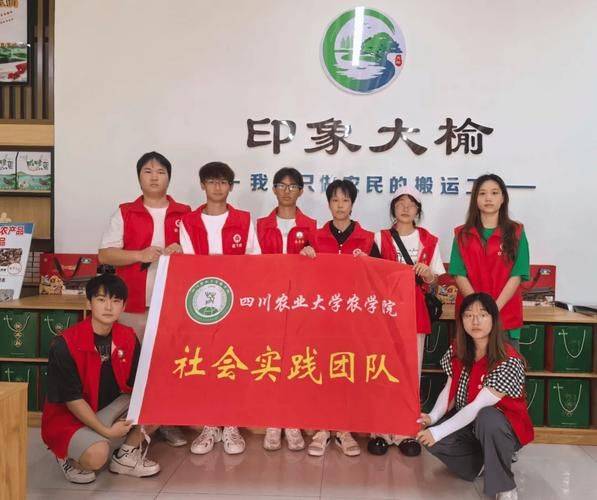
In line with the sichuan agricultural university's 2010 summer “three downs” social practice initiative, which further develops the positive role of social practice in strengthening and improving the political education of university students, directs a wide range of young students to actively engage in the great practice of “two accelerated” and vigorously promotes the great spirit of earthquake and disaster relief in the great practice of promoting scientific development and social harmony, and in line with the ccp central state council's opinions on further strengthening and improvement of the political education of university students, as well as the spirit of the sino-china declaration, the central civilization office, the ministry of education, and the cycyc centre's opinions on further strengthening and improvement of the social practice of university students, and in line with the requirements of the actual and higher-level organization of my school in the field of social practice for students in 2010, the following observations are being made on the great social practice of “three downs”, the following ideas are being taken into account. Thematic and practical activities for the promotion of pro-poor agricultural policies through field visits, questionnaires, and local implementation of the central policy for the promotion of productive farmers, using the advantages of information from higher education institutions, collecting up-to-date information on policies, regulations, technologies, markets, etc. Appropriate to the needs of rural economic development, training farmers in the collection and dissemination of agricultural information, setting up information stations for rural economic development, providing local governments and farmers with information on agricultural production and the development of rural communities, helping to maximize professional advantage in the field of local agricultural production, helping farmers to address the scientific and technological achievements of agricultural production and rural economic development through lectures, technical training, the distribution of science and technology videos, and the promotion of agricultural science and technology products. To reach out to the rural grass-roots level, to understand the current situation in the countryside, to deepen understanding and awareness of the new rural construction, and to enhance the sense of responsibility and mission of the contemporary university students in agriculture to actively engage in socialist new rural construction. Development of scientific and practical services for university students. To organize university students to reach out to disaster-affected areas, villages and communities, in conjunction with the central strategic decision-making and the reality of grass-roots development, and to disseminate widely the scientific content, the spiritual essence, the fundamental requirements and the practical urgency of scientific development in the light of the environmental and ecological constraints facing our province's development, and to increase awareness and capacity to promote scientific development. To convey sichuan's important decision-making and strategic significance in advancing the “two accelerations”, to help the public to understand the sole validity of the socialist path of china's identity, which insists on reform and opening up, to understand the major policies of the party and the government to integrate urban and rural development in a scientific development perspective, to promote the construction of a new socialist rural village, and to sing loudly to the communist party of china, to socialism, to reform and openness, to the great motherland and to create a strong atmosphere for scientific development and harmony among the peoples of china. In view of the fact that young people focus on human life in the country in the context of social security, equity in education, health reform, food and medicine security, housing issues, safe production, income distribution and household registration reform, young students are concerned with the most topical and realistic issues of interest to the population. Young students are actively engaged in research, advocacy and service activities focusing on human life issues from multiple perspectives and perspectives. Research and practice activities on the phenomenon of snails, ants and snails reach out to communities at the grass-roots level to understand the current state of life of young people and to study social phenomena unique to modern urban life, such as snails and ants, in the form of survey visits. Social problems are viewed from the perspective of current university students through an in-depth analysis of the nature of the phenomenon in the social context, analysing the underlying causes and seeking solutions and ideas. Rehabilitation of our schools in the aftermath of the earthquake, services for research and demonstration of modern agricultural technologies for post-disaster rehabilitation, agricultural support activities such as animal and plant disease prevention, promotion of excellent animal and plant varieties, dissemination of knowledge on crop cultivation, training in animal husbandry techniques, training of agricultural technicians, etc., are carried out in the form of field visits, study visits, exchange of talks, etc. Massive thought work is carried out through targeted packages, mobile services, rotational relays, etc. (c) to actively engage in a team of “hand-and-hand” students and students from the affected areas, “fortune and hope” groups, to fully activate the second class of primary and secondary school students, to build a spiritual home for young people, and to promote the physical and mental health and development of primary and secondary school students. Focus on accompanying and condolence of the three lones. The organization of “five ones” activities for volunteers accompanying the three orphans, i. E. A family visit, a psychological adjustment, a street tour and a film (television). The organization of small groups to carry out cultural tours in the homes of the “three orphans” grouping centres, social welfare homes, rural homes for the elderly, orphanages, decentralized settlements and single-occupancy “three orphans” to inform the policies and regulations of the party and the government and enrich the spiritual and cultural life of the “three orphans”. Volunteering activities for relief workers. Volunteers were organized to reach out to the affected areas, to offer condolences to provincial and external aid workers, to provide them with the assistance they could through a cultural performance, a volunteer service, a condolence event, an exchange interview, an in-depth understanding of the needs and difficulties of the aid workers, and an active interest in and service of their lives and work. (b) presentation of sichuan's trophies to aid workers, offering of condolences such as books and video discs, and enrichment of their amateur cultural life. A letter of thanks was sent to aid workers and family members, a grateful card was sent, school supplies were given to aid workers ' children, and they were invited to visit and exchange with kawakawa to help them enjoy a pleasant and full summer vacation. Bearing in mind that the series of educational activities organized the return of students from the disaster-stricken areas to their homes, the study of the practice of “accepting the opportunities of the world and looking forward to urban development” to the disaster-affected areas in the form of the display of a thanksgiving education film, the spread of an thanksgiving song and the teaching of a thank-giving story revolved around the concept of “cities for a better life” at the shanghai expo 2010, visits to the ongoing expo and visits by relevant government authorities to understand the impact of the 2010 shanghai expo on small and medium-sized cities. Taking into account the real needs of the children of the remaining migrant workers, the need to provide effective services such as community centres, schools for the children of migrant workers, rural centres for migrant workers, village schools with large numbers of children left behind, the organization of student volunteers focusing on academic guidance, hospitality, self-care, cultural activities and caring donations to help them alleviate their learning and living difficulties. A healthy and productive cultural event is carried out to help the remaining students enjoy a pleasant and full summer vacation. Explore the establishment of long-term support mechanisms to advocate for a society-wide focus on rural students left behind. In the earthquake-affected communities, summer camping activities for young people are conducted on a demand-driven basis to motivate students in the affected areas to work hard to learn and thrive. Services reach out to all parts of society, provide care for the elderly, the disabled, the underprivileged and other vulnerable groups. A study on practical activities for the employment of university students, entitled “re-employment of returning migrant workers”, organized professional internships and job placements in order to raise the level of social awareness, experience, competence and employment competitiveness. Research on the implementation of policies to support university-level entrepreneurship, the status of university-level entrepreneurship, problems and responses? 3. Characteristics of the era of financial crisis following the practical study on the theme “the impact of the post-financial crisis era on university-level employment and entrepreneurship”, through research, interviews with high-quality entrepreneurs, etc., to study the needs and demands of enterprises for talent and to combine them with a view to addressing them. Students are organized to work in urban communities, in rural areas, in research and in voluntary service, in order to gain a better understanding of the national situation, to undergo exercises and to develop skills. Our summer social practice activities this year will be based on two levels of priority team 1. This year, schools are planning to form sub-council priority teams. The priority teams are organized in a system of reporting to the school social practice steering group, which plans the programme, the purpose of the activities, the form of organization of the activities and the expected impact and effects of the activities. School funding is available to all focus groups duly approved by the school. Prior to july 2010, the college sent the priority team's declaration to the college office. The declaration must include the name of the team, the form of the organization, the team member and the tutor, the time of the event, the place of the event, the purpose of the event, the main content of the activity, the means and means of communication, and the expected impact and effectiveness of the activity。the focus group funding is based on part of the student's self-financing (including sponsorship), part of the college subsidy, part of the school subsidy (up to a maximum of $500 per team school);2 the college team. The colleges will organize their activities in conjunction with this year's social practice groups, and the colleges will allocate organizational fees (500-7000 bs). The team funding for the organization of the college is based on student self-financing (including sponsorship) and college subsidies. 3 students freedom team. This year's social practice theme and its main content is being used by individual students for the whole school