


Twisting corn: a technical guide to high-yielding, complex and efficient cultivation
Don xiaoxia
The togawa autonomous district is located on the north-east side of hozhou, where the provinces of guangxi, guangdong and hunan meet, and is surrounded by mountains and high north and low south, with a subtropical monsoon climate with abundant rainfall and a period of up to 318d. Most of the soil in the county is made up of flood-accumulants and fourth-century red earth-mothers, including red, mountain, yellow and yellow, with deep, organic and permeable characteristics, phosphorus, potassium, iron and other trace elements, ph values of 5. 5-7. 5. Climate and soil conditions are suitable for the growth of various southern medicinal products。
Togawa county council, county governments actively follow up on the implementation of the party central, the state council's programme for the implementation of the major project for the revival and development of chinese medicine and the circular of the office of the people's government of the guangxi autonomous region on the publication of the programme for the implementation of the programme for the promotion of the high-quality development of the pharmaceutical and pharmaceutical industries throughout the region (gwigung's office) in the spirit of document no. 98, the chinese pharmaceutical industry has been vigorously promoted, and the area under cultivation has been continuously expanded throughout the county, making it an important pillar for farmers to escape poverty and become rich. The authors of this paper, while serving the local pharmaceutical industry, demonstrated the promotion of an efficient cropping model using the growth properties of the twilight virulence of the winter. The model has increased both the production and quality of daily winters, while increasing food production and achieving a synergistic harvest of medicinal and food products。
I. Holding and holding
(i) landing
The site is to be selected according to the requirements of the new version of the gap, as follows: far from the sources of pollution such as villages, roads, farms, mines, factories, etc., at least 500 m; the soil is not contaminated by industrial “triple waste”; the surrounding water source is clean and meets agricultural water standards; the field is selected with a gradient of 25°, well-drinked, deep-dwelled and high organic content, avoiding the choice of water fields (the soil is permeable, easy to accumulate, and can lead to the rooting of the winter, bad growth or even extinction); and, to the extent possible, the chinese medicine and food crops are not contested。
(ii) land as a whole
After the selection of the plots, the excavators were used to dig up more than 50 cm deep, to break the earth blocks and to dredge them, and to remove the roots and roots of the grass. Each acre is distributed evenly with decomposed organic fatty 4 to 5t (at the time of stacking, 12% of each 4 to 5m2 organic fertilizer is spilled over calcium phosphate 50kg), followed by a ploughing machine that starts with a wide oxidation = 50 cm x 30 cm x 50 cm wide. The direction of the plume shall be vertically to the slope, which, if 15° gradient, shall be modified to the ladder before the plowing。
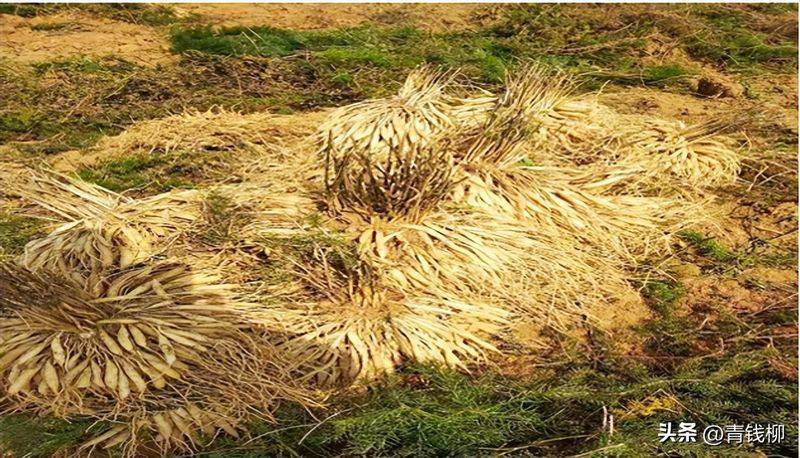
The winter harvest
Ii. Cultivation and transfer
Day and winter breeding methods include seed breeding, split breeding and tissue development. Among them, the organization of seedlings, because of their high cost, has not yet been replicated on a large scale, with the production being dominated by seed and plant reproduction。
(i) varieties selection and breeding
1. Winter selection and breeding
(1) varieties selection. At present, there are fewer well-selected types of natural winter, such as quini winter 1, pharmacy winter 2, etc. Most of the current growing winters are based on wild winters, which are expanded by shifting plants, and the choice of high-quality varieties is the basis for high productivity。
(2) selection of nursery grounds. The nursery grounds need to meet the conditions of soil estration, 5 per cent organic content (which can be supplemented with organic fertilizer if the organic content is insufficient), easy drainage and irrigation, and the conditions for the uncultivated cultivation of lily medicine such as heavy buildings, tianmen winter, lily, wheat winter, yellow sperm and mackerel。
(3) slender beds. Each acre is distributed evenly by fertilizers ranging from 1-2t, 12% of calcium phosphate and 45% of potassium sulfate compound fat 25kg, with a tilling machine that rises up to 120 cm wide, 20 cm tall and 30 cm wide, to level the soil。
(4) seed treatment and seeding. The seeds were collected in black during the winter of august-september, and fermented in snake-skin bags, which were then washed out of the seed and immediately wet the sand. The sand can be sowed after 10-20 d. The temperature is kept at 18-22°c, and in case of excessive temperatures, sunscreens are required to protect against cooling. The amount of seeding per acre range ranges from 10 to 15 kg, which can be reduced appropriately when seeds are mature, and when seeding occurs at a relatively high rate, and when seeding occurs in the spring of the following year, due to the drop in seeding rates, it will be necessary to increase the amount of seedage to ensure that the seedlings are well fed. Seeding may take the form of a strip or sowing, followed by a snail-throwing face, which allows the seed to be fully mixed with the soil, with a light suppression, which can pour through the water and cover the straw or membrane to keep it warm and humid。
2. Selection and sowing of maize varieties
(1) varieties selection. Under the corn crop model, maize is grown two seasons a year: in the early spring, fresh corn is grown in the first quarter, followed by fresh corn or ordinary hybrid corn. Fresh corn is divided into sweet corn and sweet corn, with a long-term 70-100d. In order to take advantage of the high prices of the early market, it is advisable to select sweet corn or sweet corn varieties from 70 to 80 d of the whole reproductive period in the first quarter; new corn varieties from 80 to 100 d of the second full reproductive period in the second quarter; and common hybrid maize varieties from home ownership。
(2) the manner of sowing. In the first season, fresh maize is grown using seedlings and in the second season, fresh maize or ordinary hybrid maize is broadcast live. The first season of fresh corn: 72-hole plastic seedlings were planted in hot sheds in late january, sweet corn seeds sprung to the ground and sowed two seeds per hole; and the second season of maize: 10-15d seeded in the middle of two dens of corn before the first season of fresh maize harvest。
(ii) deplantation
1. Winter migration
(1) period of planting. Every year, every winter and winter, it is possible to migrate, with the benefit of winter and spring。
(2) a seedling standard. The seedlings need to grow more than one acre and 10 cm or more, with more than three and free of disease; the seedlings need more than two beads and more than three whole beams, and if the roots are fractured, they need to be cut off in time to prevent the causing of a disease。
(3) sapling treatment. Sterilization is required before planting, with 50% chlorobromoisocyanouriate sp800-1000 or 50% more than wp500 immersed by 2min to extract dry surface moisture and plant it. They can be dug once they have been dug in autumn and winter. If they cannot be grown in time, they can be decontaminated and dry of surface moisture, stored with 60 to 70 per cent of the water content in the sand layer, and humidly protected by the membranes or covered straw, until the right time。
(4) cultivation density and patterns. The winter was planted in a canyon, with corn on the side, 30 cm long, and two rows were planted, with a row of canyons set aside as a sidewalk (for subsequent farming purposes), and in this way 1,500 per acre。
Corn transplantation
(1) the period of planting and the age of the seedling. The first season of fresh-eating maize migration took place in the middle of february, and when temperatures stabilized at more than 12°c, the seedlings were optimally planted as far as the two-leaf perturbation period, avoiding the use of older ones。
(2) the method of planting. First, a 60-cm wide membrane cover the surface, with a 30-cm range and a perforation of two maize seedlings per hole, with approximately 4,000 per acre. At the time of planting, the water is filled with solid root water with 2% urea or high nitrogen compound fertilizer + 1. 8% sodium sodium nitrophenol as2000 times, which reduces the time required for seeding and promotes the rapid growth of maize seedlings。
Iii. Field management
(i) fertilizer management
Water fertilizer management in winter
(1) fertilisation. The first fertilisation of seedlings, dominated by shower fertilizers, took place in about a month, with 5-8kg composite fertilisation per acre of potassium sulphate; a second fertilisation of seedlings, followed by weeding, with 45 per cent of potassium sulphate fertilisers per acre; and a combined fertilisation of 15kg per acre with 45 per cent of potassium sulphate fertilizers in july and september, respectively, in conjunction with drought relief. A 2 per cent concentration was applied to fertilizers or rare marshes on the same day of the transplantation (basket water = 1-3); a 45 per cent potassium sulphate compound weight of 100 kg/acre was applied to the dens from mid-may to early june and in early august; winter fertilisation in mid-december, after the removal of the dead branch leaves, decomposed manure manure of 2-3t/acre, 45 per cent potassium sulphate complex fertilizer of 100 kg/acre, followed by soil cultivation of 5-8 cm。
(2) water management. After winter and maize migration, micro-jet belts are laid in time to prepare for drought. In the absence of effective precipitation from 10 to 15 d, it is necessary to draw water to combat drought (especially in the autumn, in order to prevent drought in a timely manner and to avoid the effects of water scarcity on the growth of winters, insects and pests, leading to a decline in yields and quality); during the rainy season of spring and summer, water is released from the fields in time to prevent rooting。
2. Fertilizer management of maize
Corn is a carbon crop with a higher demand for nitrogen during the whole reproductive period, with low and slow absorption of nitrogen between the shrimp and the vertebrates, which amounts to about 1. 18 per cent - 6. 6 per cent of total absorption; and a significant increase in the absorption of nitrogen after the vertebrates, which peaks before and after the filamentation, accounting for 50 per cent - 60 per cent of the cumulative absorption during the reproductive period. Fertilisation is therefore based on nitrogen fertilizer and is applied in conjunction with potassium phosphorus fertilizer。
On the basis of the application of base-based fertilizer, fertilization is pursued twice, during the run-up and loudspeaker periods, respectively, and the penetration of holes is promoted (reduce fertilizer volatilization and loss and increase utilization). The urea is applied twice per acre in 25 kg, 12 per cent permium phosphate in 50 kg, 52 per cent per cent potassium sulphate in 15 kg, or 51 per cent (25-10-16) 50 kg of high nitrogen complex fertilizer, which, depending on the strength of the maize, is supplemented by the application of the estuarine fertilizer (weak plots). In case of pests and diseases, potassium dihydrophosphate may be added for leaf-capacitation. In the event of a drought, it is sufficient to fight drought in parallel with the winter。
(ii) weeding
There are currently no compatible herbicides available for use, and weed control is dominated by artificial weeding or cover-proofing。
(iii) pest management
The principles of “preventives, integrated approaches” are followed in winter and in pest control of maize。
1. Winter pest control
(1) common pests. The main ones are aphids, red spiders, euphemisms. 1 biophysical control: yellowboarding, blueboard baiting aphids into insects; release of aphids for herring insects: release of aphids and dictums against red spiders; 2 chemical control: aphids were selected to be treated with 10% aphids wp 2000-3000 times liquid or 50% americone wg 3000-4000 times liquid spray; red spiders were selected to be treated with 10. 5% avi dictim ew 1,500 times liquid, or 1. 8% anthracin ec 1000 times liquid + 11% acetium sc5,000 times liquid homogenized spray control; and thiram was selected to be treated with 2. 5% high-efficiency chlorocythrin ec 1000 times liquid or 50% thiophosphos-othion ec 1,000 times liquid root control。
(2) common diseases: most of them are decomposition and foliage. (b) measures to combat the root disease: a timely discharge of water from the field in the rain to prevent rooting; avoidance of damage to the tiny winter root system in the operation of 2 agricultural operations; strengthening of the control of underground pests to reduce the bad root caused by insect injuries; and chemical control: timely digging and inspection of the plant when atrophy has been detected, as well as the disinfection of the strain with bioplasm, 25% of the copper aus 300-600 times liquid, 30% of the mercuric acid as 800-1,000 times liquid or 75% of the trichlorfon sp 500 times liquid root, 7-10d apart, 2-3 consecutive times。
2. Corn pest control
(1) common pests: mainly aphids, corn troubles, grassland night moths, red spiders, etc. Agricultural control: selection of anti-worm varieties to breed strong seedlings; biological and physical control: release of acne to control the hatching of maize worms and grassland night moths, with reference to the biological control of aphids and red spiders; chemical control: acupuncture of aphids and red spiders to combat reference winter-related methods; corn worms and grassland moths choosing 20% of abenzomamine sc1000-1500 times liquid, 1. 8% of avec 1000 times liquid or 10% of americium suspension (depleted) 1000-1500 times flat spray control。
(2) common diseases: most of them are striped, bland, small, rusty. Agricultural control: selection of resistant varieties, rational planting, breeding of strong seedlings; 2 chemical control: selection of 5 per cent acinol sp500 times liquid, 43 per cent acinol sc1,500 times liquid or 30 per cent acne ester sc1500-2000 liquid spray control at the initial stage of the disease; repeated spraying of 2-3 successive times at the beginning of the outbreak; selection of 10 per cent anthracis cyclic wg 1000 times liquid at the initial stage of the disease, 43 per cent acreol sc1,500 times liquid or 70 per cent acinogen zincan wp 500-800 times liquid spray control at the initial stage of the disease, with 2-3 continuous spraying at the beginning of the outbreak; selection of 25 per cent acne wp 500 times liquid spray control at the initial stage of the disease。
Collection and processing
(i) pick-up processing in winter
It is necessary to grow more than 3a per day in winter in order to collect and sell, and premature harvests lead to small roots, poor quality, low pharmaceutical content and poor economic efficiency; after four years of cultivation, extraction is best at a time of high pharmaceutical content, high production, high quality and high selling prices. After the extraction, fat, white, disease-free meat roots are cut and sold directly to drug distributors or pharmaceutical companies; conditional growers are able to process value addition and the remaining smaller meat roots are divided into “two or more budding + three to four meat roots” for replanting or sale as seedlings。
(ii) corn harvesting processing
1. Fresh corn. The timing of harvests is crucial, with premature harvests, insufficient seed grains, low yields and low edible portions; too late harvests, weak seed skins, poor tastes and loss of commerciality. In general, maize seed grains are full of round, skins are bright and bright, and maize is harvested when it is tanned, about 22-28d after the pecking. After harvest, refrigeration is required in a timely manner, in addition to being sold on the local market on the same day, and ready-to-eat maize is processed within 24h of harvest. In addition to being directly on the market, fresh corn can be processed into frozen corn, corn canned, soft-packed maize, maize beverages, etc., with relatively simple production processes and higher value added, with a clear competitive advantage over ordinary maize。
2. Ordinary hybrid maize. When corn seed grains are hardened and leaves are completely yellow。
3. Straw treatment. After the first season of fresh maize harvests, the straws are cut off in time (to avoid affecting the second season of maize growth), which can be used as a feed for cattle and sheep to increase value added; and the second season of maize straws can be used as a support stretcher for the winter, saving the purchase of support racks and sunnets and reducing the labour costs of the racks。
Concluding remarks
The pattern of maize planting in the winter is fully compatible with the growing habits of the winter and the fear of the sun, and the planting of high-dry maize between the winter and winter cycles, which solves the problem of the shade during the high winter season, saves the cost of shade facilities, increases the production and quality of the winter, achieves two seasons of maize production, effectively resolves the tension between chinese medicine and food, stabilizes food production and enriches market supplies. The economic and ecological benefits of the model are significant and are worth promoting。



