It's a good way to grow medicine。
A number of newly arrived friends have been in trouble with their selection: they look at the expensive medicines, they look at the cold and they are afraid of breaking their hands. In fact, it is much more profitable to make sure that medicines are commonly used for those in high demand, even when they are grown from waste slopes and forested fields, than simply food and oil crops. Today we're going to take the potion of ginseng, yellow cucumbers, wet grass, fragrances and spa dates, from what to what. It is clear at once that it can be used by farmers who want to plant medicine and by friends who want to maintain it。
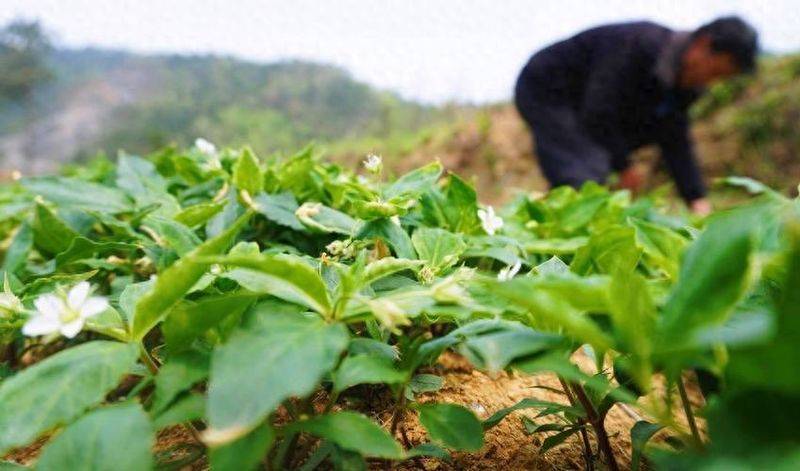
First of all, prince zin, it's often called a child zin. As a “moderate” of the gas boundary, it is based in fujian, guizhou, anhui and shandong. This taste prefers warm and wet, most afraid of the heat and sun, so that it grows the most in the sandy sandy soil, which is thick, loose and well drained, with the highest quality being planted in hilly areas between 800 and 1,200 metres above sea level. It is also particularly suitable for forest or orchards and does not compete in any way with staple foods. The planting threshold is not high, it is bred by roots, which are broadcast from october to autumn in october to november of each year, with healthy and disease-free roots, which are placed in a ditch at a 15-cm range and a 6-cm stretch, with soil around 5 centimetres, and enough water for the root. In the latter period, care will be taken, two or three grasses will be pulled from the seedlings, and during the rainy season, water will be drained, and one or two thin fats will be applied over the long term. In june and july of the following year, the leaves are yellow enough to be poached, and drying is the medicine. The pharmacy standard for princes' drying is now worth between $30 and $60 per kilogram, 150 to 250 kg of acre dry produce, with a net profit of 3,000 to 6,000 dollars for rooting and labour costs. It has a temperamental temperament and a much warmer drug than humans and does not have a fire. It is particularly useful for people who are spleeny, weak after illness, and who suffer from a lack of abscondment. It is also a regular patient of pediatric care。
The second one is the yellow one, the famous northern one. It is in the core of the gas pharmacists, and the land estates are concentrated in inner mongolia, shanxi, gansu and heilong river. It prefers cold, dry, dry, drought-resistant and flood-resistant, and is extremely resilient. Even the slopes and even the mild salines can take root, most suitable for the deep sandy sandy or chestnut calcium. The yellow sprouts are bred by seeds, spread from april to may in the spring and from september to october in the autumn. New species will have to be selected for the year. They are sprouted with hot water at 30 cm range and 15 cm range, and the soil is soaked with water at 2 cm, and seedlings are produced for about 10 days, up to 10 cm in length, leaving one or two saplings in each den. The management of the pharmacological material is extremely extensive, removing two or three grasses each year, and following up on potassium phosphate for a long period of time, almost without major illness. The next two to three years, the fall roots will be cut dry. The current pharmacological standard for the purchase of yellow dry products is 20 to 40 dollars per kilogram, with a higher annual slant price of 300 to 500 kilograms for dry acre and acre pure profits of 4,000 to 8,000 yuan, which are classics with extremely stable patterns. It can be used to improve the sun, to contain the sweat, to swollen water and to feed the blood. It can be used for lack of energy, indulging in diet, and in the sweating of the edifice. It is also a good food for the general population. Large pharmacies and tablets require large quantities of water, and the road is stable。
The third is the summer weed, which is a frequent visitor in the field of thermal quench fires. They are mainly produced in jiangsu, anhui, henan and hubei. They are warm and wet, resistant to cold and infertile, and they are unchallenged in soil quality. They grow on fields, on waste slopes and even on roadsides, and are highly adaptable. In spring, from 3 to april or in autumn, from 10 to november, new species are saturated at 25 centimetres and 15 centimetres, with three or four grains per den, 1 centimetre of lid water, around a week of seedlings, and a sapling is set at 5 centimetres. The management effort was almost unaffordable, with two or three weeds removed from the whole reproductive period, followed by one organic fertilizer before flowering, and very few pests. The following may-june, when the ears turn brown, the sun drys the medicine. The purchase price per kilogram of dry goods that now meet the pharmacological criteria is between $10 and $25, with an acre production of 200 to 300 kilograms, a high yield of up to 400 kilograms, a cost of about $2,000 to $4,000, and a well-established low-input and fast-out-out-production variety. It specializes in flaming liver cavity, dispersing eyes, dizziness and tumours caused by hepatitis, and in the form of large cool teas and psychothermal psychoactive materials, the market is often short of demand。
The fourth one is fragrance, commonly called northern fragrance. As an essential drug for solid and profitable growth, the land estate area in the three north-eastern governorates and in hebei, which is a cool and humid veggieland resistant to the cold, is best grown under a mountain forest of 1,000 to 2,000 metres above sea level, and can be planted with man-stretching and not fertilizing fields. During the period from 4 to 5 may, seeds or pegs may be used to plant a seedling at a distance of 1. 5 m and 0. 5 m to plant a root water, which will be used to carry the chicken to the ground. The key to management is to trim the twigs, catch up with complex fertilizers for two or three long periods, and run out during the rainy season. The first three to four years of planting can be 10 to 15 years of harvest, while the fall fruit is tanned and then dried. The current purchase price of us$ 60 to 120 per kilogram for dry north-face-face-face-face-face dry goods, 150 to 250 kg of dry fruit acre, and acres with a net annual yield of us$ 6,000 to 15,000 after cost, is an example of a long-term high return. It is solid, renally stinging, coughing, dreary, sweating, insomnia, and is the core ingredient for breathing, pacing and supplementing medicine, with a constant harvest and steady demand。
And finally, talk about fried dates, or sour dates, and the absolute power of the medicine. The main source of the product is to wait, wait, wait, wait, wait, wait, wait, wait, wait, wait. The seedlings are planted with acid-tree seeds, which are planted in the spring from 3 to april or in the autumn from 10 to november, and the selected seedlings are planted at a distance of 2 metres and 1 metre. The care is extremely low, cutting branches once a year and chasing farm fat once a year. The next two to three years of croquettes can be harvested for decades, and when the fall fruit matures, it is taken to the shell to collect seeds, and it is then made to make dates. Today, pharmacy-compliant date-dry products have a strong purchase price of $150 to $300 per kilogram, acre dry products of 100 to 200 kilograms, elimination of processing and seedling costs, and acres of up to $8,000 to $20,000 per year, which are long-acting gold brands with little care and high returns. It provides for the liver, peace, sweat, sleep, dream and sweat, and is used as a base for medicine in almost all the anglicans, in high demand and at high prices over the years, the most cost-effective to grow in mountainous areas。
In the end, we give our friends who are ready to enter the profession: these are the most popular varieties recorded in the chinese pharmacy, which are stable and marketable. Let's not be blind to high-priced cold-doors, and keep a steady grip on regular varieties. I'd like to hear about what kind of medicine next time。