


First, the choice of suitable varieties has received widespread attention as a result of the rapid growth of the country's economy and the increasing demand for mushrooms in the market. The most important thing to do is to choose the appropriate mushroom varieties in order to improve their production. The variety of mushroom varieties and the different requirements for the growing environment make it necessary to select mushroom varieties according to the climatic characteristics of the cultivated areas. If the mushroom varieties are not chosen in the right way, no matter how high the planting techniques are, they will not work. For the lai district of lejum city, shandong province, the local climate is of high quality and the variety of mushrooms can be cultivated over four seasons a year. The selection of mushroom varieties should therefore be considered in a comprehensive manner, with suitable mushroom varieties selected according to different seasonal climatic characteristics, followed by formulation blends, steam, fermentation, etc., in preparation for subsequent vaccinations。
The selection of appropriate vaccination time and measure is in a warm-temperature monsoon climate in the lai district of lejum city, shandong province, with a concentration of precipitation, with an average annual temperature of 11 to 14°c, and the planting of mushrooms in four seasons of the year, so that the selection of vaccinations is based on the best time and method of planting mushrooms in each season. The selection of suitable mushroom cultivation varieties is followed by the selection of appropriate vaccination measures. Inoculations of mushrooms are divided into two steps: germication and germ control. One is germic. Cultivation takes into account the mushroom season, generally using 43 cm - 47 cm x 25 cm - 28 cm polyethylene tubes. In summer, however, special attention should be paid to the fact that, because of high summer temperatures, the choice of a bag of material is more heat-resistant than that of a bag in general, and its specifications are smaller than that in order to ensure normal growth of the mushrooms. First, bacterial species, tools, indoors should be sterilized during the infection and then the indoor temperature reduced to below 30°c before filling. Selecting the appropriate bag to load the material, the bag is to be filled with several holes around the bag to maintain the breathing space of the mushroom. Second, during bagging, one layer of material is filled in the order of one layer of bacteria, in three to four layers, making sure that the outermost layer is material. Finally, care should be taken to keep the material as tight as possible when bagging, preferably not too loose, or otherwise affect the growth of the mushrooms. Two is bacteria. The first is to identify the place where the disease is produced and to ensure hygiene, dryness and shelter and good ventilation. Packages are selected according to the fungus planting season, for example, when temperatures are lower, there are more layers, and when temperatures are higher, there are fewer. Secondly, to control the temperature and humidity of the nursery, the average temperature is between 18 and 28°c, and the humidity is below 60%, and care is taken to maintain fresh air in the nursery and to protect the pests in a timely manner. Finally, packages are periodically replaced and checked, and damaged bags are picked up in a timely manner to avoid affecting the growth of other kits. Third is the temperature in the composting and the tipping. On the second day of construction, the core temperature begins to rise gradually, and on the fifth to sixth day, the central temperature rises to a maximum of 70°c, when the first dump is carried out. Thereafter, the amount of water is kept at 65 to 70 per cent per dump at about 5d. At the second dump, plaster powder and calcium carbonate are added. The composting can decomposed after 4 to 5 rolls. The stack period is 25-30d. Four are composted and fermented: double fermented. The second fermentation of composting can be divided into two steps: the first step, increasing the compost temperature to 60-65°c and maintaining 2-4h to eliminate the remaining pests and harmful microbes in the compost (paste disinfection); and the second step, a slight ventilation, reducing the compost temperature to 50-52°c and maintaining post-fermentation to 4-7d, allowing the beneficial microbes (lined bacteria) to fully grow and reproduce, and then reducing the temperature to 25-26°c for seeding。
Iii. Shroom management
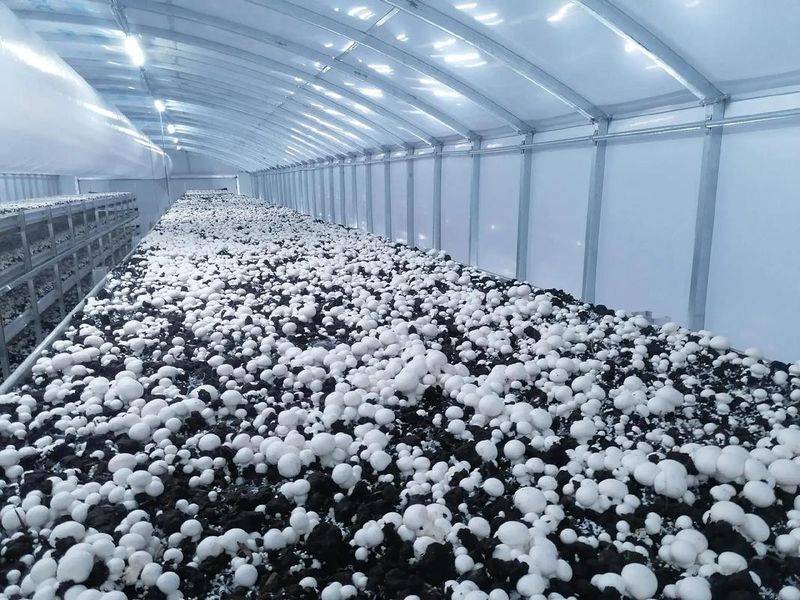
The good and bad of the mushroom-out stage directly affect the production of the fungus, so better maintenance and management of the fungus-reciprocation period, the original base period, the coral period and good ventilation and humidity are ensured. The mushrooms are managed according to indoor temperature, humidity and ventilation. First, when the fungus in the bag is full, the bag is moved out of the mushroom shed, and 4d to 5d is cultivated, and the bag is unseparated when the foundation is formed, and the mushrooms begin to be ready for mushrooms. Second, the indoor temperature is adjusted to the growth characteristics of the mushrooms, generally not exceeding 26°c. At the same time, the humidity of the room should be controlled so that proper spraying can keep it wet so that it can be between 80 and 95 per cent. Finally, there is a need to maintain indoor ventilation and to give appropriate dispersive light, usually between 500 and 800 lx. Adequately provide suitable conditions for the growth of mushrooms until they are growing in size, with a fungus handle of around 13 cm, and they are collected when the cover becomes thin。
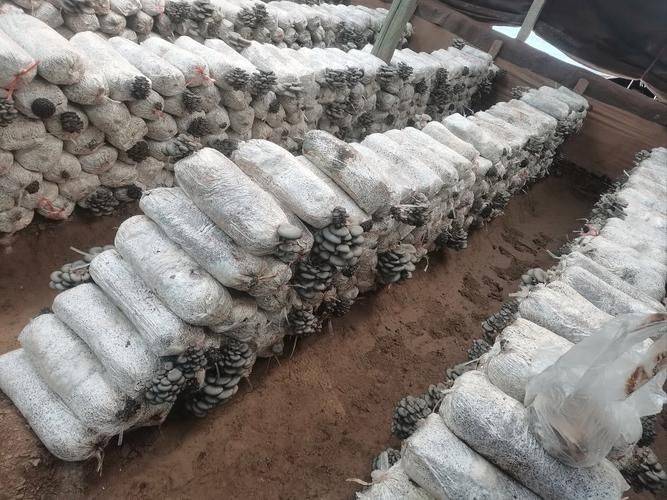
Iv. The mushroom can be harvested when the mushroom cover is 2 cm in diameter, 2-3 times a day, and must be collected in a timely manner when the membranes become thinner. A smaller harvest than the standard required is due to the growth of the oxen mushrooms. No water is sprayed on pre-smoothopsis beds in order not to cause sludge contamination, to produce finger marks and to affect beauty. There is a requirement that mushrooms be taken in the same way, that they be distributed according to grade and that they be kept clean. The post-smooth beds are prepared in a timely manner, the roots of mushrooms are cleaned, death, disability, disease mushrooms, etc. Are removed and then humid soil is used to level them。
V. Pest management
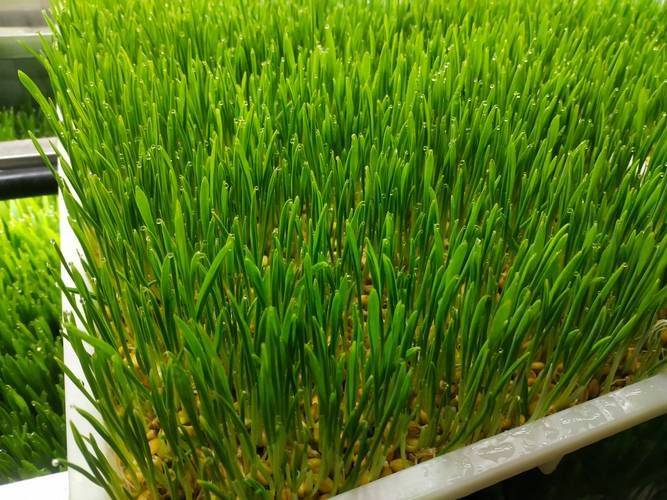
In the context of preventive/integrated treatment methods, precautions should be taken in the case of mushroom rooms, the selection and seeding of raw materials and secondary fermentation, as far as possible without pesticides in case of disease or insects, death, disability, mushrooms and mushrooms, and the timely elimination of contaminated earth particles, in strict compliance with the ny/t939 guidelines for the use of green food pesticides, the use of lime, bleach, etc. In conventional sterile materials. One, the fungus control method. The quality of the bacterial species is ensured, strictly sterile, and pollution is eliminated; in the case of fungus in the fungi bed, only one dose of bordeaux 1 pesticide can be used for each pesticide that meets the requirements for application; and, second, control measures for mushrooms and mushrooms. Sanitation to prevent pests from growing, mushroom doors and windows, ventiles are secured by a pest-proof net, and pests are isolated from entry。



