


It's a mushroom-eating technique.
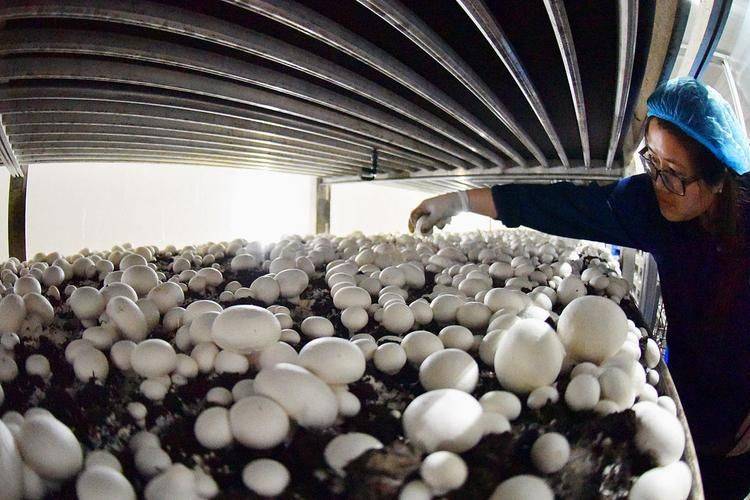
Indoor mushroom cultivation requires certain facilities, such as houses, beds, etc. In the process of planting, the handling of nutrients and earth grains has significantly increased the costs and labour of the mushroom farmers, and the mushroom houses have reduced the production and quality of mushrooms due to the year-to-year planting of mushrooms, increased densities of fungs and pests in the rooms, and a slight neglect in disinfection. In recent years, the state has strengthened the management of land, and there will be greater difficulties in the construction of standardized mushroom houses for large-scale development of edible bacteria. As a result, mushroom cultivation has evolved from indoor to outdoors into the future direction of large-scale mushroom cultivation. The mushroom farmers at the mushroom production base in the chongqing sands dam have successfully grown under the technical guidance of experts in idle winter rice fields, yielding 7-9 kg per square metre and with simple facilities, low costs and infestation, reducing labour intensity and labour use. The slag from mushroom cultivation, which is disposed of in situ and which is the fertilizer of organic farmers in rice fields, creates a good ecological agriculture model and produces both social and economic benefits。
Its cultivation measures are:
1. Paddy fields grow mushrooms by using non-existent winter water fields after the harvest of rice. When rice is drained by seed, the rice fields are drained and the compartments begin to be packed as follows: 2 ditches, 3 compartments, 1. 5 metres in the centre, 1 metre in the side, 0. 3 metres in the width, 0. 3 metres in depth and 10-15 metres in length, 3 ditches, 1. 5 metres in the width and 0. 3 metres in the width of the ditch. When it is made, the field in the ditch is excavated, and the base is on the side of it, forming dirt to block the culture. Garages are also used for the movement of operators and drainage. A human typology shed was built on the side, and the central pillars of the shed were reinforced with bamboo or wooden sticks at a height of 2. 4 metres. The poles were connected to each other with poles. Cover the beam with a membrane, and pull both sides into a natural triangle. With thin paddy straw, it is placed on top of the bells with a heavy-grained fan, which acts as a shade of light. A black plastic film can also be used to stretch through the beam to form a human triangle without using a fur fan to cover the light. Two heads of the shed, covered with straw curtains. Outside the sheds, the surrounding drains should be completed。
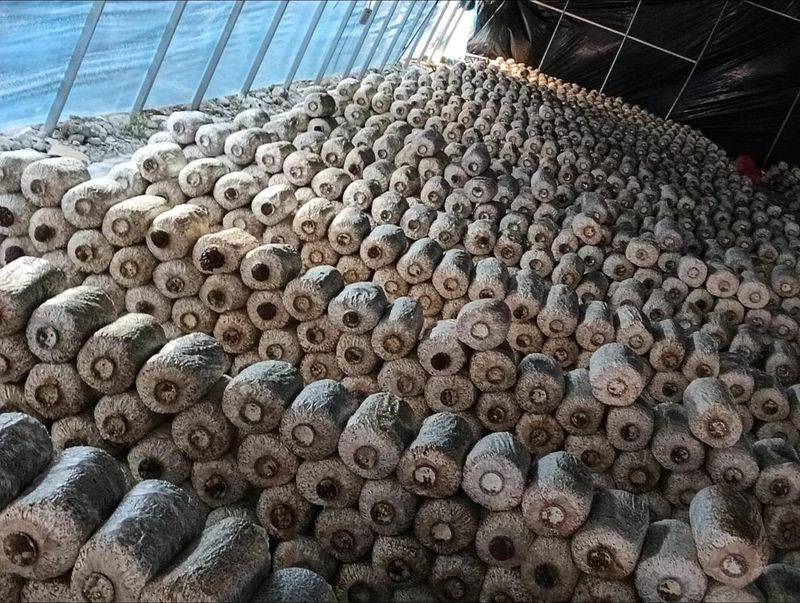
The fermentation of the culture is the same formulation of the culture as the indoor mushrooms. One fermentation and two fermentation methods are available. Instead of fuel heating, outdoor secondary fermentation uses natural high temperatures in early autumn to achieve secondary fermentation and lower production costs. The method is to use bricks and stones as cushions, about 20 centimetres tall. Sticks are placed on the hot poles, and bamboo blades are placed on the rods, especially as a bed frame, which is 1. 5 metres wide and has no fixed base. Pyramid fermentation is used to transfer water to handpumps of 5-6 drops of water, then lime is used to ph to 7. 8-8. Cultivation is then stacked on the base, pre-positioning sticks or bamboo into air vents. When the material is stacked to a height of 0. 8 to 1 m, the vents are typified, and when the material is stacked, the rod or bamboo is pumped out, it becomes naturally empty and makes a channel for the exchange of air within the material. Insecticidal on the surface with 0. 5 per cent dd or dicofol spray. A simple frame of bamboo is then constructed around the pile, with a 20 cm or so of the fabrication stack, to prevent plastic membranes from fermenting directly onto the culture. The film is finally covered. Material piles are closed in thin membranes, taking full advantage of the day-time sunlight and the fermentation heat accumulated in the piles, resulting in a rapid rise in temperature above 62 °c. At the end of the high temperature, the temperature is cooled at 1-2°c per day, with ventilation at 3-4 times for 30 minutes each. Temperature control ends at about 50°c, 6-7 days of fermentation and can then be moved into the human typhus when the temperature is below 45°c。
3. Painting and seeding. Two days before the material enters the shed, a full spray of 0. 5 per cent of the dichlorvos was used to spray the planting bed and prepare the material for entry. The amount of water contained when the culture was laid on the floor was 63% ~ 65%, with a drop of water in hand, ph 7 ~ 7. 5 without ammonia. The thickness of the fabric is 13 to 17 centimetres and the edges are mixed, evenly. When the material is prepared, the temperature is measured using thermometers, which, if below 28°c, are known to sow. The sowing uses more class particles, with 0. 7 to 0. 8 square metres per bottle. Pre-show operators disinfected 0. 1 per cent of potassium permanganate in hand, tools and bacterial bottles. When seeding, two thirds of the fungus seed is spread over the surface of the culture, then the platinum of the material is rolled over with the hand, and the remaining one third of the seed is spread over the surface, with light pressure from clean wood。
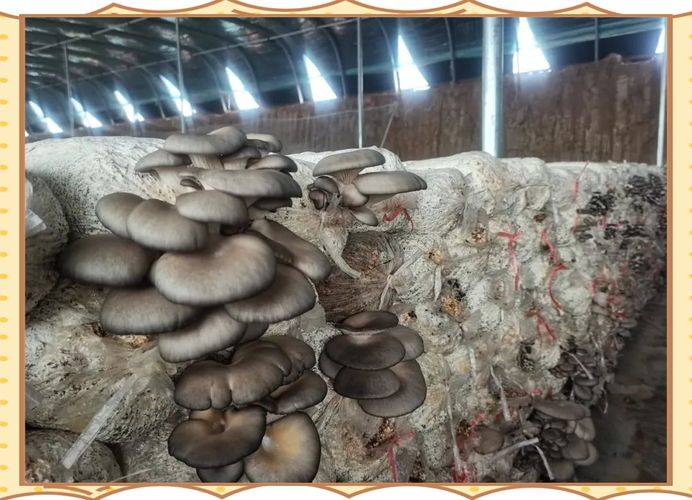
During the three days following the planting of the fungi and mushroom management, the man's writing sheds, both of which are covered with straw curtains to keep them warm and humid, contribute to the growth of the bacterial seed and to the food. Three days later, the sheds could be properly opened at night and aired. In 15 days, the inside wire is almost full, so it can be covered. The land is mixed with wet soil. It covers the surface in equal order. When the mycelium is sewn to the ground, a heavy water spray begins, prompting the mushrooms to grow rapidly, and during the entire period of the mushrooms, the water is managed with light spraying and the soil moisture is maintained. After spring, temperatures rose, attention was paid to increasing the amount of water being sprayed, and efforts were made to increase the number of spring mushrooms. By the end of the entire rice field in april, the human typhus could be removed, the slag spilled into the rice field and the slag of 667 square metres spreads 2700 to 3300 square metres. The slag is a good organic fertilizer that increases rice production and reduces fertilizer application. The cultivation of mushrooms in rice fields is a good way to develop the resources of rice fields and guide farmers to become rich。



