Low-yielding forest causes and adaptation techniques for crustacean walnuts
Fund project: forestry authority of zhejiang province (no. [2019]90), study and extension demonstration of low-yielding walnut forest conversion and pest control techniques in shell mountain。
Yushiro, etc
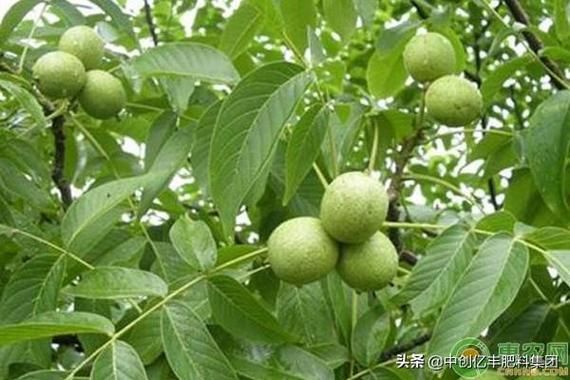
Carya liminoensis k. Koch is one of the species of high-quality dried fruit and woody oils, with thin nuts, a high yield rate (50-70 per cent), easy to obtain, strong nuanced, sweet and nutritious. Nutrients containing 11. 4 g/100g protein, fat 74. 4g/100g carbohydrates 10. 7g/100g carbohydrates and containing multiple vitamins and a variety of amino acids for human benefit, have the effect of intestine renal supplementation, coughing of lungs, haemorrhagic pigmentation, and brain prodigy. Its fat content is over 70 per cent, better than 44 per cent of its tea, 60 per cent of its walnuts and 57 per cent of its canopy fruit. The amount of unsaturated fatty acid is 97 per cent, better than 91 per cent of tea oil, 89 per cent of walnut oil, 82 per cent of peanut oil, 70 per cent of cottonseed oil, 86 per cent of soybeans oil and 86 per cent of maize oil, including 61. 4 per cent to 83 per cent of oil sour acid, close to 65 per cent to 85 per cent of olive oil, and 0. 85 per cent to 2. 1 per cent of soybolic acid, which is higher than olive oil and tea oil, and is the top cooking and cold cooking oil。
As people's standard of living improves and consumption perceptions shift, the higher nutritional value and supplementation of crustacean walnuts are increasingly favoured by a wide range of consumers. In particular, with the windfall of the domestic market in recent years, the cultivation of the walnuts of the walnuts of the crust has been on the rise throughout the country, with a total area of 80,000 hm2 growing over the past 20 years. At the same time, in practice, inappropriate selection of varieties and inadequate configuration of pollination varieties have resulted in a number of low-yielding forests with severe flowers, low yields, poor quality, visible years of age and fruitless light trees, severely constraining the development of the walnut industry. Therefore, how to accelerate the transformation of low-yield forests is of great importance for the healthy development of the shell walnut industry。
1 status of the development of the shell mountain walnut industry in the city of zengde
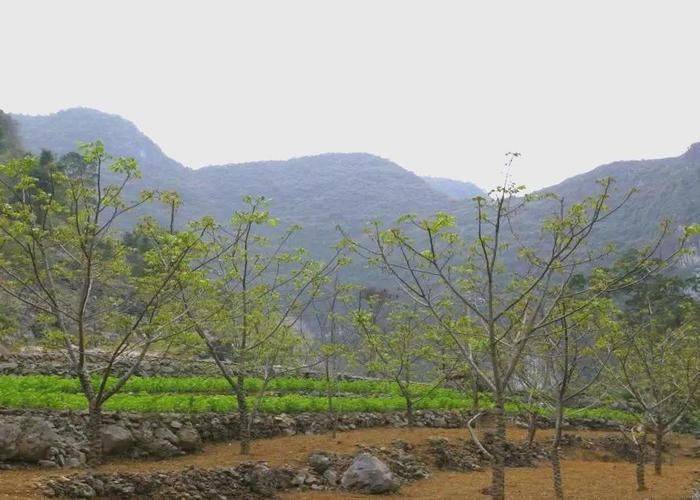
In the early 1980s, with the help of a collaboration group comprising the zhejiang academy of sciences, the zhejiang forest institute and the zhejiang university of agriculture, the city of zhejiang, one of the first counties in the country to grow and promote zhejiang walnuts, introduced such excellent varieties as `mahan' from abroad and abroad. High replacement planting tests were carried out in the zheshi zhushan zhuang forest, with an average yield of 2250 to 3,000 kg/hm2 in the six years following marriage, with better results. In particular, in recent years, with the help of research institutes such as the chinese institute of forestry sciences, the institute of forestry sciences of zhejiang province and the zhejiang university of agroforestry, technological bottlenecks in scaling up have been broken, and some results have been achieved in the field of seed selection, laying the technological foundation for the development of the shell walnut industry. To date, two variety gardens have been set up to collect 127 good goods from home and abroad, 36 of which have been tested in a non-sexist stage, with a cumulative promotion of 667 hm2 for the planting of walnuts and walnuts in the crust, with a maximum annual production of 50 t. With a value of $3 million, mainly in more than 10 townships, such as sandu, may, ocean, lotus, dry landing, hm2 as 2001-01 the fruit forest planted in 2013 with the main `mahan ' plant was the `weston ' , with the main pollination configuration, with the forest cultivated mainly on hill slopes and small fields. Although a small number of fruit-based forests, mainly `mahan', have been converted to pollinators or artificially pollinated, with a maximum yield of 2627. 1 kg/hm 2, more than 80 per cent of fruit-based forests are currently produced at long periods of low production at more than 95 per cent of the fruit-based forest, with little economic benefit to the grower, owing to the extreme seasonal water demands of `mahan'. Base management is either widespread or semi-desolation, seriously affecting the overall economic benefits of the crusty walnut industry。
2 types and causes of low-yielding forests of thin-shell walnuts
2. 1 infertile land the low-yielding forest type usually has poor land conditions, thinner soil, sandy soil, poor water fertility protection, insufficient light to satisfy ' the mahan ' varieties, which grow normally and have a strong demand for light and water fattening, are usually mixed in size and size, with fewer flowers and less abundant fruit。
2. 2 poorly configured pollination varieties the low yield of low-yielding forests of this type is due to the fact that the " mahan" species are female first, that the female flower has a five-to-seven-d flower that is barely self-affordable, that the pollination varieties are poorly configured and that the pollinating species are not flowered, as was the case in 2002 when the fruit forest with the " mahan " as its main plant was planted, that the established pollinator species were " weston " , and that the male flower was found to have fallen short five to six years later when the " weston " flowered. The flowering season of the mahan ' female, the walnut forest of the crust, is usually fruitless。
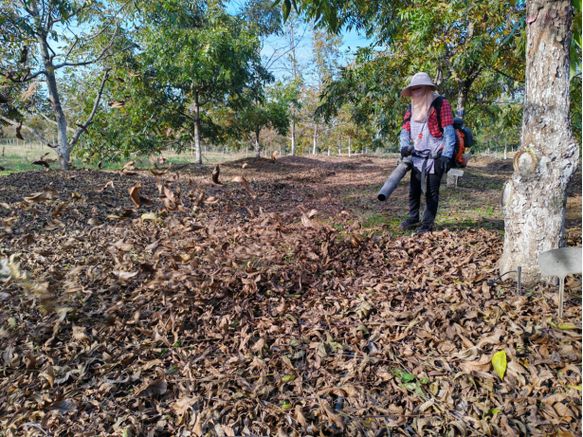
2. 3 over-intensity of cultivation. Low-yielding forests of this type are usually over-intensified, followed by extensive management and severe pests. For example, in the period 2002-2012, fruit trees were planted with the main `mahan ' plant species, mostly at a distance of 5 mx (6-7 years)m. Because of the faster growth of the `mahan' species, eight to 10 years of basic depression can be observed, most growers are not estranged, with the growth of their planting age, the forest is too closed, the forest is luminous, the radiant conditions are extremely poor, the lower part of the tree canopy is largely dead, with little result, with only part of the upper part of the tree crown remaining in the solid area; and the pecan crop cycle is long, late in production, before cultivation is largely unprofitable, post-management coarse leaves behind, leading to a severe occurrence of disease and pests, with a large amount of fruit-based infestation and infestation, with dark and bitterness and total loss of commodity value. The pecan forest of the thin hulls is usually a serious flowering fruit, which is extremely significant in its age and age, with poor quality。
2. 4 low-yielding forests of this type are often characterized by certain deficiencies in the main plant varieties themselves, which are difficult to replicate in production. For example, the “mahan” species, the main plant in the built-in region, was one of the first walnuts to be introduced in the country, producing 2250 kg/hm2 for six years in the built-in field walnut test forest; but because of their high demand for water fattening, natural precipitation is not enough to meet the strong demand for growth. In the roll-out of the mountain planting experiment, most of the forests of almost 20 years of age have been almost unproductive, with very poor economic benefits, and shell walnuts are usually fruitless。
3 low-yielding forest conversion techniques for crustacean walnuts
3. 1 improperly configured low-yield forest conversion
3. 1. 1 rationally configured pollination varieties according to the main plant species mahan's female can be given a period of time, and the original pollination species are not properly configured. High-level conversions such as weston to `arlin 35 ' `poney ' and `cardo ' , which meet during flower seasons and produce high-quality pollination varieties, would be preferable to those that pollinate each other with primary plant varieties such as boney, which overlap with most of the `marhan'she can be given, and most of the `mahan'she can be given to overlap with `mahan ' , which ensures both full pollination of `mahan ' and increased pollination of `boni ' and maximizes production of fruit forests. The effective pollination distance of the crusted walnuts is 60 to 90 m, and the general main plant varieties are configured in line with the pollinating varieties at a ratio of 3 to 4 :1 and the hill terraces (5 to 6) :1。
3. 1. 2 in mid-april, multiple high-strength bindings were carried out with a platinum tongue attached to the upper middle backbone of the tree or to the main branch of the tree, with an interface of 5-10 cm in diameter, with two to four ears inserted, with no fewer than two to five high-strengths, and the upper crown retained as a “water pumping branch” to ensure the survival of the marriage。
3. 1. 3 post-nuptial management. After incarnation, with the growth of the sprouts, the sprouts of the sprouts are more abundant on the aluminum, which, if not removed in time, consumes large amounts of nutrients and moisture and affects the growth of the sprouts, so that the sprouts of the sprouts are removed in time to facilitate the growth of the sprouts. When the new roof is around 30 cm, the wind column should be fastened in a timely manner and tied to the pillars in case of wind break. Multiple cardiac trims are required according to the growth and plasticization requirements of the top. As the resonance grows, competition branches, such as the top crown and the middle bone branch, which are required to be kept in stages and sawn in batches for water discharge, create optimal growth space for the resonance。
3. 2 cultivation densities over large low-yielding forest transformation reasonably deforested, 10 mx (12-14) m long range of range, integrated measures to restore tree positions, improve inter-forest structure, maximize the impact of each single plant, reduce the occurrence of “years and years” and gradually shift low-yielding forests to high-yield, stable, high-quality and efficient forest fractions。
3. 3 retrofitting of low-yielding forests of under-served varieties
3. 3. 1 the main plant species, " mahan " , shall be replaced by an excellent species, such as " arin 64 " , which is suitable for mountain cultivation, with four to eight stem branches to be replaced at the lower end, depending on the growth of the tree, each interface being inserted into two to four ears, with production to resume in three to five years。
3. 3. 2 fertilizer management fertilisation in thin-shell walnuts is dominated by organic fertilisation, combined with the application of appropriate quantitative fertilization, and the promotion of recipe fertilization based on nutritional needs analysis of soil and leaves. The larvae, which is dominated by nitrogen fertilizer, is applied three times a year and 5-10 kg per urea (acid soil application) or physico-acid nitrogen fertilizer (near neutral or alkaline soil application) in mid-march and early may respectively. As a result, the tree determined the application of fertilizers based on the size and yield of the tree and the appropriate increase or decrease in the capacity of the wall fruit, calculated by the tree crown projection area, 1st, rapid nitrogen fertilizer 0. 2kg/m 2, 2nd, nitrogen, phosphorus, potassium 3nd compound fertilizer 0. 2 kg/m 2, 3rd, farmer fat 5 kg/m2, phosphorous fat or calcium phosphate 0. 3 kg/m 2. Depending on the size of the tree, and using different fertilisation methods, the larvae uses circular fertilisation methods: a circular fertilisation ditch of 30 - 40 cm deep and 40 - 50 cm wide is dug along the outer edge of the tree canopy, and the fertilizer is mixed with the soil and then the soil is covered; the older tree or result tree uses radioactive fertilisation methods: from the edge of the canopy, four to eight radioactive fertilizing ditches are dug in the direction of the trunk, 20 to 40 cm wide, 30 to 40 cm deep, deeper and deeper from the inside of the canopy. Once the canopy is dug, the fertilizer and the soil are fully ploughed into the ditch and covered with the soil. Between mid-july and early september, the walnut expansion period and the slurry period in the thin-hull walnuts are critical periods for water demand, and it is essential to ensure that water supplies are sufficient, that lack of water results in fallews or unsaturated, that there will be a significant reduction in production or even crop failure in serious cases, and that it will affect the sprouts, affecting production and quality the following year. Consequently, emphasis must be placed on water-saving irrigation, which should be filled in a timely manner in the event of drought, once every 10 to 15d。
3. 3. 4 in the second year following the height of the line, the branches chosen for the bone branches are cut by one third at full sprouts, the branches are bred for extension, the branches are bred at all levels, the main branches at all levels are regulated by the relationship between the branches, the direction of the trees is balanced, the tree skeleton is nurtured, the canopy is rapidly expanded and the tree is formed in a happy or evacant shape. As a result, the first was a moderate short cut, a retrenchment of the core branch and a result branch, which controlled the horizontal extension of the canopy, prevented the displacement of the result, kept the canopy cover at around 80 per cent, renewed the branches, saturated them, and sustained the robustness of the tree; and the second, while removing the insect branch and part of the weak branch, the overstretched branch, the overlapping branch, the chamber in part of their birth location. The small branch is appropriately briefly updated to fill the chamber and prevent it from being empty。
3. 3. 5 pest control the most harmful pests and diseases in the production of walnuts are black spots, which are more common and, in serious cases, lead to large amounts of flowers and fruit, affect yields and quality, even harvests, and affect production the following year. As a result, predictions are being strengthened to effectively control the occurrence of black spots once the disease is detected and promptly prevented. At the same time, comprehensive preventive measures such as cleaning, sealing, rational trimping, selection of disease-resistant varieties, etc。
3. 3. 6 white tea under the forest the high level of indoctrination of the main walnut species will take at least three to five years to resume production, with a large investment and a long cycle. The production of white tea under the forest 2 to 3 years later is 75kg/hm2 with a value of $90,000, not only making full use of the open area of the forest, improving the economic efficiency of the woodland, effectively addressing the shortage of funds for the preceding period, achieving short-lived nutrients, but also increasing the rate of air moisture and flashing in the woodland, which is conducive to the growth of tea under the forest and improving the production and quality of tea. At the same time, the tea tree is the permanent green sub-bush, the crusty walnuts are the fallows, and the planting of white tea under the forest can not only increase the greenness of the cold winter but also prevent soil erosion, maintain soil nutrients in the middle slopes and preserve the ecological environment. The main elements of the technology for planting white tea under the forest are as follows: soil reclamation on thin-shell walnut level belts, application of base-based fertilizers, general placement in school or pie at around 25000 kg/hm 2, construction of a ditch, 20 cm deep, 50 cm wide, 30 to 40 cm long, full mixing with soil after application of fertilizer, selection of autumn planting, to be carried out after mid-november, until late december, before freezing of the soil, selection of spring planting, to be carried out after defrosting of the soil, mid-march, 30 cm in chromatic range, 2 per platter, and pressing of the soil upon planting. In order to prevent the loss of water and to ensure survival of the seedlings, tea seedlings should be cut by about one third of the leaves. In mid-february of each year, pre-spring tea was fertilized, in mid-april, with appropriate fertilization applied in mid-april, in october-november early in the autumn and late winter, with a partial stagnation on the tea tree fields, combined with a deep flipping of fertilizers, which were dominated by bread and phosphorus, potassium fat, and by nitrogen fat; total fertilizer was controlled at 15000 kg/hm 2, 900 kg/hm, 45 kg/hm 2, and 60 kg/hm 2, respectively. Fertilizers are applied by digging deep 10-20 cm fertilizing ditches in two rows of tea trees, so that the fertilizer is evenly mixed and applied into the soil in time. Every year, after the spring tea harvest, moderate trimmed, canopies are cultivated and tea trees are reinforced。