In the countryside, old-fashioned old-fashioned old-fashioned land language has never been the same. All these words are “high-yield codes” that they have exchanged for decades of fieldwork in front of the world。
The phrase we're going to say today, “the potatoes are thin, the potatoes are tilted and the seedlings are so much more condensed”, seems to be a simple ten words, but speaks to the core of the high production of potatoes and potatoes. Today, in 2026, both old farmers who planted land for decades and new recruits who had just begun their work, would, in the same way, fill up potatoes and potatoes and double production. Many people have been growing their whole lives without understanding why it is so important to "slow down" and tell you today in big white that it is a solid field experience that can be used。
1. Spud preservation: not lazy, but “sitting in the delivery room” for the penis
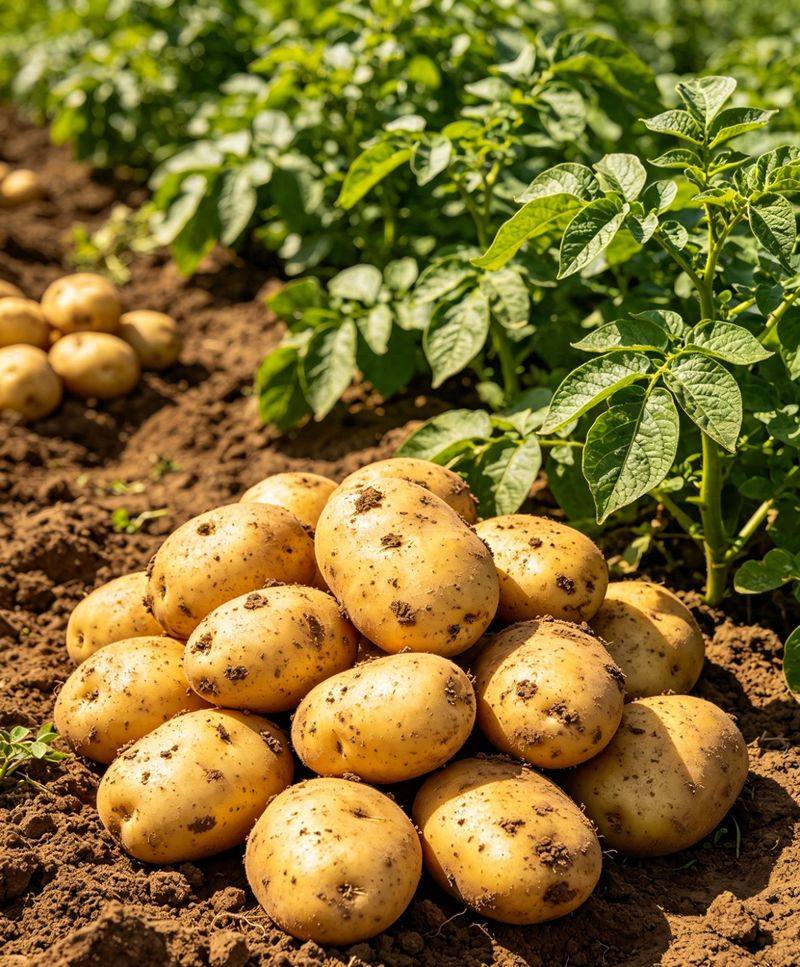
Let's start with potatoes. Many people grow potatoes in the wrong place: the more they feel they are grown, the more they get, the more they get. On the contrary, the densely planted potatoes, looking at the gills with green oil, thick sacks of mud, stripping off the soil, are all small potatoes, either deformed or small, and their production is poor。
The essence of what the old man said was “savage of potatoes”, is to plant them rationally, so that the seedlings do not “take their land”. Data from field tests in the agricultural sector in 2026 also confirmed that potato cultivation was too dense, that there was poor ventilation in the plant, that insufficient light would lead to the growth of the seedlings, that the nutrients would be spent on long saps, and that the troughs would not expand at all; and that the density would be so great that the underground roots would collide together, fighting for water for fattening, which would end with a pile of “small spots”。
How much is left of the "silent"? This year's production standards for potatoes in shandong, henan and hebei are taken into account:
- line distance: 60-70 cm to ensure a ventilated field
- range: 25-30 centimetres, with one or two saplings per den, not to be greedy
- density per acre: 4000 to 4500 are the most suitable, with a 40 per cent reduction in the risk of loss of output compared to the membrane fields, evenly balanced head, and a high potato rate of over 70 per cent。
Except for the rare, the potatoes want to be productive, and the seedlings can't be small. When seedlings are produced, seedlings are detected in time to remove them and leave them with only seedlings; if the seedlings are long, they are free of drugs and artificially controlled to avoid the waste of nutrients. This year, mongolia and gansu’s potato-rich demonstration fields, which are based on “scarrying + sapling” and produce up to 8,000 pounds of acreage, are more than 2,000 pounds more than the usual dense-planted fields。
Ii. Potato slashing: it's not blinding, it's making every stairwell curt
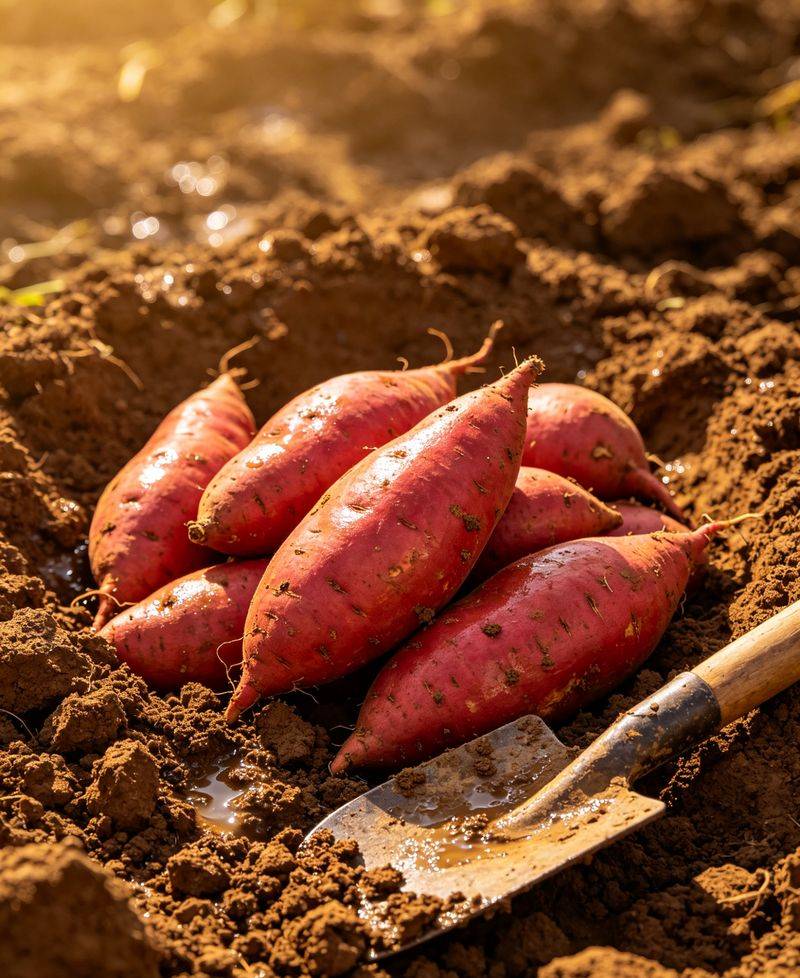
In the past few years, many farmers have responded by applying the same fertilizing and watering, while others have five or six large, skin-skinned cassavas; their own cassavas are either in two or three, or they are all small chips, deformed potatoes. The root causes of the problem are mostly in the form of planting — the so-called “frowning of the sweet potatoes”, which is the key to the high production of the sweet potatoes。
Why can't the potatoes grow straight, flat, and have to tilt? Let's compare the difference between the three planting methods
- direct cultivation (stamping): only one or two tubers on the bottom are energy-efficient potatoes, which are shallow and non-tasting; they are deep-rooted, slow, drought-resistant and have less than 20 per cent sodium, and produce around 2,000 pounds
- cultivation (crossing): albeit with a high number of custards, the seedlings are prone to fallback, the roots of rain are surfaced, drought-resistant, the potatoes are not equal in size and the potatoes are abundant
- tilting (45°wwwt): this is the standard method promoted in 2026 in the main region of the country's red potato, where seedlings are inserted in the soil with an angle of 15°-45°w, and four to five tubers, leaving only 2 to 3 leaves on top. Each sap buried in the soil produces its own roots and potatoes, which are equivalent to a seedling of four to five sweet potatoes, with an even distribution of nutrients and a proper head。
This year, henan wenchang's high-yielding cassava base, which is based on an oscillation technique, has produced 5038. 5 pounds of acreage, more than 3,000 pounds than the field; the farmer, li, a farmer in henan's storeyard, has grown 3,000 pounds of cassava acreage, and this year, after shifting it, the acre has grown to 6,200 pounds, making more than 2,000 dollars。
The foothold of the slash is simple, and the rookies look like they're up and up, digging 10 centimetres of shallow caves, tilting the root of the seedlings down, burying the ground and pouring down the water. Remember one sentence: deep slopes are mixed and shallow seedlings are easy to live。
Iii. Growing seed control: controlling "crazy and long" to produce "big chips"
Whether it be potatoes or potatoes, “breath control” is at the heart of the high yield and is the “hand of the family” of the old breed. Many people grow land, which only knows how to fertilize, but which does not matter how long the seedling grows, which leads to “crazy and small chips” and to a six-month period of effort。
Let's start with potato control: the potato lye period is a critical period for the growth of the stem, when the seedlings grow too much, and the leaves are thick and thick, and the stem is long. It's easy to buy medicine without paying for it
- the timely removal of buds to avoid nutrient consumption on flowering
- cultivation of soil to the roots, inhibiting the growth of seedlings and promoting the growth of tubers。
See the sweet potato control: it grows in the medium term (50-60 days after planting), it is rained and fed, it tends to grow wildly, and it has to be controlled. The green control method recommended by agricultural experts in 2026 is safe and effective:
- titten ting: lift the chicken, turn it over and put it back in place, not break the trough, destroy the top edge and inhibit the boom
- creaming: when chickens grow to about 1 metre, they take off the buds of the top, promote the growth of the side branches and increase the number of potatoes。
This year's cassava growers in shandong zining are “sloped + controlled” with an acre production of more than 6,000 pounds, and the size and quality of the chips are large, with a purchase price of more than 2 cents more than the normal cassava and more than 1,500 dollars more。
Iv. It's not old. It's practical. 2026
Many now feel that the old seeding experience is out of date, rather than using new pesticides and fertilizers. But what has proved to be truly productive is these land-based, low-cost solutions。
The old saying, “the potato is rare, the potato is tilted, and the sapling is so strong that it has been able to grow for decades, because it captures the core patterns of potato and potato growth: the potato needs space and cannot be squeezed; the potato needs multicrop and cannot be straight; both require control over the abundance of nutrients to be left to the chips。
In 2026, whether it be large-scale farmers or small-scale farmers who grow a few plots in their homes, it will be easy to harvest potatoes without extra money or sophisticated technology. The fields have never been dry, but rather have to understand the rules, the ingenuity, the wisdom of the older generations, and deserve to be passed on from generation to generation。
Today's dry stuff is shared, and it's a solid field experience, and it's not a lie. Do you grow potatoes? Was it secret or rare? Is the potato a straight or a tilt? Have you ever tried the "slutting" method? Welcome to the comment section to share your field experience, and we'll share our studies and grow more productive crops