


A large number of rural friends grow potatoes at home and spend the rest of the year in despair. Although the potato is growing so full of leaves, the green oil, which looks like it's growing, is full of puss, either empty or small, low-yield potatoes and waste of human resources。
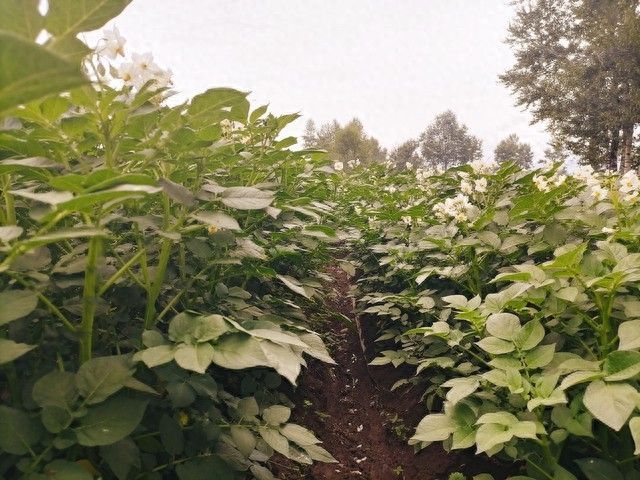
Many grow potatoes, often with old problems, in search of fattening water, fearing that the seedlings will not grow well, and in the form of quick-impact fertilizer, neglecting the demand for potatoes with long leaves. Water is also being poured over time, and the fields are covered with rotten roots of potatoes, and the disease continues to deteriorate。
In fact, potatoes don't buy expensive farming at all, and they don't fertilize frequently. Zero-cost farming techniques passed on by the old vegetable farmers are simple and new. As long as we are able to grasp potato growth habits, avoid planting faults, do a few crucial steps, without fertilizer pesticides, and grow high-quality potatoes from our own small gardens, which are full and double their production, we will share all the solid field experience today。
I. Breaking out of the planting faults: stop being stupid and just feeding. Mio
Today, most of the farmers are growing their vegetables in the same dead end, believing that the more crop seedlings grow, the higher the output later, especially potatoes。
Many people, starting with the seeding of potatoes, are often fertilizing and pouring large amounts of nitrogen, raising high and dense potatoes in their hearts, and foliage is thick and green. It is not known that potatoes belong to underground stem and tuber crops, which are too strong to take all the nutrients directly from the soil。
All-supplyed seedlings grow on the ground, and the ground potatoes are not adequately nourished. Naturally, they grow only with no potatoes, which is what the old farmers say。
Excessive use of fertilizers not only results in soil sheet acidification, but also reduces the amount of wood and water from the potato mouth and reduces storage time significantly. Reliance on farming for a long period of time has costed and hurt the ground, and it has not been possible to grow pure, natural and delicious potatoes。
It is the core of high productivity that a man who can grow potatoes is able to grow them in a way that he/she does not have the same accelerator。
Two: three zero cost-turn techniques. Easy for potato high. Production
(i) controlling the top of the roof in a timely manner, blocking the outflow of nutrients and specializing in the subterranean sodium
The central role: to suppress potato leaf lengths, to preserve nutrients, to transport all of them to subsurface chips, to rapidly expand the size of potatoes, and to prevent loss of production。
Painpoints: after growing to a certain height, potato seedlings have a strong upper edge, nutrients continue to flow to the top with new sprouts and branches, and the development of subsurface chips has stalled. The higher the seedlings, the smaller the potatoes。
Neighborhood comparison case: the two neighbours grow potatoes on the same land, the family grows by seedlings, and later the seedlings are tall, and there are few potatoes in the autumn. In another case, the production gap was doubled as a result of the steady and steady growth of the seedlings and the tumbled potatoes。
It's very simple
1. Determination of the control time: the first control is carried out when the seedling is grown up to about 30 cm after the seeding of potatoes, i. E. When the seedling grows six to eight leaf leaves。
2. Artificial strangulations to the top: without any anti-moisturant agent, with the hand to the top of the potato, to the point of two to three centimetres and, bearing in mind, not to recut。
3. Elimination of redundant branches: excessive potato seedlings in the field, removal of all the weak and ineffective branches attached to the ground floor, and provision of ventilation in the field。
4. Second light control: potatoes enter the flowering period and remove surplus flowers. Potato blooms only consume large amounts of nutrients, leaving flowers useless and all of them are most beneficial to the potato。
Attention
Large-water fattening is strictly prohibited and the application of nitrogen fertilizer is stopped within one week of the control, reducing the frequency of water irrigation. Skinny, small potato seedlings do not top them, but are only used for long, strong seedlings to avoid a deterioration in the growth of weak seedlings。
(ii) sub-graining of potatoes in order to avoid the lumbering of the chips and to increase production significantly
Central effects: thickening of the potato roots, covering of the sunlight, preventing the potato from becoming green and hard, while defusing the soil, leaving ample space for the expansion of the chips under the ground and preventing the fallover。
The pain theory: when the potato chips come out of light, they quickly produce ronino, not only do the skin have a bad taste, but also lose its food value. The shallow roots of the soil are not deep-seated, the size of the chips is limited and exposed to exposure。
Lifetime cases: many grow potatoes that do not produce soil, and when they are harvested, most of them are found on the ground, half of them are green, and the taste is poor. They insist on sub-painted plots, where the potatoes are buried in the earth, with a smooth surface。
Step by step, step by step
1. First light soil: after a seedling of potatoes, the first soil preparation was carried out in conjunction with weeding in the fields, with the small earth in the rows gently reaching the roots of the potatoes, and the soil was approximately 3 cm thick。
2. Medium-term focus on earth production: the second thick earth before the potato sealing is a key step that increases the size of the soil to 6 to 8 centimetres and places all the roots of the potato in the ground。
3. Post-surgical soil protection: before the onset of the rainy season, the potatoes in the fields are viewed, but the places where the roots are exposed and the chips are found are filled in time to prevent the appearance of the potatoes。
Key reminder
To the extent possible, it has chosen to use lax soil, so as not to crush the roots of the seedlings with large pieces of hard soil. It also cleans the fields of weeds, which have a strong capacity to harvest nutrients, and takes a step forward。
(iii) accurately control water fattening, adapted to growth habits, and stable levels of drought and floods production
Core role: water-based supplementation on demand, steady growth of seedlings in the preceding period, medium-term expansion of potatoes, post-crop control of potatoes, avoidance of the accumulation of bad potatoes and drought。
The principle of pain relief: potatoes are resistant to drought and flooding, the roots are shallow and watery, and soil moisture is too wet to cause root and late disease. In the pre-growth period, water scarcity and weak seedlings, as well as in the cassava period, the small size of the cassava chips and the timing of the water was wrong and directly affected the annual harvest。
Exercise details
1. Stable seedlings with little water during the period of seedling: potato seeding up to the long sprout stage, soil being kept micro-humid, dry and dry, water being strictly controlled, rooting of seedlings in exercise, avoiding the growth of seedlings。
2. Peasant tremors: potato starts with small chips and enters a critical period of expansion, which requires the largest amount of water, pouring through water every seven or eight days to meet the water demand for the development of the chips and helping them to grow quickly。
3. Cutting water for potatoes at maturity: in the first half of the month before the harvest of potatoes, the water is completely stopped, the chips are fully shaped in the soil, the skin is thickened, storage is facilitated and the taste of potatoes is enhanced。
Zero-cost supplementation techniques
Chemical nitrogen fertilizers are rejected at all times, and fertilized farmers in their homes are excellent natural fertilizers。
Ash from grass and wood is rich in potassium fat, most suitable for potato growth, spread around the root of potatoes, which can be both fattening and magnifying, as well as insect-preventing, and preventing underground pests from eating potatoes。
Fertilized chicken dung, sheep dung, vegetable leaves, small-scale planting, mildly unburned seedlings, and pure natural harm to the seedlings。
Water taboo
It is strictly forbidden to pour water into the fields, so that the first hours of the rain are followed by the drainage of the fields and the discharge of the water in time. At high temperatures, water should not be watered at noon, and it is best at cool hours to reduce the incidence of disease。
Iii. The advantages of natural land-based cultivation and the success of fertilizer farming
1. Cost-effective: whole-way farming without the purchase of all types of farming resources, such as complex fertilizers, insecticides and controlled vegetatives, full-scale management with field weeds, home-grown defecated manure, grass-wood ash, no cost for a penny of agricultural money and no cost for growing vegetables。
2. The more fertile the soil, the more fertile the soil is: natural farmers conserve the soil, do not destroy the soil structure, grow the soil in years of ablaze, do not cause the problem of slabs, and produce more annually。
3. Food is not harmful: no pesticides are used without rapid fertilizer, all-way eco-planting, potatoes are sweet and sweet, saline tastes, elderly children are safe to eat and sell。
4. Increased resistance to disease: responding to the natural growth patterns of crops, rational control of water, growth and weakness of seedlings, significant reduction of diseases and pests in the field, and the need to treat drugs。
Long-term dependence on fertilizer pesticide cultivation, short-term outlooks, high long-term soil damage, reduced potato resistance, annual declines in disease, poor cropping of vegetables, and the risk of pesticide residues。



