


By the beginning of may, spring potatoes had officially entered the golden period of tubing, a critical stage in determining the size and production of potatoes。
A lot of farmers have been busy for six months, looking forward to this time when the potatoes are so long, and many people are doing the wrong thing — the only thing they know is to pour water, and either the water is so big, the potatoes aren't so big, they're so small, they're so busy。
In 2026, the state continued to promote the strategy of “treasure-to-earth” and to support the development of the potato industry, not only through the use of land protection subsidies, subsidies for agricultural insurance premiums, etc., but also through the promotion of science-based farming techniques to help farmers increase their incomes。
Growing potatoes is very productive, it's useless to be hard-working, but it's only managed properly! In may, when the potato swells, you don't have to work, you do science and water control, you're well fattening, you can dig up a sack, you can double the potato rate, and you can't produce much
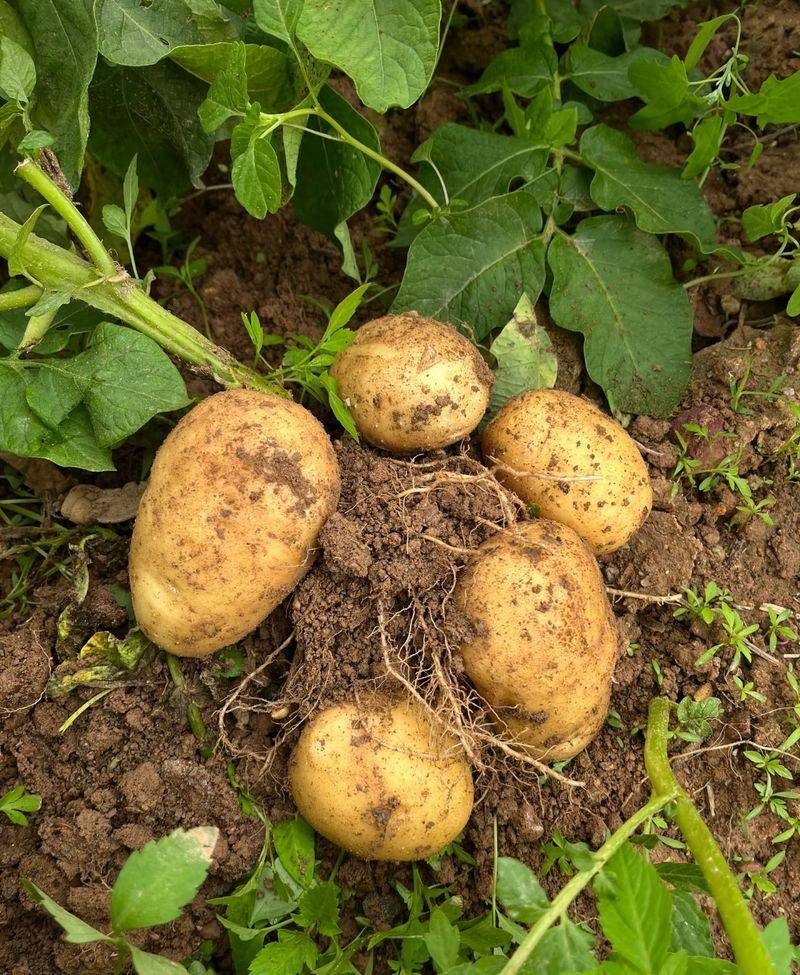
One: stop pouring water
Many farmers mistakenly think that they need more water for their potato expansion, so they water every day, and pour water, the deadliest mistake! Potato tubers are the most afraid of “dry and wet, and lack of oxygen”, with a lot of bad potatoes and less water, and only with a “dry and wet” science-controlled water will the potato round be full and intact。
1. Water consumption patterns during periods of inflation and refusal to water blindly
During the may period of potato expansion, water requirements accounted for more than 60 per cent of the total fertility period, but were not equivalent to water surges. At this time, the tubing expands rapidly, so that the moisture sustains the growth of the cell while the soil is ventilated to keep the roots breathing。
The soil is over-wetted (water accumulated for more than three days), roots are oxygen-decomposed, the plumes are rough and susceptible to late disease; the soil is dry (10 centimetres of earthy hand-stretching), the plumes cease to grow, and water can be watered at a later stage with hollow, fissure, deformed potatoes, and the commercial properties are directly zero。
2. Water harvesting techniques: 3 standards + 2 methods, easy to remember
- humidity criteria: maintenance of 70-80 per cent water in the field, simple judgement - 10 centimetres of deep soil, hand-held, scattered, dry and dry。
- the method of watering: first of all, the ditch or drip irrigation, and absolutely no flooding! Water levels do not stretch through the tops of the gutter, with 30-40 cubic metres per acre per water pouring; with a condition of drip irrigation of 3-6 cubic metres per acre, water conservation and preservation, consistent with the national water conservation agriculture policy。
- key nodes: 5-7 days of continuous rain-free water must be watered; in the event of a continuous storm, the trenches must be drained in time and the pine soil must be ventilated; 10 days before the harvest, the water must be completely shut down, the chips must be sequestered and not easily broken。
3. Frequent water error zone, avoid it
- days and days of water: the soil is saturated for a long time, the rate of rotten potatoes is soaring, the tubs are small and the taste is poor。
- drifting after drought: the soil is dry and wet, the growth rate inside and outside of the tubers is uneven, and there are large quantities of hollow, fissure potatoes。
- unfilled roofs: lasagna is too tight, potatoes are luminous, producing dragon aluminum, not edible。
Ii. Don't mess with the fat! Quantification period "heavy potassium-controlled nitrogen"
Potatoes are potassium crops with peak levels of potassium required for periods of expansion, and excess nitrogen fattening can only lead to the growing of strangulations and tubers, leading to the “smuggling of potatoes”。
In 2026, the ministry of agriculture and rural development's agricultural technology promotion station explicitly recommended that high-end potato fattening be “nitrogen control, potassium enrichment, boron” and that precision fertilisation be applied to allow all nutrients to run to the underground truncheons, with large and large potatoes。
1. Core pursuit of fertilizer: high potassium fertilizer, away from nitrogen fertilizer
In the early stages of expansion (now reais to flowering period), fattening is pursued in a ditch on the side of the earth, with 15-20 kg of potassium sulphate per acre, or 10-12 kg of potassium compound fertilizer (15-5-30) and water is poured after burial。
- choosing potassium sulphate: acid fertilizer, adapted to the properties of the potato-synthetic micro-acid soil, promoting starch accumulation, potato-porous powdering, durable storage。
- ban on potassium chloride: chlorine ion inhibits starch synthesis, potatoes are sticky, impotent to cook and causes damage to root systems。
- no nitrogen fertilizer such as urea: at this point, nitrogen fertilizer is applied, the leaves are so long (over 60 centimetres high), the nutrients are full of saps, the tubers are not long, and they are prone to fall back and disease。
2. Leaf supplementation: 2 formulations, 7 days per day, boosting inflation against premature failure
When the soil is fatter, it is accompanied by a “flowering” of the leaves, which is quickly nourished, prevents premature decay and increases in the tubing。
- basic formulation: 0. 3-0. 5 per cent potassium solution of phosphate, 30 kg per acre, 1 in 7-10 days, 2-3 in succession, potassium phosphorus supplementation, accumulation of drying material。
- efficiency formula: 0. 3 per cent of potassium phosphate + 0. 1 per cent of boron fertilizer, which promotes the trans-shipment of carbohydrates to the tubers, reduces the deformity of the potatoes and increases the potato ratio by more than 30 per cent。
- controlled formulas: if a squirt is long, 15% more than 50 g/acre is sprayed, boosted by control, inhibiting the growth of the leaves and promoting the growth of the tubers。
3. National policy alert: scientific fertilization, high green production
In 2026, the state promoted integrated techniques for soil formulation and water fertilization to reduce the misuse of fertilizers and protect the quality of cultivated land。
Farmers are required to adjust their use to the fertility of their own soil, not to over-utilise them blindly, both to reduce costs and to meet the requirements of green agriculture development, and to benefit from the relevant agricultural technology subsidies。
Iii. "high, loose, hard" two times
A lot of people grow potatoes that don't give much attention to the ground, and the potatoes show that they are green, little potatoes, small heads, and that they are the “hidden key” to the high production of potatoes。
Potato tubers are grown on their runners, and the ground can create a lax space for the tubers to grow, prevent light from becoming green, and also increase the cassava layer, so that the cassava is abundant and sour。
In may, it expanded twice, with little resistance from the tubers, a twig of potatoes and a doubling of commerciality。
1. First pedestal: 20 cm tall and 5 - 8 cm shallow training
Potato seedlings grow to about 20 centimetres (in front of the present rheumatism) for the first time in a combination of chinese grass-planting。
- operations: taking soil from both sides of the tungsten and planting it to the base, with a thickness of 5-8 cm, light training, no roots, no heart leaves。
- impacts: soil laxation, weeding, promotion of the growth of runners, laying the foundations for potatoes and avoiding water competition for water and potatoes。
2. Second grounding: 8-10 cm deep training at the beginning of flowering
Potatoes are just flowering (in the early stages of expansion) and the second deep-drive is the most critical one。
- operation: the earth continues to be taken from both sides of the tungsten, and is piled up to the tungsten, which eventually is 20 centimetres above its height, 30 centimetres beyond its width, and is untidy。
- impacts: complete cover of runners and freshly condensed potatoes to prevent the luminous turn of potatoes; thickening of earth floors, large and unobstructed troughs of the troughs; and increased cassava layering for the planting of multi-chip potatoes and sour potatoes。
3. Peasant care: 3 details, protection of potatoes wounded root
- location of the earth: take the soil on both sides of the twig, not too close to the plant, to prevent injuries to the runners and freshly grown potatoes。
- soil strength: act light, earth is loose, hard blocks are broken and air is guaranteed。
- time control: the last pedigree is completed before the seal is closed, and after the seal is sealed, the soil is not moved and damage to the leaves and roots is avoided。
Iv. Additional warning: disease and pest control and safe harvests
In may, the temperature and humidity were high, ranging from potato fever to early disease to a high incidence of aphids, which, in the event of disease, were corrupted, production fell and the management was entirely wasteful。
- night disease control: early spraying of the dyson manganese zinc protective microbicide; immediate removal of the central strain, application of alkyl and fluoride in alternate applications, with emphasis on the lower back of the plant。
- aphid control: aphids transmit viral diseases, spray them with aphids after detection, and prevent early treatment。
- green control: priority is given to the use of high-efficiency, low-toxic pesticides, which meet national agricultural quality safety requirements and guarantee food safety。
End interaction
The three things of may potato expansion, water control, potassium supplementation, high-breeding soil, each directly determine the production level! Are your potatoes already growing? Have you ever stepped on a “water-watering, fertilizing” error before? Let's get these three things under control and dig a sack in the back
Do you know any high-yielding techniques for potato expansion? Welcome to the comment section to share your messages, share your experiences and grow high-yield, high-quality potatoes



