Old farmers who have grown potatoes are aware that they grow fast, have head sizes and have little knots over the course of the year, depending on the management of the may period。
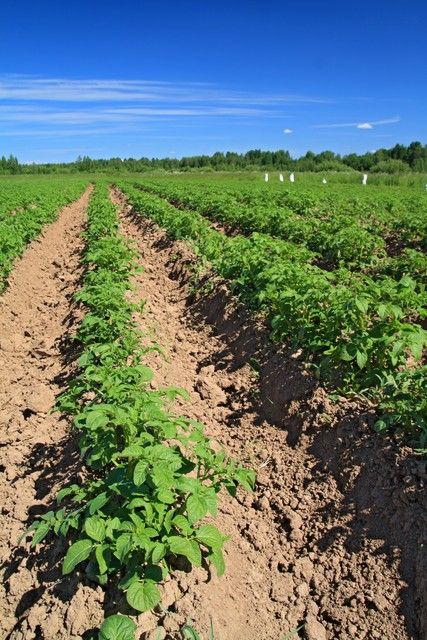
As we enter may, the temperature rises from day to day, and the rains begin to increase, with potatoes moving from the long-stamp phase to a critical period of rapid underground sprain expansion. At this point in time, the potatoes are full and the harvest is steady; if water is poured, fertilized and the earth is lazy, it is easy to come up with potatoes, cracks, hollow potatoes, crochets with a long and hard season and no final production。
Many farmers are losing their potatoes, not bad seeds, not bad power, but mostly bad management in may. Today i'm going to talk to you about the may potato pipe, with a solid field experience, and remember three sentences of watering mouths, three steps of chain management, so that you don't turn around and grow potatoes。
First, in may, the potatoes will be watered
Potatoes, unlike other crops, are drought- and flood-prone, have shallow roots, have average water intake capacity, and are particularly sensitive to moisture when the subterranean tubing expands. The water is scarce, the chips are small, the water is stale, and damp and wet are the most vulnerable to cracks and deformities。
After all these years of growing potatoes in the field, i've come up with three of the most practical water-throwing devices, simple and easy to remember。
First sentence: small water is hard to get, heavy water is the worst
The increase in temperature in may and the marked increase in the demand for water for potatoes can never be avoided and the water pours into the gutter. Large-water flooding directly results in soil slabs, with subsurface roots suffering from a lack of oxygen, poor breathing, mildly yellowing and premature decay, heavy roots decomposition, and subsurface chips bubble deterioration。
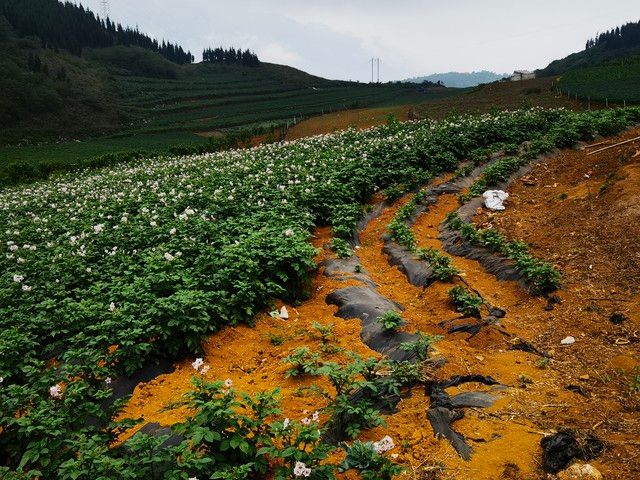
The right way to do this is to water the water, which flows slowly along the ditches, so that the water slowly penetrates into the earth floor, with only the roots and not the surface. Watering times are chosen as early as possible in the morning or evening, avoiding periods of high noon temperatures, preventing large differences between water temperature and temperature, irritating root causes and affecting the absorption of nutrients。
Second sentence: see wet and steady water supply, dry and wet form
The most taboo part of the potato boom period is the high and low water. After long periods of drought, water is suddenly poured over once, the subsurface chips will expand rapidly, their skin growth will not keep pace with internal expansion, they will split directly, they will become crack potatoes, they will be sold differently, they will not be durable, and they will be treated at low prices。
The daily determination of humidity is simple, and the most appropriate state of humidity is that of the hand, without complex instruments, stretches out 10 to 15 centimetres below the surface, grabs a piece of earth, squeezes it gently and then breaks it off, without sticky hands or dripping water. Keep the soil wet and dry and wet so that the chips grow evenly and shapely。
Third sentence: fall before the rain, fall before the rain
In may, the weather was volatile and the rains were frequent, and the water accumulated in the fields was a major contributor to the reduction in potato production. Before the rains, the ditches and the edges of the earth were wiped and smoothed in advance to ensure that the rains could flow quickly; the first time after the rains, they were viewed and the water was completely drained from the ground and the roots were kept out of the water for long periods。
There is also a key node where 7 to 10 days before the potatoes are ready for harvest, water is stopped, the soil is properly drained, the potato skin is thickened, the harvest is not easy to break, and the storage of rotten potatoes is reduced。
As long as the three water vents are ingested and flexiblely adapted to the soil and weather conditions of their home plots, potato moisture management will not go wrong and the expansion base will be stabilized。
2nd may potato gold period, 3-step chain measures cannot be wrong
It is far from enough to water, and may is a crucial stage in the stereotyping of potato production, which must be managed in a three-step cycle of scientific fattening, timely earth preparation and disease control to ensure the growth and stability of potatoes。
Step one: accurate pursuit of fattening nitrogen and increasing potassium fattening
A small amount of nitrogen fat is required when potatoes grow, but when they reach the may period of expansion, nitrogen fat is strictly controlled. Nitrogen fattens, long leaves on the ground, infested leaves, all nutrients taken from them, small and small chips under the ground and prone to fall back and disease。
The core principles for fertilization at this stage are nitrogen control, phosphorus management, potassium enrichment, which directly determines the size and abundance of the chips。
Specific exercise methods:
When the potato is ready and the flower is blooming, the first roots are followed by fattening, with high potassium-type fertilizer, with shallow ditches open along the edges, and then the soil is watered so that the nutrients are slowly released without damage to the roots。
The flowering season, combined with watering, the spraying of potassium phosphate on the leaves, the supplementation of the leaves, the extension of the function of the leaves, the increased delivery of nutrients produced by light cooperation to the subsurface chips, and the avoidance of premature plant failure。
Throughout the period of expansion, there was a strong determination not to use pure nitrogen fertilizer such as urea, ammonium carbonate and to avoid the growth and loss of seedlings。
Step two: two pedestals can't be saved
Many farmers grow large amounts of potatoes later in life, which is a lack of ground. After lighting of the potato trachea, the skin becomes green, produces harmful substances, can not be eaten properly, can only be phased out and production wasted in vain。
In may, two critical points of time must be seized to complete the two fields:
For the first time, the soil was grown about 20 centimetres high in potato seedlings, combining pine soil with shallow cultivation of 5 to 8 centimetres, bringing together the soil around the roots, protecting the runners and preventing fresh potatoes from coming out of the ground。
For the second time, in the beginning of the potato flower, i. E. At the beginning of the flower, it will be a little thicker, 8 to 10 centimetres thicker, thicker earth floors, and an expansion of the underground cassava space, both to prevent the luminous and to decompress the earth floor and to help it to grow down。
When weeds are cleaned in the fields, weeds and potatoes compete for water fertilizers. Weeds also cover the ventilation, remove them in a timely manner, make the fields cleaner and the disease much less。
Step 3: prevention and early prevention and reduction of disease risk
The high temperature and humidity in may were periods of high potato disease, among which the most common and most harmful was the night disease. In the event of an illness, water stains appear on the leaves, and on the back there is a palae that spreads particularly fast, which can spread entire plots in a few days, causing a large reduction in production。
Prevention is critical and should not wait for a major outbreak to heal. In general, keeping the fields radiant, free from water and damp, and reducing the humidity of the fields, can significantly reduce the likelihood of disease。
If the field is too big and the leaves are shielded from each other, it is necessary to control it properly, avoid growing up, increase the resistance of the plant itself and reduce the incidence of disease. Regularly, more often than not, the leaves are viewed and found to be handled in an exceptional and timely manner, strangling the disease at an early stage。
In the month of may, the potato management area is a common error
Over the years, i have discovered that many farmers have not done it without heart, but rather with the wrong way, and have stepped on a number of management faults, which have resulted in half a day of busy work. Today, we have made clear a few high-frequency error zones, which are adjusted in time against their own plots。
The first area of error: watering, feeling, drought, rain。
A large number of farmers do not usually water, and see the stings and the mudsliding of the floors, so that they are more likely to cause cracks and hollows. The right way to do so is to keep the soil steady and humid, which must be drained after the rain, so as not to allow the water to accumulate。
The second area of error is fertilizing and using nitrogen。
It's like a lot of fertilizer, and potatoes grow well, and in may they use a lot of nitrogen fat, so they're so long, they don't have potatoes, they're very late. It is important to keep in mind that may is heavy potassium fat, light nitrogen fat, as required, and not blindly。
The third area of error: it is made only once, not even once。
I think the potatoes have grown, there's no need for it, and finally, there's a lot of potatoes, and the quality is down. The soil is used twice as the basis for the high production of potatoes, both for the protection of potatoes and for the decomposition of the soil, without being lazy。
The fourth area of error is incorruptible and after-use。
When the leaves are yellow and moldy, the disease spreads, it is difficult to control and it can affect the expansion of the chips. High temperature and humidity in may, prevention of disease must be done ahead of schedule and routine management kept pace, saving much more than later remediation。
Iv. At the end
The month of may is a crucial month for potato cultivation, which is better managed than before, and the efforts of the previous period will be significantly compromised。
In fact, potato management is not a complex technique, but at its core it is good water, good fat, good soil, good disease prevention. Remember three sentences of watering mouths, three steps of chain management, avoiding common fault areas, ensuring daily care in the fields, levelling and steady production of potatoes at the end of the period, and naturally securing harvests。
I don't know what's going on here. What steps have been made in may management? Have water, soil and fertilization problems been encountered? Welcome to the comment section, where we farmers share experiences and grow potatoes together。
A sweet hint
In may, the temperature fluctuates and the humidity of the field changes rapidly, and you will have to make more frequent patrols, adapting the fertilization rhythms to the soil and weather, so that management can take place sooner or later。