


Many farmers grow potatoes in their homes, often in a disturbing situation. The previous period was full, the saplings were seen to be strong, there was a green oil in the ground, and there was a good feeling that the harvest would be good this year. It's true that when you harvest potatoes, your heart is cold。
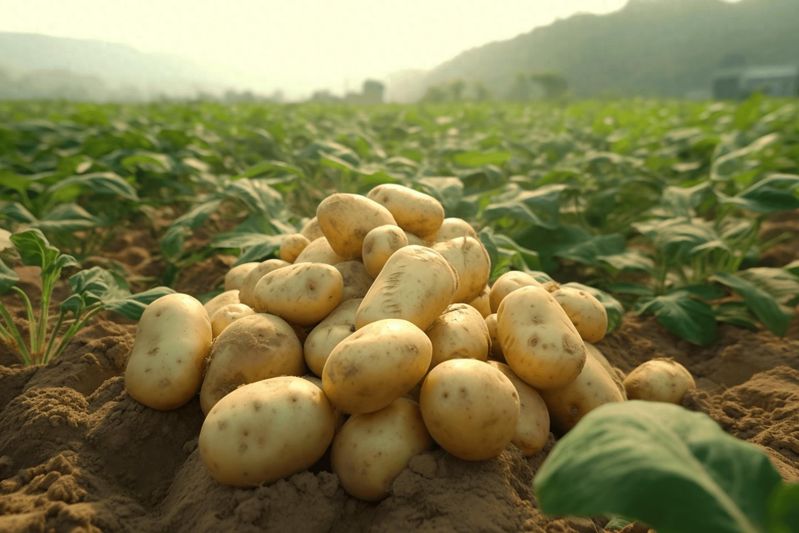
Either there is a small amount of grass-roots potatoes, which do not yield much, or small potatoes piled up and rolled out, with few good potatoes. In the previous period, fertilizer had been delivered, field kung fu had been used for a whole growing season, production had been lost and the products had not been good, the market had been sold at the best price, and it had cost nothing。
Many growers are unaware that the most critical period of gold pipe care in determining the size and size of the potato is the 10-day flowering cycle. Many farmers either leave their plants to grow naturally and spend their time, or use their old experience to fertilize them blindly, step by step in the wrong area of cultivation and miss directly the excellent opportunities for high potato production。
Today, with its many years of real experience of laying roots in the fields, without saying lies or playing games, it is clear to the growers that the potatoes are entering the flowering phase, and that they should be put in place in such a way that they do not need to spend extra money or extra effort, and that the chips are so thick and full that normal plots are able to steadily improve the harvest, and that ordinary farmers take care of their methods。
I. Timely control of bouquets to avoid unwarranted nutrient consumption
Potato blooms are a normal growing habit, but we grow daily potatoes for food commodities, with no practical value in the field, and continue to divert the nutrients accumulated within the plant。
Large amounts of nutrients are grown and blooming, and the nutrients that are transported to the ground and fresh chips are naturally less, which is the core cause of the small size of the potatoes in many farming households, which is one of the most easily neglected areas。
When more than half of the potato fields in the fields grow flowers and are officially beginning to bloom, the first thing that is critical for farmers is to harvest them in time to adjust their growth。
1. Artificial collection of small plots of land
A small amount of land is grown from their own gardens and small plots, which can be operated manually. Only the flowers that are grown at the top of the plant will be removed, the first flowers will be removed, the strong mains and the functional leaves will be preserved, the operation will be soft, the large seedlings will not be broken, and only the raisins will be cleared。
2. Rational control of large fields
Scalded fields are grown, and manual extraction is time-consuming and inefficient and can reasonably be controlled according to the size of the field. In the case of an overstretched seedling of potatoes in the field, a crowded branch of leaves, long spacing between the stasis, signs of protraction, timely control of the boom, and inhibition of the growth of wild growth in the ground。
To limit control to the initial use of flowering, the field seedlings are slow and weak, and cannot be used to control them. Once the controls are too heavy, they directly impede the growth of the subsurface chips, and result in a reduction in production。
3. Day-to-day shelter alerts
It is important not to listen to old misconceptions that the more flowers the more they produce, the more the potato seedlings grow, the more the flowers bloom, and the less they grow. Daily field management is based on a steady and steady growth of seedlings, a smooth sink of plant nutrients, and a high level of development of underground chips, which is essential for the steady production of potatoes。
Ii. Precision control of water fertilizers to match the high demand for growth of chips
The flowering season of potatoes, the rapid fragmentation of the underworld's masts, and the slow expansion of their growth into formable chips, during which the water fertilizer supply cannot keep pace, and the growth and growth of the chips have been halted directly, making it difficult to recover the normal grooves even if they are to be replaced in a hurry later, seriously affecting the final harvest。
Watering and fatting during the flower season are appropriate, and random watering and blind fatting can only disrupt the growth rhythm of plants and cause problems in various fields。
(i) science-based water-watering techniques
1. Timing of water control
During the flowering of potatoes, it is most appropriate to keep the soil slightly moist. In the event of a continuous high-temperature weather, the surface soil is dry and dry, and the water must be recharged in a timely manner with the body; in the event of continuous rain and prolonged weather conditions, all water work should cease immediately; the first time, the drainage canals in and out of the fields should be removed from the fields in time。
2. Selecting the right way to water
The day-to-day watering preference is given to the application of light water and slow-watering patterns in shallow trenches, which strictly prevent flooding. Overstretching of water in one-off cases and heavy water accumulation in the field are highly likely to cause a lack of oxygen in the potato roots and to induce the deterioration of the subterranean chips, as well as to breed various kinds of field diseases。
3. Post-control water use
The gradual reduction in the frequency of field flooding and the high moisture content of the soil, which is close to the later stage of the increase in the growth of the chips, can lead to the break-up of the potato skin, the variation of the potato appearance and the consequent reduction in the prices of sales, are not conducive to higher incomes for farmers。
(ii) reasonable focus of the flowering season
In the flowering phase of potatoes, fattening is pursued, with the overall principle of preference for potassium fertilizer supplementation, reduction of nitrogen fertilizer and appropriate combinations of phosphorus fertilizer. Excessive application of nitrogen fattening will only continue to contribute to the growth of the land-based seedlings, and potassium fattening is the core nutrients that contribute to the rapid expansion and strength of the potato chips。
1. Large and balanced staminas
Long, steady and robust potato fields, fertilized by potassium fat, and fertilized by shallow ditches open by the potato planting booths, can also be flushed with water from the fields. The full range of boosted subsurface chips expands rapidly, fills up the growing potato outer circle, and the potatoes are sorely strained。
2. Longer and weaker yellow fields
In the fields, the leaves are yellow, the whole is thin and thin, and a small mix of balanced nutrients is available to supplement the plant's base with nutrients, and the process continues to give priority to potassium fattening and to the high levels of nitrogen fertilizer。
3. Efficiencies of leaf-faced fertilizer support
Choosing cool hours in the middle of the sun, recomposting on the field leaves, quickly replenishing the nutrients needed to plant the leaves, increasing the efficiency of the luminous co-operation of the leaves, allowing the leaves to produce more organic nutrients, smooth transport to the parts of the chips under the ground, quick absorption of nutrients, easy handling of the fields and easy handling by the families。
4. The ban on fertilizing during periods
During the flowering of potatoes, it was determined not to use high concentrations of fertilizers, nor to apply fertilizers to farmers who were not yet fully decomposed. Fertilizer concentrations are highly resistant to burning roots and to the injury of the leaves, not only to contribute to the growth of the potato, but also to the death of the whole plant withering and unnecessary losses in the field。
Iii. Preserve vagrant pests and stabilize long-lived harvests
At the flowering stage, the suitable temperature of the field and the excessive humidity of the air coincide with the breeding conditions of the various strains of disease and pests and are also important periods in the concentration of disease and pests in the field。
Once strains have been planted with pests and pests, the damage to the leaves does not allow normal photocooperative use, the growth and development of the subterranean chips is directly hampered, and when the pest is severe, the entire field is reduced significantly, so that the control of potato-bearing pests and diseases is not relaxed。
(i) early prevention of high morbidity
1. Potato fever
It is the most common and most hazardous disease in the cultivation of potatoes and the most prone to large outbreaks of high temperatures and humid conditions. After the plant has contracted the disease, the leaves grow brown and the disease spread so rapidly that the whole seedling is contaminated in a short period of time, and it will gradually attack the subsurface chips, causing them to rot. On a day-to-day basis, the field has been heavily monitored and sporadically diseased strains have been detected, with a first-time extraction and integrated field treatment, and a full range of prevention work has been done ahead of schedule。
2. Potato disease
Cultivated leaves grow small and tan-coloured spots, which gradually spread as the disease increases, and the leaves slowly dry out, directly affecting the normal growth and development of potatoes. The daily rational control of the density of field cultivation and the assurance of good ventilation in the field can significantly reduce the probability of such diseases occurring。
(ii) timely control of common pests
1. Aphids in the field
Aphids tend to gather in green potato leaves and fresh flowers to suck in aqueous juices, which not only damage the growth of the plant, but also indirectly spread various strain viruses, resulting in the stagnating growth of the potato plant and the strangeness of the chips, seriously affecting the quality and yield, and detecting the presence of aphids in the field and providing timely clean-up protection。
2. Underground pests
Underground common pests such as vermin, tigers, who are specialized in eating fresh potato chips in the fields, were gnawed out of a large number of holes, neither meeting the standards for the sale of goods nor keeping them for long periods of time. In the flowering phase of potatoes, underground pest protection is done ahead of schedule to protect the fresh chips from the ground and reduce the damage from the root causes。
Field pest management principles
The management of day-to-day farming in their own fields, with priority given to green agricultural control methods such as field farming adjustments and physical protection, minimizes the use of all kinds of pharmaceutical products, both to ensure the safe consumption of the potatoes that are grown and to reasonably control the cost of field cultivation. It is much less costly to insist on on insular inspections, early detection and early treatment than to treat the disease after a major outbreak。
Full summary + practical cultivation
Taken together, in 2026, either small areas of their own small vegetable gardens were planted with potatoes, or daejeon was grown on a large scale. Steady implementation of the three core field management programmes, namely, flower removal control, dynamic regulation, scientific control of field water fattening, early prevention of pests and diseases, stabilization of the overall growth of potato plants, and the concentration of all nutrients accumulated in the plants for the growth and development of the subsurface chips。
As long as these three fields are fully managed, the late-stage field is soared with potatoes and potatoes, and individual chips are equally large, the overall production of crops has steadily increased, and the agricultural field has been hard-earned in exchange for solid food harvests。
It's just the field
Potatoes don't get lazy. Three farmers do their job
The bouquets, the bouquets, the chubby potatoes. Crazy long
The sick and the infested have a good harvest
Field farming techniques, which are useful, are kept by farmers who usually manage their fields, and can be transmitted to their neighbours, who grow them together, to share their experiences in field management, to acquire practical farming skills, to manage their fields easily, and to steadily increase farm yields。
Statement of non-compliance
This paper shares only the experiences of actual farming in rural areas and the general content of basic agrotechnics. It does not serve as a professional standardized cropping guide, nor does it refer to any investments related to farming. There are significant differences in the climate environment, soil quality and planting patterns in the north and south of the country, and the range of field care methods and fertilizer use in the text is adjusted flexibly to take into account the actual situation in the field。
# three farmers grow # potato skills #



