Hello, i'm a farmer in the spring field, who brings you up to date every day, with more content, and every single piece of it is dry; if you think it's useful for your life, just ask for attention
Old farmers who have grown tomatoes know that the tomato crop looks good, wants to have a steady crop, sits in fruit, does not die early, does not work with water, is in a small detail of daily management. A lot of friends grow tomatoes, either with a lot of flowers, or with a lot of fruit growing, a lot of plant growing, or a lot of production, mostly because of poor management details。
I've been growing tomatoes in the field for years, and i've been telling you about the management experience of the critical period between the flowering and the outcome today. It's not just the side of the head, it's not the magic, it's all the real-work methods that can be used in the field. You do it, and the tomato fruit is stable and the production is guaranteed。
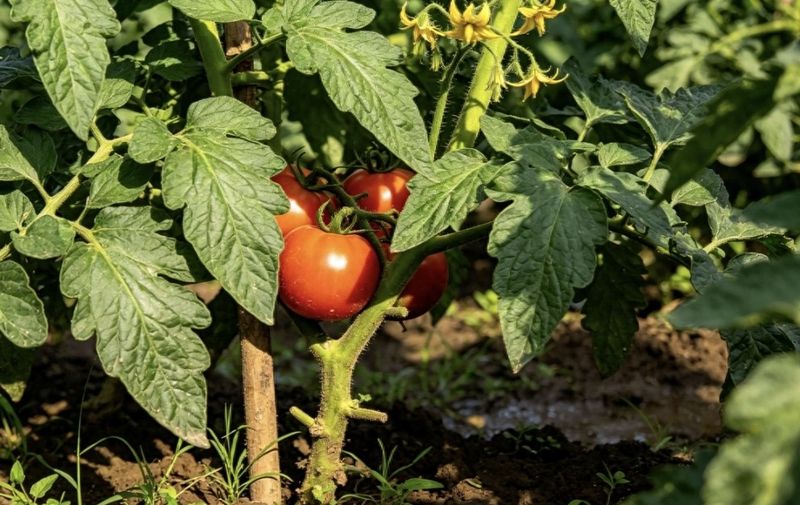
I. Tomato blooming fruit, adjusting the plant state okay
As soon as tomatoes enter the flowering season, it is no longer just a long tree, when nutritional growth and reproductive growth go hand in hand, and management fails to keep pace with it, and it is easy to grow and fall。
First of all, it's strong. Tomato plants can't be too weak or too strong. Weak and yellow leaves must not produce flowers; they are too thick and too thick and thick to feed on leaves and straws, and the flowers and fruit are not nourished。
It is observed in the field at times, and when it is found that the plant is too long, the leaves are too fat and the flowering position is on top, it is basically booming. This is done without the use of drugs, with management adjustments: first, proper water control, before the flowering of the soil is particularly dry, and no heavy water overflowing; secondly, keeping the fields ventilated, with high planting density and proper cleaning of the floor leaves; and thirdly, keeping the temperature under control and, when the temperature is high during the day, taking care that the ventilation cools and the temperature is too high to cause the plant to grow and fall。
Plants are too weak to be replenished in a timely manner but cannot be applied blindly. Weak seedlings are mainly in the form of tubing, thin leaves, light colours and small flowers. This situation needs to be based on roots and seedlings, which allow the plant to grow first in order to be able to grow。
Ii. The water is well watered, and the water of the flower can't be poured
The practice of watering tomatoes, which many people use to save, soaks and sours, is the most problematic in the flowering season。
Tomatoes open to fruit and the soil cannot dry or wet. Soils are too dry, with inadequate water-inhaling and pollen activity declining and prone to falling flowers; long-term wetting of the soil, poor breathing of the roots and weak absorptive capacity can also lead to flowers falling fruit and root problems。
My own experience in the field is:
Before flowering, if the soil is fine, pour water once to ensure sufficient moisture at flowering
(a) when large-scale flowers are blooming, no heavy water should be recommended for flooding to prevent sudden changes in soil moisture from affecting sit-ins
When the first fruit grows to the size of the finger, the fruit begins to expand rapidly, then the water is gradually increased to ensure its growth needs。
Watering is also timed, as much as possible in the middle of the sun, avoiding high noon temperatures and evenings. When water is poured in the evening, the night is wet and the field is depressed, which increases the probability of disease occurring. Proper ventilation with water and reduced humidity in the shed or in the field will help stabilize tomato nuts。
Iii. Fertilizing the disease requires rational nutrition
Fertilizing is the key to high tomato production, but instead of using as much fertilizer as possible, it is counterproductive to use it。
A large number of farmers use nitrogen fat as soon as they get to the flowering season, resulting in a particularly high size of tomatoes, green oil, or no fruit, which is typical of excess nitrogen。
Tomatoes open to fruit, reducing nitrogen fattening, increasing phosphorus fattening, and supplementing some of the moderate trace elements that help with the flowering fruit。
There's plenty of fatty floors and there's no heavy demand for nitrogen fertilizer。
When the first bouquet is open and followed by a succession of bouquets, fertilization is dominated by balanced nutrition, promotion of sit-in fruits, and fertilization。
When the fruits begin to swell, the emphasis is on the supply of potassium fertilizer, which helps the fruits to expand and improve their quality。
In some cases, there are cases of yellow leaves, low tops, small flowers, mixed fruit, many of which are related to poor absorption of roots and uneven nutrition. It is time to focus not only on the ground but also on the root system, so that it can be absorbed。
Fertilizers are normally applied in a small number of ways, which is much more reliable than a single application or later. In particular, during the outcome period, tomatoes require high levels of fattening, excessive one-time application, which can easily cause loss of fertility and waste of costs。
The whole thing must be done in a timely manner, so don't let the useless branches go for nutrition
Tomatoes are of the two types of unlimited and limited growth, and in either case the whole sting is necessary to reduce nutrient waste and concentrate nutrition on the provision of flowers。
Many farmhouses are not allowed to swung and feel that one more branch can produce more results, which is not the case. There are too many side branches, closed plants, poor light and high humidity, not only to sit well, but also to be ill。
In normal management, the side branch can be broken as long as 10 centimetres, not to wait too long to beat, which is already consuming a large amount of nutrients, and which is not conducive to recovery。
The sting is chosen in the morning of the sun, which heals quickly and is not easily infected. In the dark, when there's dew, try not to operate。
The bottom leaves, yellow leaves and sick leaves should also be cleaned up in a timely manner. These leaves largely do not produce nutrients. They also shield the light and increase the humidity. Once cleared, the fields become better ventilated, the flowers become more stable and the disease decreases。
Take it easy when you're hitting the whole branch, so don't pull it hard and don't pull it. High-planted plants will have a direct impact on the flowering fruit if they are fixed in a timely manner to prevent ambushes and post-fall injuries。
V. Purpose environment management, holding light
Open and facility tomato cultivation is slightly different in environmental management, but the core is the right temperature and adequate light。
Inadequate light, weak ketchup cooperation, low nutrient accumulation, weak flowers, small fruit and easy to fall. Do not be too dense in planting to ensure that every plant can see light. The plant is grown to keep the shrub clean for as long as possible while the light is weak。
Temperature has a very strong effect on tomato flowering fruit。
High temperatures, reduced pollen activity, poor pollination and easy flowering
The temperature is too low, the flowers are slow to bloom and the fruit is poorly developed。
The temperature is appropriate during the day and not too low or too high at night。
(b) be exposed to continuous high-temperature weather, with attention to ventilation, shade of the sun and lower field temperatures
In case of low-temperature weather, protect against the effects of low temperatures on flowering。
The environment is suitable, the tomatoes are fully flowered, the seating rate is high, and the fruits are even in size in the later stages, and production naturally comes up。
Vi. Plumbing fruit, management without bias
The internet often sees all kinds of so-called porcupine tricks, what hosehold stuff to spray flowers, which are mostly unsupported, and which can cause flowers, deformities, and so on。
A truly reliable bowling fruit, or a rational field management:
1. Cultivation of a strong plant with strong flowers
2. Control of fattening, which is not long or short
3. Ensuring ventilation and reducing field depression
4. Appropriate humidity to create a good flowering environment。
As long as these are in place, the tomatoes will be stable and less fruitless。
If it is true that an undesirable situation is encountered, it is recommended that a local, suitable tomato-friendly fruit-push approach be adopted through formal channels, subject to reasonable regulation, and that it not be misused。
Vii. Precautionary pest prevention and early detection and treatment
Potato omelet periods, which have a particularly strong impact on yields in the event of pests and diseases, can lead to direct fallout and premature plant failure。
The most common problems are, inter alia, folate disease, fruit disease, aphids, pink lice, etc。
The occurrence of pests and diseases is mostly related to high field humidity, poor ventilation and weak plant growth。
Prevention is therefore more important than treatment:
- rational watering that does not cause prolonged wetting of the field
- the full and timely provision of ventilation
- not to apply nitrogen fertilizer and to increase the resistance of the plant itself
- discovering of leaves, fruits and diseases and taking them out of the field in time for transmission。
In the field management, the state of leaves, flowers and fruits is observed at extra early stages。
Do not use the equation at will, do not make the preparations themselves, and do not cause any harm and affect the development of flowers。
Viii. Management of periods of fruit expansion, determining final production and quality
When the first sprouts are steady and they start to swell, they enter a critical period of tomato production. It's time for the management to follow. The tomatoes are on their feet, and the tree is full of fruit。
This period has focused on these things:
1. Water fertilizers: the expansion of fruit requires a high amount of water to ensure that the soil is humid, that it is reasonably fertilized, that it is mainly potassium fertilized and that other elements are appropriate in quantities
2. Continuation of the whole branch: new and emerging branches are being knocked out in a timely manner and old leaves are being cleaned up in a timely manner
3. Plumbing fruit: a sap leaves a healthy amount of fruit, removes a deformity and a weak fruit, and ensures that the fruit left is large and good
4. Prevention of early decay: post-planting is prone to yellowing and long-term decline, attention is paid to root protection and longer duration of plant results。
Many of them have had a good early start with tomatoes, and at the end of the mid-term plant failure, the latter do not grow and the production is far from complete. Therefore, management in the mid-term and later stages cannot be relaxed, and the details are kept in place so that tomatoes can continue from bottom to top。
Nine: don't step on these common faults
Taking into account my own experience and that of the farmers around me, many of the people who grow tomatoes do not produce very much, and they step on the wrong side:
1. Overloading of water, prolonged wetting of the soil, poor roots and flowers
2. Nitrogen fertilizers are too much in use, with a strong plant, and they are not productive
3. Indulgence, closure of fields, poor light and infirmity
4. Obligatory application of fertilizers in the preceding period, resulting in the loss of fertilizers and premature plant failure
5. The blind belief in bias and the absence of formal management methods leads to a high incidence of mischievousness and malformations。
It is difficult to avoid these faults and to get the details out of the way。
Do you grow tomatoes in the open or in the facility? What's the problem with tomato bouquets? What practical experience do you have in wiping, watering and fertilizer? Sharing exchanges, learning from each other and growing tomatoes together are welcome。
Carnation tips: tomato management is focused on detail, flowering is focused on stability, is not blind, is fat, is not free to use unknown formulas. The whole day is chosen with a small amount of water, mainly on a precautionary basis, with a strong plant, with a natural stability and a guaranteed yield。