


Many family friends who grow vegetables have a common disease, and tomatoes tend to feel “more fat and more fruit”. Watching the seedling grow slowly and thinly, they quickly spread fertilizer and water into the earth。
I've been working for half a day, but it's not right. When fertilizer is scarce, tomatoes grow poorly, and branches are thin, leaves are yellow, and the fruits are small and small; once fertilizer is overdosed, especially too much nitrogen fat, the seedlings grow madly, and the vines grow thick and thick, and the leaves are thick and thick, and look at them as they grow, they grow, they don't bloom, they don't sit in fruit。
The leaves are too strong to cover the air and light, the fields are hot and humid, and the doors are filled with powder, frost and pests. Fertilizers cost money, water and effort, and the final production did not go up, and many of the cabarets stepped on pits year after year。
In fact, tomatoes do not use frequent fat pursuits and sophisticated planting techniques. The experience of old farmers has taught us that the key to the high production of tomatoes is not the amount of fertilizer, but the distribution of nutrients and the accurate filling of fertilizers. If the management methods are right, if they are not heavy, if the branches are full of fruit, if the harvest is finished and then the new fruit comes, from the early summer to the late autumn, the pellets will work and the newers will grow easily。
Today, we share a real, sober and easy way to manage tomatoes, not by fertilizing them, but by using science to manage them, all of which are practical ways for farmers to prove their hands on a permanent basis, without false or exaggerated results。
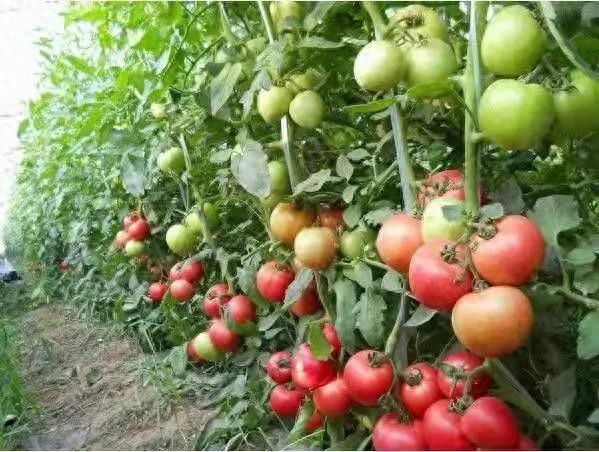
I. Correcting the faults: the reduction in the production of tomatoes, all management failures let's go
The reduction in the production of most species of tomatoes is not a problem of diet at all, but of all nutrients consumed by leaves。
The tomato has a very strong growthal character and has a strong ability to split and pull branches. If it is allowed to grow freely, all nutrients of the plant will be given priority for the growing of vines and new leaves, and the sprouts will not be adequately nourished, there will be a situation in which flowers will be thin, flowers will fall and fruit will fall。
Many know only that the pursuit of fatty is tantamount to “weighting up” the branches of the protege, so that the seedlings grow stronger, and there is a greater shortfall in the nutrients of the flowers, and they are caught in a vicious circle of fertilization and less fruit。
So for tomatoes to be productive, the first step is not to fatten, but to control the shape, artificially adjusting the growth of the plant and shifting nutrients from branches to flowers, which is at the core of the low-cost increase。
Ii. Two steps in the shape of the plant, locking down the nutrients
One, take your mind to the right moment. Stop the invalid captain
The tomatoes are tiered, with normal open-air, pelvic-planted tomatoes, and when the plant grows between six and seven stalks, it is possible to conduct a top-to-crystal operation。
The method of operation is simple, cutting off the growth bud at the top of the plant and completely disrupting the growth of the plant upwards。
Many newcomers are afraid to hit the top, fearing that strangling the bud will affect growth, which is the opposite. After the top, the plant no longer consumes new nutrients, new leaves and all the nutrients absorbed by the roots, which are concentrated in the fruit ears that have already grown, so that the fruit of the child will expand rapidly and become more stable and will effectively reduce the incidence of fallout and rigidity。
2. Elimination of side buds in time to ensure ventilation
Small sprouts continue to emerge in the sutures of tomatoes and leaf handles. These sprouts grow so fast that they can grow into new branches in just a few days。
These redundant branches have no preservation value and can only take up the nutrients of the mains and fruits in a mad way, while keeping the branches too dense to cover the sun and to block the ventilation, which is the main cause of disease and pests。
In day-to-day management, whenever the sprouts are found in the stitches, they are effaced with their bare hands in a timely manner and only the main and strong branches of the outcome are retained throughout the journey. In addition to being less susceptible to disease and pests, growing branches and adequate light are likely to increase significantly in the quality of luminous sprouts, with a steady increase in the rate of sibling。
In addition to this, yellow, aging and dry substrates are regularly removed from the base of the plant. The failure of yip to use photosynthesis to produce nutrients can only lead to nutrient depletion, which is more conducive to soil ventilation and the reduction of root diseases。
Iii. Precise lobes to fatten, warm and plumb, and not burn the seedlings. Long
The construction of the plant is based on the need to provide nutritional supplements for the flower season if the fruit is to be abundant and long。
As compared to the slowness of soil fattening, easy to burn root and easy to grow, the application of potassium phosphate on the leaves is the most efficient and safe way to regenerate tomatoes and a necessary technique for old vegetable farmers。
The household's standing potassium phosphate is a high-yielding gold fertilizer for tomatoes, which is simple and stable。
Standard ratio: 1 gram of potassium phosphate with 1 litre of clean water at a 1:1000 scale is used evenly, at a safe and mild concentration suitable for all tomatoes, without burning leaves and flowers。
Spraying time: spraying every 7 to 10 days from the beginning of the tomatoes, focusing on the positive and negative sides of the blades, so that they are evenly wet and not repeated。
Potassium phosphorus is the core nutrient of flowering results, which can effectively contribute to the fracturing of flowers, increase their strength and reduce their physiological fallout. When sprayed after the fruit sits, it accelerates the expansion of the fruit, allowing the fruit to be saturated evenly, and when it matures, the tomatoes are more sweet and taste better。
Continued spraying also enhances the resilience of plants, allowing tomatoes to remain robust at a later stage, extending the overall outcome cycle and achieving multiple collections。
Iv. Water to control the details, to circumvent the broken roots, to stabilize the seedlings
Fertilizer management is in place and poor water distribution can reduce production and cause problems。
Watering of tomato fruit, bearing in mind the core principle: wet and dry。
In day-to-day cultivation, water is not allowed to overflow. The prolonged wetting of the soil results in a lack of oxygen and a failure to absorb nutrients when the roots are damaged, and there is a problem of loss of fruit and atrophy of the plant。
At the same time, the main cause of tomato fissures is soil drying and damp. A sudden and massive watering after a prolonged drought, the rapid expansion of the meat and the failure to keep pace with the growth of the bark, will result in a large number of fissures affecting the shape and food value of the product。
The correct method of watering: observe surface soils and then water them when they are dry and white; it is sufficient to keep the soil micro-humid during the outcome period. The water is chosen in the morning or in the evening to avoid the high noon temperature. In the event of consecutive rainy days, water collection and drainage are done in a timely manner to protect the healthy growth of the roots。
V. Principal resources in resources of real family institutions and results of standing manufacturers heart
Many of our village's elderly people who grow vegetables of a perennial age do not often use tomatoes for compound fertilizer and urea. Each year, it is managed by a “plastic + leaf supplementation + scientific water”。
In general gardens, tomatoes are grown, with six or seven simple and loose nuts, with dense and even fruit; and in the balconies, tomatoes are also grown full of branches sufficient to feed their families。
This method is less time-consuming and less costly than blindly fertilizing, and it is effective in avoiding common problems such as growing up, disease, loss of fruit, which is typical of high-yield production by lazy people, without care。
Summary: science management is the key to high tomato production
The core logic of tomatoes is never the more fertilizers the better, but the more rational the nutrients are。
The blind pursuit of fattening only results in long leaves and waste of nutrients, and locks the nutrients of the plant by taking the top and removing the side buds; periodically spraying potassium phosphate with bouquets to accurately supplement the nutrients required for the fruit; and, in combination with dry and wet watering, the problem of falling, short-cut and short-lived fruit can be completely resolved。
This mature planting management programme, adapted to rural vegetable gardening and urban balconies, allows new hands to reach the zero threshold. In accordance with this approach, tomatoes are grown with strong, dense trunks, mature and sustained harvests, easily self-sufficient family tomatoes and fresh and natural open tomatoes。
Is it not common for people to grow tomatoes, too, to be confronted with problems of loss of light and scarcity of fruit? How do you manage tomatoes? Welcome to the comment section to share experiences of growing vegetables and learning from each other
Focusing on home gardening, sharing practical techniques for grounding, landing, unrouted vegetable growing every day, helping people grow good food easily. It's practical, remember to watch it, so it's easy to watch the next planting



