I. When knowledge becomes a game of breaking
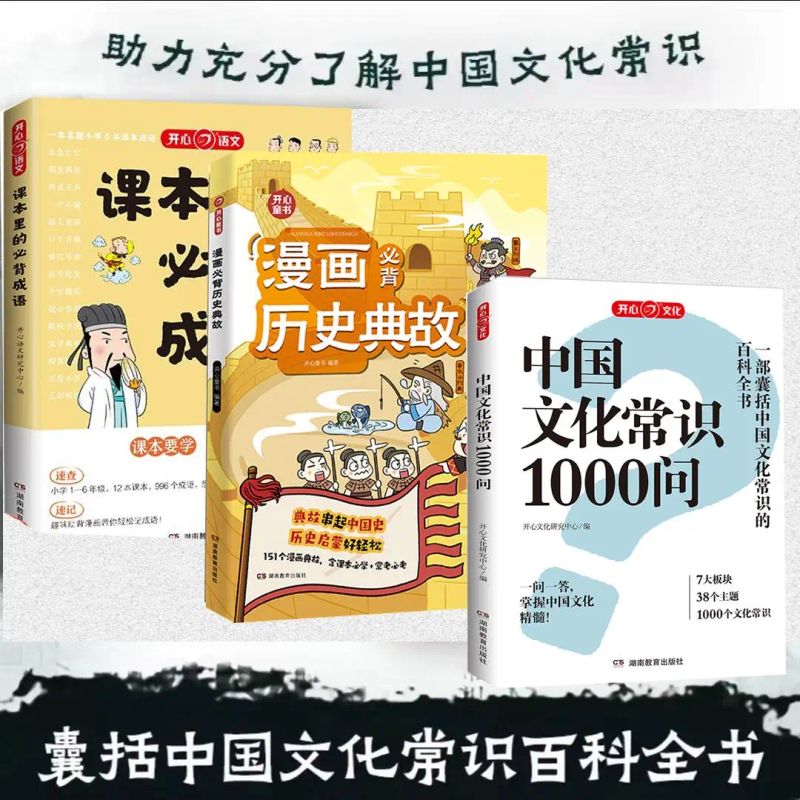
Remember the look of the kid staring at the screen with a short video? There is no greater dilemma in modern education — we have the greatest amount of information, but it is more difficult than ever to systematically absorb knowledge. This book, " chinese cultural commons 1000 questions " , is like a wise old man who turned the 5,000-year-old civilization into 1,000 fun question and answer cards。
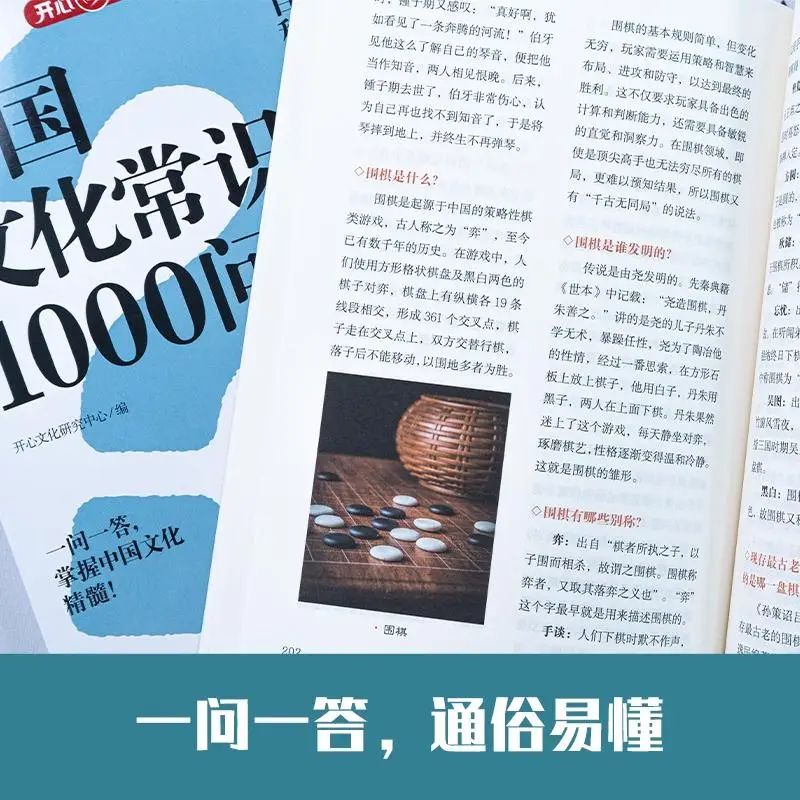
From "why the ancients drink with brass" to "what astronomical secrets are hidden in sun goku's golden stick," every question is like opening a blind box. Specially designed ar technology allows the cultural objects on the book page to “live”: scan the questions and answers page of the quizhi river map to see the automatic navigation of the river's vessels; and click on the section “zen zhui zhui zhui zhui zhuong” and the mobile phone immediately transmits the guly recovery audio. This game-style learning design makes the memory of knowledge a mystery。
Ii. Civilization codes hidden in life
One radiance into a parent laboratory
Questions and questions extended to family science: boiled eggs in different material containers, observed the pattern of cracks in the egg shell, and shared the wisdom of the ancient man's “mixing with the sun”. Each of these books has an actionable proposal for parent-child interaction。
2 ️⃣ historical characters transformed into “superhero”
Reformulate the story in a language children can understand: li bing shudujiang is a “water engineer war flood monster” and zhang chen has invented the "earthquake early warning system for ancient scientists"。
Civilization in the trees breaks memories. Topic
An original tree-like knowledge map links a fragmented knowledge point: the roots are primitive farming, the trunks spend seven main branches of the music system, technological inventions, etc., while leaves are specific person events. When a child's coloured mark is captured, it is clear that his “knowledge forest” is growing。
Iii. Education programmes for parents
Efficient utilization of debris time
In the morning, the challenge of “three questions per day” can be completed in 10 minutes, with “questions and answers” on the way to school, and “cultural theatre” stories before bedtime. Colour partitioning on the side of the ridge is designed to facilitate rapid positioning of different levels of difficulty。
Elimination of intergenerational knowledge faults
A special “paternity kit” has been set up to interpret traditional concepts in modern cases. For example, using “micro-credit red bags” as a source of old-age money, and “waste classification” as a reference to the environmental regime in the zhouli, to remove parent-child communication from the shell。
Interdisciplinary thinking development
“how ancient mathematicians calculate round rates” combines the history of mathematics, and “favorite and animal spectrographs in poetry” chain contact biology. This model of literacy education corresponds to the core orientation of the new curriculum。