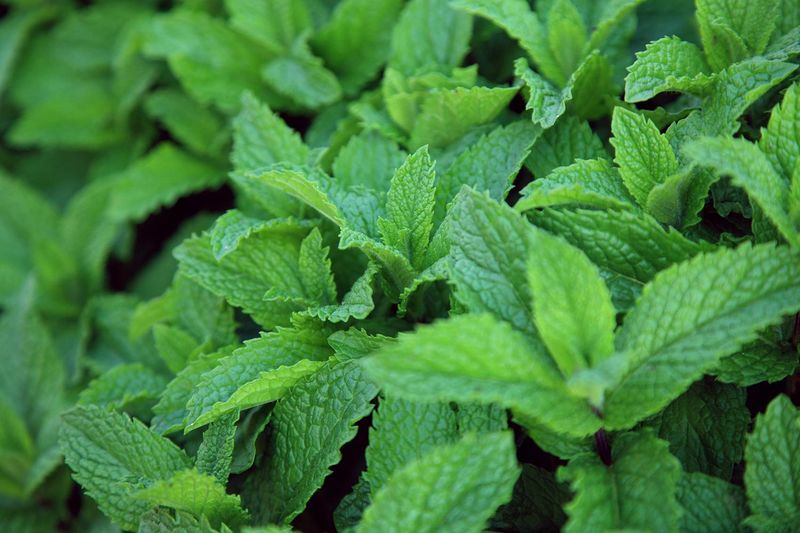
I. Environment
Temperature: mints are warm, grow at 20-30°c, are more chilly, and the root of the ground is still warm at 20°c。
Euphoria temperature: above 10°c, best 15~25°c。
Light: sufficient light is required and long-term shades lead to thinness, thinness of leaves and reduced oil content. A proper shade (to avoid foliage burns) during the summer。
Soils: persevere, fertile, well-watered sandy or bordery soil. Ph 6. 0 ~ 7. 5 (neutral to microacid)。
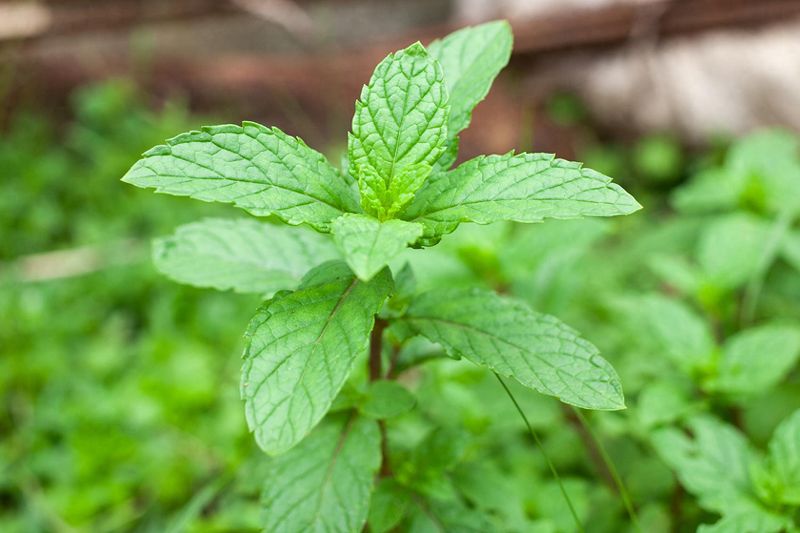
Ii. The whole area
Deep tillage and pine soil: before planting, the land needs to be stretched to 20-25 centimetres to break large soil particles and ensure that root roots take root. The tillage has been smoothed to form a defusing soil structure。
Base fat: 1,500-2000 kg of fertilizer per acre applied to mature farmers, 50 kg of calcium phosphate or 40-60 kg of compound fat, providing sufficient nutrients for seedlings. If the soil is infertile, extra organic or slow decomposition can be added。
Fertilization methods: base fertilizer needs to be evenly integrated into the farming layer to avoid the burning of roots as a result of concentrated accumulation of fertilizers. In the case of plant mints, water retention can be enhanced by coconut or corrosive soil。
Water drainage in open ditches: the whole area needs to be covered by ditches, with a width of 1. 2 to 1. 5 metres, and by digging drains around the area to prevent the drying of roots during the rainy season. Plantation is based on the choice of flower basins with drainage holes。
Soil disinfection: if there is a disease in the front crop, lime can be sprayed or multibacterium sprayed for soil disinfection。
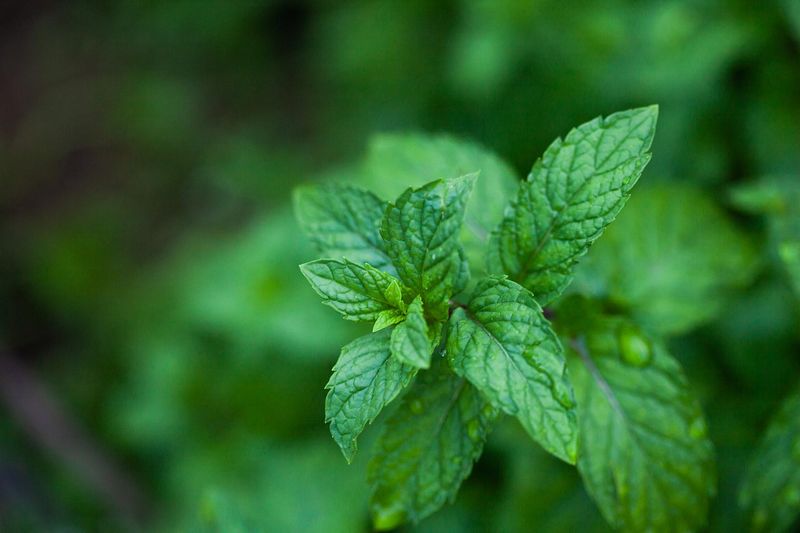
Cultivation (1)
Root reproduction: choose the thick, insect-free root, to form 7-10 cm fractions, with a distance of 25 cm and a distance of 10 cm in the ditch, and water the ground。
(b) cultivation: cut 10 cm of stubs, plant seedlings 7 x 3 cm by row, maintain soil wetness, root and then plant。
Divisiond reproduction: the seedlings are suitable for replanting when they are used。
Seed reproduction: much of this is used in breeding research, with seeding. Seeds are immersed for five hours in warm water of 40-45°c and germinate in a wet environment of 18-25°c for three weeks。
(2) seed reproduction
1) seed treatment: before seeding, full seed selection is required, impurities are removed by wind selection or screening, and seeding with root powder water solution is used to increase germinate rates。
2) preparation of nursery beds: choice of sandy or corrosive soil, application of base fattening (e. G., decomposed farmer + compound fats) and flatting (blank 1. 2m, 15-20cm)。
3) seeding management: seeds are spread evenly after mixing with fine earth, 1 cm of covered soil, water spray is kept wet and covering membranes (20-25°c)。
4) precipient seedlings are grown up to 5-6 leafs, with earth transplants, 15-20 cm。
Iv. Field management
(1) scratch root after cutting
The first harvest requires the removal of old infarction, rods and weeds left on the ground with a hoist or slash knife immediately after the first harvest, the depth of which is fine-tuned to the root of the species: deep roots are deep (about 10 cm) and shallow roots only remove surface residues. Scratch will ease the soil, protect the plume and promote the emergence of new seedlings in the underground and increase the production of double-blade mints。
Caution: in the event of continuous rain and new seedlings that are emerging, rooting should cease and be replaced by wetting of trenches and soil fattening。
(2) density control
The number of heads per acre was about 25,000 (with a distance of 10-13 cm) and increased to 50,000. To ensure ventilation through hyphenation and to avoid the loss of the next leaf because of overture。
(3) fertilizer management
1) base fertilizer application: 3000-6000 kg/scrutinizer per acre prior to planting + 1000 kg grass-wood ash with deep tilling。
2) fertilisation strategy
Shrimp period (april): 1,500 kg of septic water or 20-30 kg of urea per acre after seeding to promote seedling growth。
Division (may-june): re-apply compound fertilisation (cobalt of potassium nitrogen phosphorus) with high-quality composite fertilizers of 25 kg per acre or ammonium phosphate of 50 kg, combined with a cleavage。
After harvesting: after the head knife mint harvest, 1,000-1400 kg/acre + 50kg ammonium phosphate in human urine when the two saplings are 10 cm high; after the second slash cover high-quality organic fertilizer, laying the foundation for growth the following year。
Winter conservation: if grown for many years, the application of decomposed organic fertilizer in winter covers the root and promotes early seeding the following year。
Three: extra fat
(b) 1% urea + 1% calcium phosphate leachate + 1% potassium chloride mixture, 100 kg per acre; or 0. 1% bolybrate + 0. 1% zinc sulfate + 0. 2% potassium phosphate mixture, once every 7-10 days, 2-3 series of foliage prolonged。
(4) water management
Pre-growth: keep the soil wet and water every 15 days to promote root growth。
Long-term prosperity: heavy water is required and water is poured at high summer temperatures, avoiding high-temperature burns。
After sealing: control the volume of water and prevent the long fall of the leaf。
(5) cropping and seedling removal miscellaneous
Weeding: two to three times before the closure, near the root is shallow (2-3 cm) and slightly deeper (5-7 cm); artificial straw extraction before harvesting。
(b) dismantling: the head knife mint is pulled 12-15 cm high unless it is grown (observation of leaf shape, smell) twice-3 times to ensure purity。
V. Pest management
Plasmosis (white star disease): timely removal and destruction of leaves; 70 per cent of dyson manganese zinc 500 times or 1:200 bordol spray at the beginning of the disease。
Rusty: increased ventilation through selection of disease resistant varieties; spraying of 20% triazone emulsion 1,000 times more liquid or 300 times sodium dichloride。
Powder: spray 0. 1-0. 3-percent thirate or 20 per cent of rusty lactose 2,000-fold fluid。
Black hysteria: 70 per cent of all bacterial scabs or 40 per cent of polybacterium roots are used to strengthen nursery management。
Silver-edged night moths/slashed night moths: 90% trichlorfon sprayed with 1000 times more liquid or 5% more efficient chlorocypermethrin; booby-trapped insects with light。
Aphids: aphids, aphids, flies, etc. Are released; aphids or aphids are sprayed。
Small tigers: baited with 90% trichlorfon; artificially caught larvae in the morning。
Red spider: keep the environment ventilated and sprayed with avil。
Vi. Receivation (1) and time of receivation
In general, two seizures per year were made: in mid-july (north china) or in late june to early july (south); and in mid-october (autumn) to early frost。
Optimal period: from 12 noon to 2 p. M., when the most oily leaves are found。
(2) collection criteria
Head knife: large and low-oiled plants are harvested when the leaves are dark and green and the base leaves are yellow。
Two knives: shorter but high-oiled plants and harvests when flowers or leaves are thickened。
Special circumstances: early harvesting is required in the event of prolonged drought or severe pests。
(3) operational guidelines
The part of the ground is cut with a sickle and should not be overloaded。
After harvesting, the sun needs to be spread immediately so that the pile of fermentation does not lead to the yellowing of leaves。
Vii. Notes
It's dry and sealed and preserved。
Mint roots are well developed and susceptible to contagion, and plant planting is recommended or isolated。
Avoiding reconnection, cycle 2-3 years。
(c) the timely provision of care (tops) to promote fragmentation and increase production。
Avoiding single overdose of nitrogen fertilizer and preventing loss of productivity。
Leaf fertilizers are required to avoid high temperature periods and to opt for cloudy or evening spraying, covering both the positive and the negative。