


After each earthquake, a speech such as “happiness grass can predict an earthquake” is popular online, and some directly refer to it as “earthquake flower”. Although authoritative scientific research units such as the central institute of sciences have pointed to the inadequacy of the scientific basis for such rumours, similar rumours remain highly marketed. This shows that there is a great interest in having the magic plants of "super-sense"。
Plants have neither eyes nor ears, and they can't move. The answer is yes. In fact, plants have super-sensitive feelings。
The "shocking" of shamegrass, sharp and delicate
Mimosa pudica, born in tropical america, came to our country during the years of the tsing dynasty when the french missionaries gave it to the emperor. Its leaves are a two-fold plume, and the two pairs of feathers are usually set at the top of the branch, and when they touch, the leaves close immediately; after a while, they recover slowly. This is a very interesting feature, which even the emperor of kanlong thinks is new, and which led to the replacement of father tom's license to collect plants in china。
This characteristic of the shampoo leaves is known in botanical terms as shock. Stefano mancuso, an italian botanical scientist, wrote in their book, "they have no brain, but they have a history of intelligence -- a history of knowledge of plant intelligence " , that "the shame grass not only develops extremely sensitive touches, but also distinguishes between different kinds of sensory irritation ... If it is realized that this touch does not pose a real threat, the leaves will be reopened." jean-baptiste lamarck, a french botanist, has done an experiment to cross paris in a carriage with a weed. All the shrouds were closed at first because of the bumps of the carriage, but soon they were opened and kept open. This means that, in a short period of time, the shrouding of the carriage has become clear that it is not threatening, and thus has stopped spending energy on closing its own leaves。
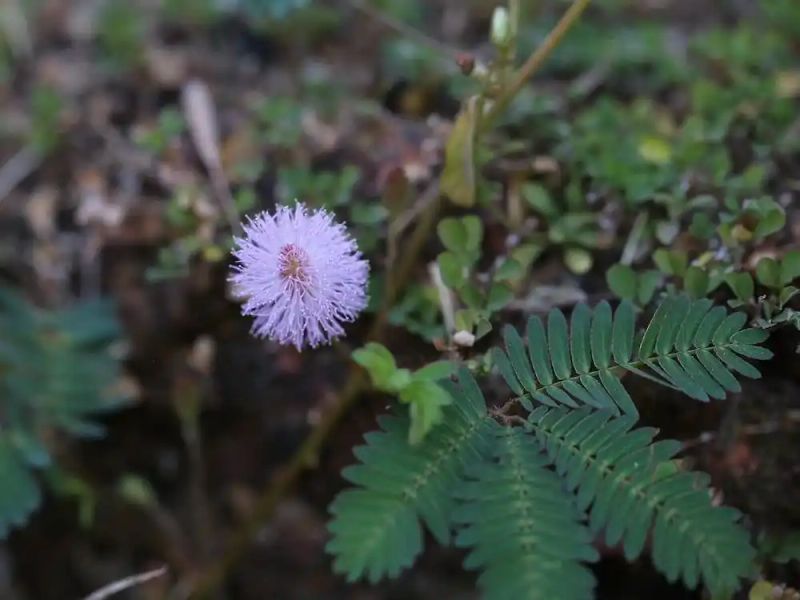
The tropics of savannah-producing america is now widely distributed in the tropics of the world. This is a picture of the author, zhou min, who, apart from being singled out, is "weak"? Botanical scientists have found 10 to 20 layers of thin wall (motion) cells in their leaves handles or leaves-based pillows that can undergo reversible expansion and contraction. Once the leaves of the shampoo have been touched, the motion cells in the leaves pillow will receive information, the cell fluid will flow quickly to the cell gap to reduce the ability to expand and reduce pressure, and the leaves will shrink and close. On the other hand, when the irritation disappears, the motion cell re-inflates after sucking water, thus opening the leaf again. Seeing an interesting video on the internet: “what happens if you keep stimulating the grass? Will it be exhausted?” there are biologists abroad who did the experiment, and it turns out they're just like the ones who travel through paris in a carriage。
Recently, the flower market found that a small plant with shy grass is popular, ranging from $10 to $20 a bowl. Maybe because it's kind of like a pet. Can you touch it when you're bored
When the night comes, it's "nightly."
A lot of plants can feel the night coming. - the leaves are spread during the day and the sun is used for light cooperation, while at night they are closed to sleep. Botanicalists call this characteristic night-sensitization, e. G., concubine, soap pots, legumes。
Albizia julibrissin, a soybean, two-leaf pairs, one at a time and the other at night, so commonly known as “night bouquets”, “night bouquets”. It is also because of this characteristic that in my country, joy has been a symbol of love since ancient times. Besides, i've tried, its leaves will be slowly closed when touched。
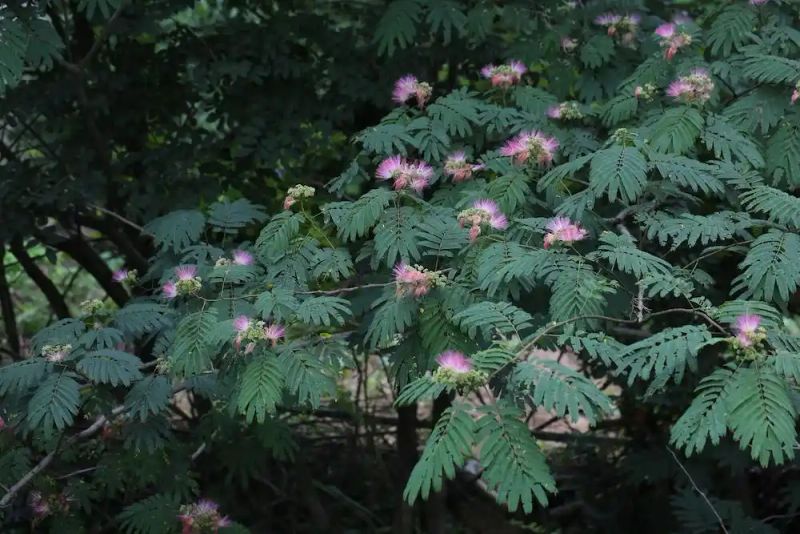
The nightingale nature of festivities, also known as night bouquets, has long attracted the attention of botanical scientists. Carl linnai, the great teacher of plant taxonomy, was the first to study the issue in a systematic way, writing a paper in 1755 called " the sleep of plants " , describing the different state of leaves of several plants at night. The same is true of the soybean plant, known as lotus corniculatus. This is a gift sent to him by a french botanist who observed that, in the proximity of the twilight, the muscular roots would lift the leaves around their varnishing, as if yellow flowers were missing. By the next day, the leaves were opened and the flowers returned. He speculated that the change in plant leaves was caused by changes in light rather than by temperature. Linnai believes that the sleep of plants is one of the most basic activities of their lives, like animals。
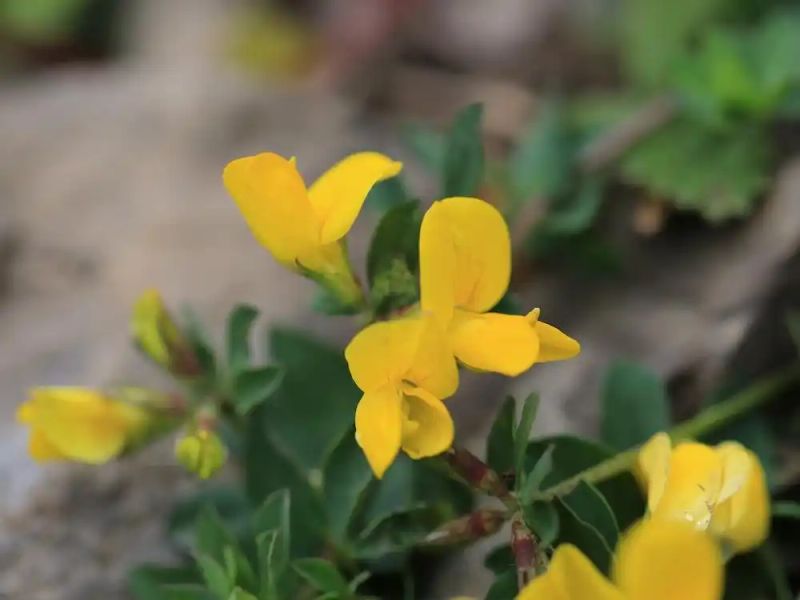
Interestingly, plants sleep in different positions, such as soybeans, whose leaves usually fall down, while the three heart-shaped leaves of plaster grass fall down at the far end of the handle from the middle pair. They show a common pattern: the shape of the leaves at night, when they germinate。
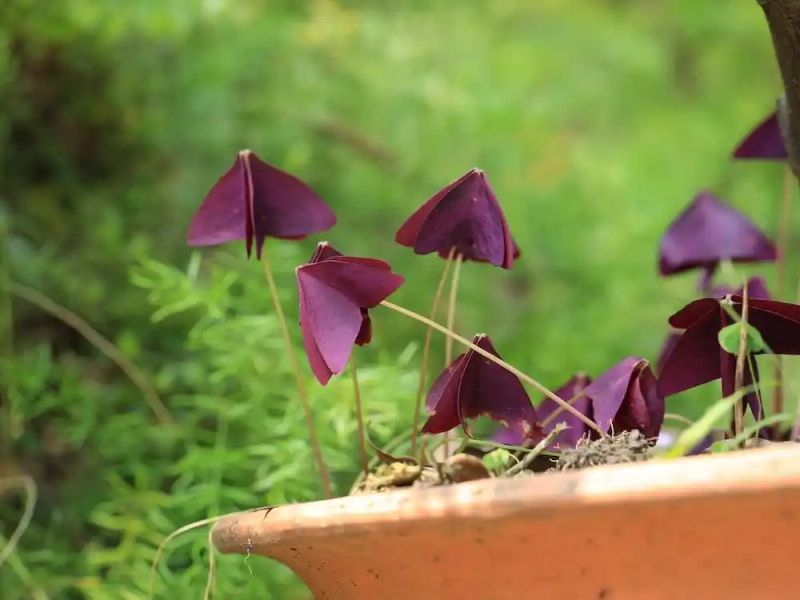
Oxalis triangulararis, where the lower weeds fall from the middle pairs, the higher the temperature, the higher the weed, the smaller bush, which was born in the south of the country, is distributed in guangdong, guangxi, fujin, jiangxi, sichuan, yunnan, guizhou and taiwan. Its flowers are the most common butterfly-shaped flowers in the soybeans, but they are famous for a strange trait -- its leaves dance. In the 1980s, the news of guangxi's discovery of a dancing plant appeared in dozens of newspapers, which was sensational。
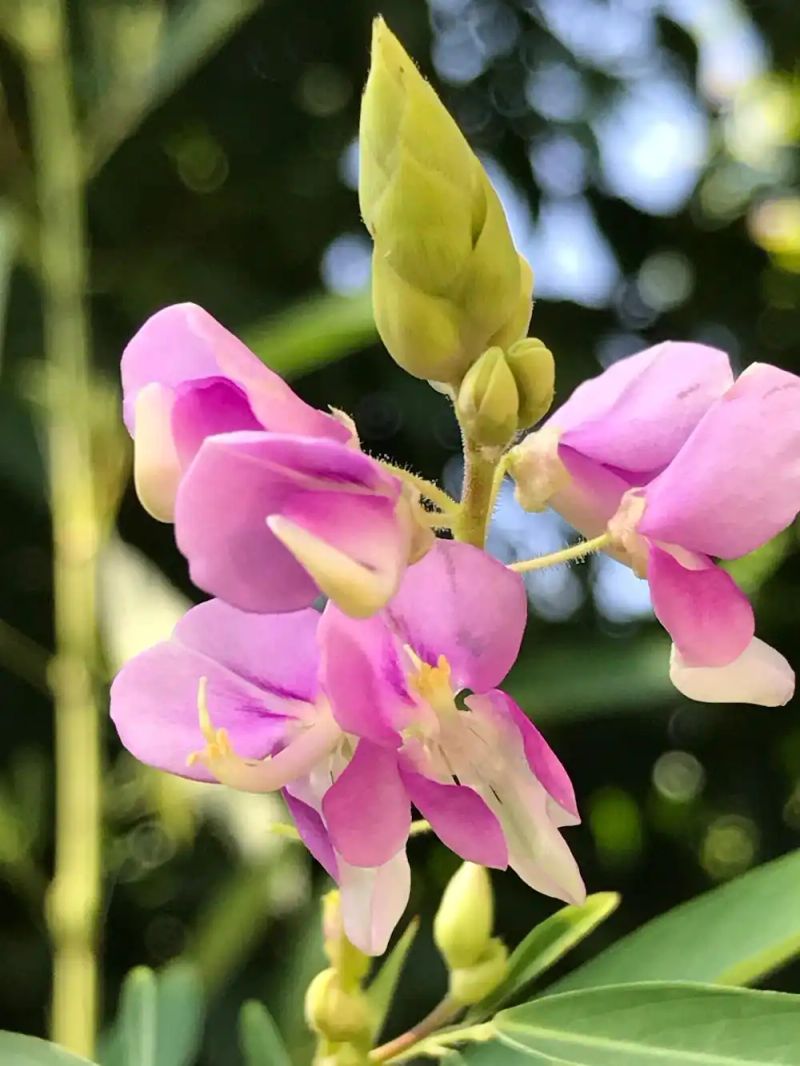
The flowers of the weeds, in the door. Zhang wing mae, on the south garden of guangzhou, where plants are put on board, paints the way it dances: "when temperatures above 24°c and no wind or rain, the leaves dance, the right or the left, the right or the left, the right or the left, the right or the right or the right, the right or the right or the right, the right or the right or the right, the right or the right, the right or the right or the right, the right or the right or the right or the right. When temperatures range from 28°c to 34°c, especially in the dark days of the rain, the beating becomes more dramatic, leaves re-emerge like other lovers, double hugs, and a trip like a ton of water, it's interesting. In the evenings, the leaves are dried up, tightly attached to them, as if they were resting in peace, a rare view of the plant world.” the weed leaves are triple-leaf, with larger leaves, small leaves on the side, and it's these two leaves that dance. Even in their sleep, the small leaves of the weeds are still spinning, albeit at a slower rate than during the day。
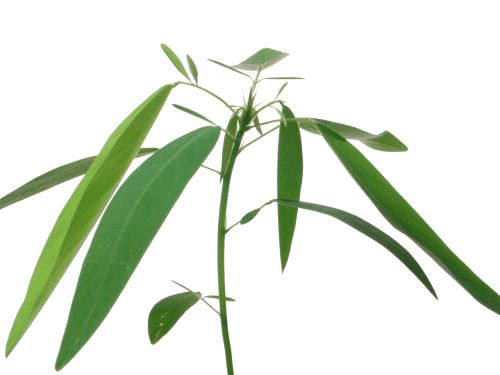
Dancing grass, indefenseofplants, the higher the temperature of the map, the more visible the little leaf moves. Botanical scientists have come up with a lot of interesting guesses about the strange nature of weed, but the real reason is still a mystery. However, at least it can be established that weeds are extremely sensitive to temperature increases. Plants are often considered to be ignorant, as we say, “how can people be ruthless” — for example. But in fact, plants not only have five senses of vision, smell, hearing, etc. Similar to those of humans, but there are 15 other feelings that we do not have, such as the perception of soil temperature, the direction of water sources, and the identification of whether chemical substances in air or soil are harmful or beneficial to them。
On the contrary, human beings, rather called the spirit of everything, are becoming more conscious in modern life, which is highly dependent on technological products. In this direction, we need to learn more from plants。
(author zhou min, senior mediaman, treasurer, now freelancer. Contact our postbox: sjdl 2020@163. Com)。



