


Technical brief:
The patent proposes a public-health-free farming method for traditional cabbage cultivation in response to low yields, poor quality, high costs and long cycles. Efficient high yields, quality enhancement, reduced planting costs and appropriate scale-up are achieved through science-based fertilisation, seedling impregnation, precision management of temperature and humidity, and green pest control。
Keywords: empty cabbage cultivation, harm-free cultivation, high efficiency production
It's a no-hazard farming method for empty cabbage
Technical field
This invention deals with the field of crop cultivation, specifically a non-hazardous method of growing open cabbage。
Background technology
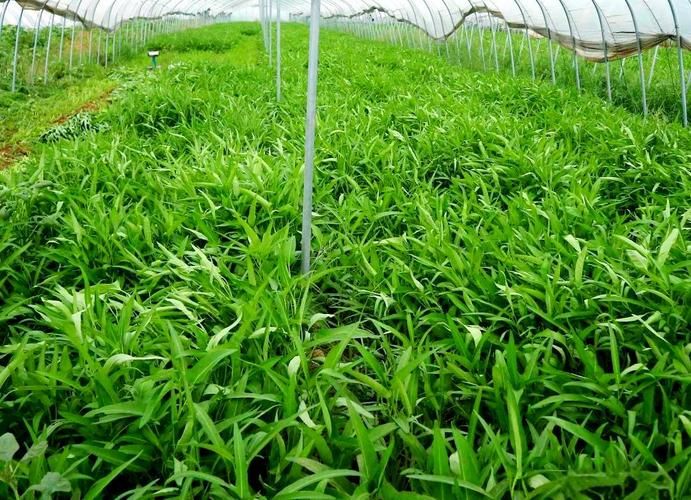
Vaccination is alkaline food and contains elements such as potassium and chlorine that regulate the water balance, which can reduce the acidity of the intestinal tract and prevent intestinal herbology, which is useful for cancer prevention. The sootic acids, vitamin c, etc., can reduce cholesterol, glycerine triesters and have the effect of reducing fat. The chlorophyll in the hollow cabbage is called the "green elves" and has a clean tooth that prevents the smell of the mouth, a good skin and a beauty. It has a wealth of coarse cellulose, which consists of cellulose, semi-cellulose, woody, gel and fruit and has the effect of facilitating intestine cortex and detoxification. Vaccination is cold, and the juice is inhibited by yellow grapes, streptococcus, etc., to prevent infection. In summer, therefore, if regularly eaten, it is possible to prevent summer detoxification, detoxification and dysentery。
At present, the cultivation of hollow cabbage is mostly in the form of field or utensils. Vegetables are expensive and space-consuming, and are only available for family cultivation; open cabbage is grown with long growth cycles and low quality and production。
"inventory"
The technical issues to be addressed by this invention are the provision of a public-friendly method of growing open cabbage, the improvement of the quality and production of empty cabbage output, the low cost of inputs, the short growth cycle, the continuous planting and extension of vegetable plantations appropriate for scale。
In order to achieve the above, this invention of a non-hazardous method of planting open cabbage includes the following steps:
- full-scale application of fertilizers: emptied cabbage is growing fast, has strong branching capacity, requires more water, and can be applied to base fattening, usually 1,500 for every 667 m2 application of decomposed organic fertilizer? 2000kg, grasswood ash 100kg, fully comming with the soil into 20 cm high and 130 150 cm wide (gaps)。
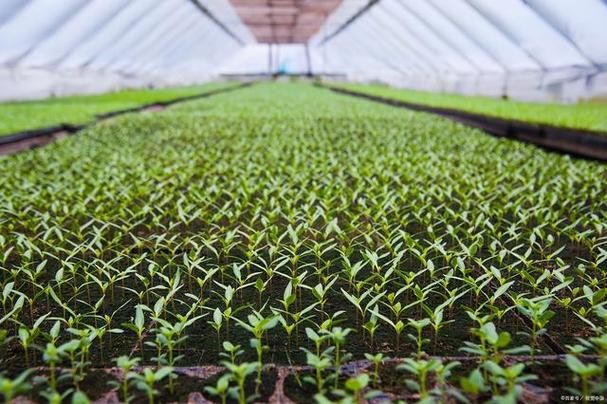
Breathing seed: the skin of an empty cabbage seed is thick and hard, and if the direct seeding occurs slowly because of low temperatures, it causes the seed to rot in the event of a prolonged low-temperature rain weather, and it is therefore desirable for the seeding to take place. 50? 60°c warm water is immersed for 30 minutes and then immersed in fresh water for 20? 24 hours, immersed in fresh water and immersed at temperatures of about 25°c, during which time the seed is humid and washed with fresh water one time a day, and seeded once the seed has a white spot. 50% of the seed is soaked when 60% of it is white。
Iii. Fertilizer application: before sowing, deep-soiling, 2500? 3000 kg or manure 1,500? 2000kg, grass-wood ash 50? 100kg, after mixing with soil. The hollow cabbage can be sowed or broadcasted in a scale of 1. 5? 2. 0 kg per 667 m2, and is then covered by concrete soil to the extent of 1 cm thick, with a 2 3 cm deep ditch to the surface, 15 cm apart, and then the seeds spread evenly into the ditch and then covered with fine soil. It is then covered with a thin film and covered with thermogenic material so that the cover can be removed。
Iv. Management in sheds:
1 temperature management. The low temperature, high humidity and persistent low-temperature weather periods during the development of empty cabbage sheds are extremely detrimental to the growth of warm cabbage, so that temperature protection is key to cultivation. When seeding takes place, the shed should be sealed in time to ensure that the temperature in the shed is higher than 10°c, which would otherwise cause a freeze, while ventilation should be enhanced when there is sufficient sunlight and higher temperatures, so as to avoid, as far as possible, temperatures above 35°c in the shed and to prevent strains from causing disease in order to keep the plant growing and increase production. When the roof is of high humidity, ventilation and humidity must be carried out in a timely manner by unmasking the film at either end of the shed or around it。
2. Fertilizer water management. Empty cabbage is a crop that has been harvested many times, and therefore, in addition to the application of foot-based fertilizers, a high yield can only be achieved through multiple periods of fatting, 10. 15 per cent of the seeding period can be covered by the urine of a rare human being of 1000? 1,500 kg per 667 m2 and, when the seedling has 3 or 4 leaves, by a combination of 15? 20kg and urea 2 4kg, and by a compound fertilization of 5? 8kg per 667 m2 per harvest period. The empty cabbage, which requires a large amount of water, should be regularly watered to keep the soil wet. During growth, weeding is done in a timely manner, after which weaning is not necessary。
3. Pest control. The main diseases of shrunk fallout and stasis are caused by low temperatures and relatively high levels of wetness, which can reduce the occurrence of the disease through wetting, which can be combated by rhesus or carroton; the main pests are mites and red spiders, which can be combated by khukort or kadek。
Collection: 27. 32 days after general sowing, when the hollow cabbage plant grows 25-30 cm high. In the case of a one-time harvest, a one-time harvest can be taken to the market when it is 20 to 35 cm high. In the case of multiple harvests, the seedlings may be placed on the market at a height of 12. 15 cm; when the seedlings are 18. 21 cm high, the seedlings may be removed to the market in conjunction with the seedlings, and the seedlings left may be collected on the market several times. When the seedling grows to 33 cm, the first picks, the first leaves two penis sections, the second takes the second takes the second part of the penis, and the third takes the first part of the tuber in order to rejuvenate the tuber. In this way, the chickens that are later picked can remain strong. Hand-strangling is more appropriate at the time of the extraction and can lead to the rusty death of the mouth with iron such as a knife. Generally, acres (667 m2) can be harvested up to 1,500 kg, while acres (667 m2) can be harvested up to 5,000 kg。
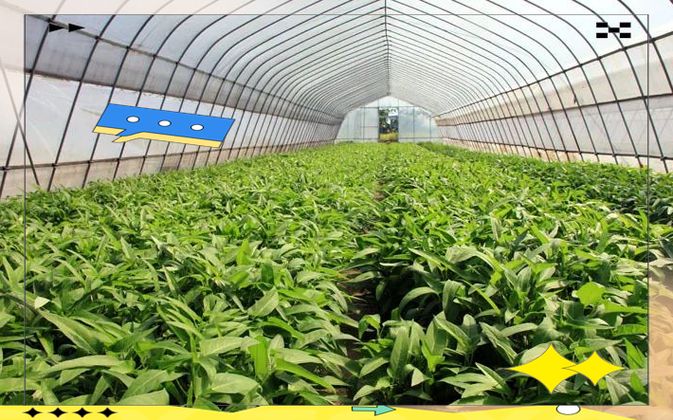
One of the methods proposed in this invention, which is not harmful to the public, is to improve the quality and production of hollow cabbage output, with low input costs and short growth cycles, which can be grown on a continuous basis and be replicated on a scalable vegetable plantation。
[practical means of implementation]
A harm-free farming method for empty cabbage, which includes the following steps:
- full-scale application of fertilizers: emptied cabbage is growing fast, has strong branching capacity, requires more water, and can be applied to base fattening, usually 1,500 for every 667 m2 application of decomposed organic fertilizer? 2000kg, grasswood ash 100kg, fully comming with the soil into 20 cm high and 130 150 cm wide (gaps)。
Breathing seed: the skin of an empty cabbage seed is thick and hard, and if the direct seeding occurs slowly because of low temperatures, it causes the seed to rot in the event of a prolonged low-temperature rain weather, and it is therefore desirable for the seeding to take place. 50? 60°c warm water is immersed for 30 minutes and then immersed in fresh water for 20? 24 hours, immersed in fresh water and immersed at temperatures of about 25°c, during which time the seed is humid and washed with fresh water one time a day, and seeded once the seed has a white spot. 50% of the seed is soaked when 60% of it is white。
Iii. Fertilizer application: before sowing, deep-soiling, 2500? 3000 kg or manure 1,500? 2000kg, grass-wood ash 50? 100kg, after mixing with soil. The hollow cabbage can be sowed or broadcasted in a scale of 1. 5? 2. 0 kg per 667 m2, and is then covered by concrete soil to the extent of 1 cm thick, with a 2 3 cm deep ditch to the surface, 15 cm apart, and then the seeds spread evenly into the ditch and then covered with fine soil. Then use it



