


Press: which one is better in a convenience store beer, a net red beer
What kind of beer tastes and tastes best? Only if you drink it can you compare it; all the risks such as formaldehyde, arsenic, cadmium are likely to be in beer. How safe is that beer
In july 2021, consumer report sent 12 mainstream beers to authoritative third-party testing agencies to inform your selection。
Testing products
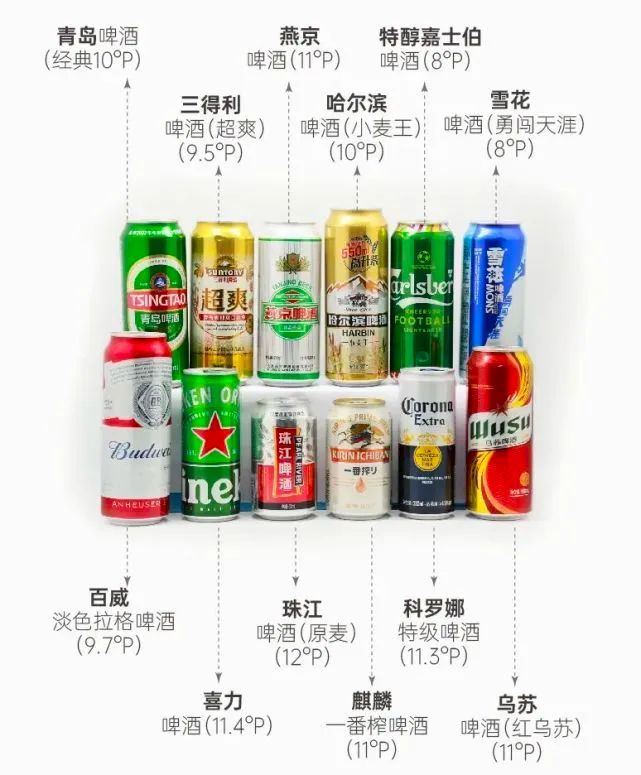
Test indicators
Safety indicators: formaldehyde, carbamate, lead, cadmium
Subjective blindness: taste and taste
Test results
Sections 1, yankyung and thorium are more popular with volunteers, with subjective taste ratings of 7. 4 and 7. 3, respectively, while sections 3, harbin, snowflake and triple, are less well evaluated with scores of 6. 4, 6. 5 and 6. 5, respectively。
In terms of safety, all 12 beers have detected a certain amount of formaldehyde between 0. 16 mg/l ~0. 23 mg/l, of which 0. 23 mg/l is on qingdao, although all beers are within the standard limit。
None of the 3 or 12 beers detected hazardous substances such as aminomethylate, cadmium, and lead, and, to a certain extent, the overall security of the beer tested was good。
3 beers are subjective
Is the malt fragrance strong? Is the wine thick? Is that bitter enough to reconcile? An evaluation of the indicators is essential。
To investigate consumer preferences for different beer, consumer report organized a group of volunteers with drinking experience to conduct a subjective beer evaluation experiment。
The dimensions of the evaluation included four indicators, namely, aromatic, oral, alcohol and bitterness, with a 10-point rating followed by a weighted average for each indicator。
The results show that the three sections yin kyoon, kiruna and others are more popular, with a total of 7. 4, 7. 3 and 7. 0 respectively. Most volunteers said that the oats were fragrances, that they had regins, that the cylindrical colours were the deepest, co-ordinated and fragrances, and that corona was cleaner but bitterer。
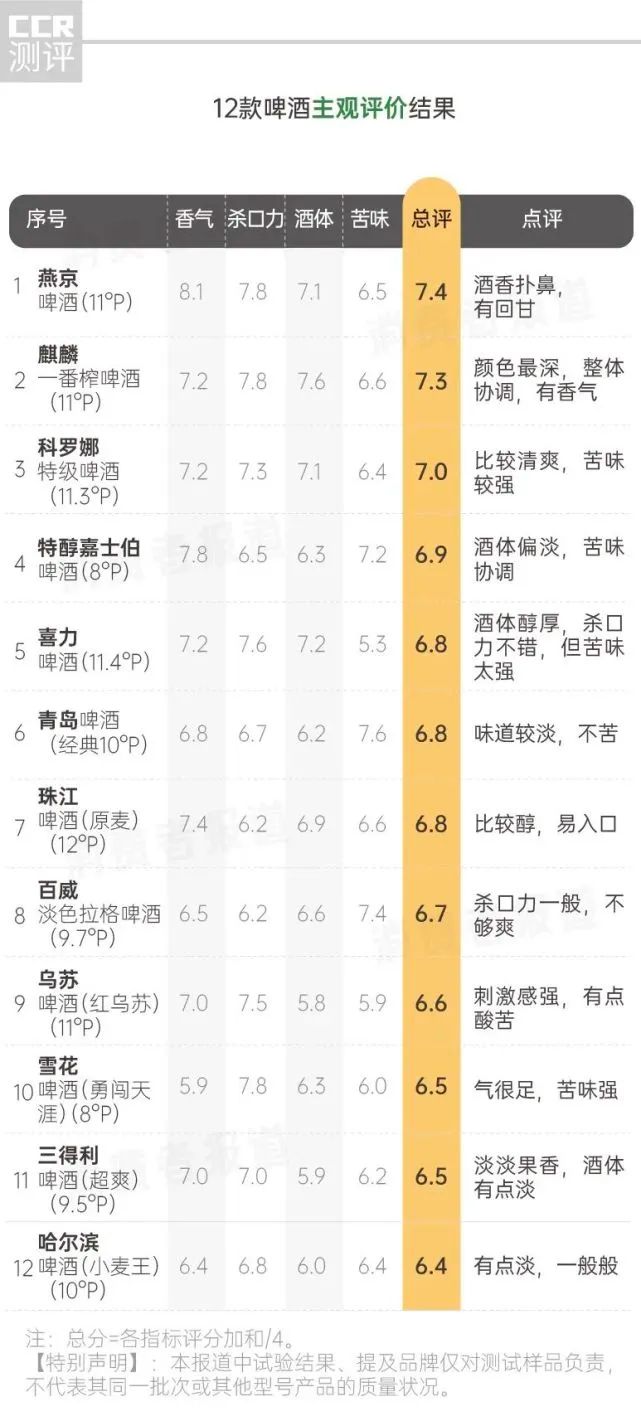
Sections 6 of kasib, joojiang, heili, qingdao, budwey, usu and others are in the “second platoon” with a total of 6. 9, 6. 8, 6. 8, 6. 7 and 6. 6 respectively。
There are volunteers who believe that gabe and qingdao are both dim, but bitterly co-ordinated; that the pearl river is more intoxicated and accessible; that the helician alcohol is thick, good in oral terms, but strong in bitterness; that the baccalaureate is common in taste and not good enough; and that the usu stimuli are strong but bitter。
Three sections, snowflake, triple and harbin, were less evaluated, with totals of 6. 5, 6. 5 and 6. 4, respectively. Some volunteers felt that the snow was strong and bitter; that the trifle brought light fruit, but the wine was thin; and that harbin was light and common。
Food experts have indicated to the magazine that the vast majority of chinese are primary beer consumers, with low beer consumption and low taste requirements。
So more than 90 percent of the beer sold in the domestic market is light beer. Large beer brands have also been introduced to meet market demand。
However, the vast majority of the volunteers who participated in this subjective evaluation threw out some beers too thin, even to be described as “water beers”。
Therefore, to be popular with consumers, beer manufacturers still need to start with raw materials, and only beer made of real materials can be permanently occupied by consumers。
All 12 beers have a trace of formaldehyde
The beer industry in our country used formaldehyde as a stabilizer in the beer production process, which reduces the color of beer and reduces the amount of time spent on alcohol。
In 2011, the former national commission for the defence of human rights issued the gb 2760-2011 standards for the use of food additives, removing formaldehyde from the list of food process aids. Thereafter formaldehyde will not be used for food production, operation and use。
However, formaldehyde in beer also originates from a range of biochemical metabolites produced during beer fermentation, where there are trace formaldehyde soluble in water。
Formaldehyde is a toxic substance that accumulates not only in humans, but is also integrated with proteins, and is likely to cause nasal, nasal, nasal and leukemia in chronic ingestion, so that the concentration of formaldehyde in beer is becoming a public focus。
Gb 2758-2012 fermented wine and its formulations require that the residue of formaldehyde should not be greater than 2. 0 mg/l; the world health organization (who) published a guide to drinking water quality safety which states that formaldehyde content is 0. 9 mg/l。
The results of the tests showed that all 12 beers detected a certain amount of formaldehyde between 0. 16 mg/l ~0. 23 mg/l, of which qingdao was 0. 23 mg/l, although all beers were within the standard limit. It is worth noting that all 12 beers of formaldehyde are below the who maximum amount for drinking water。
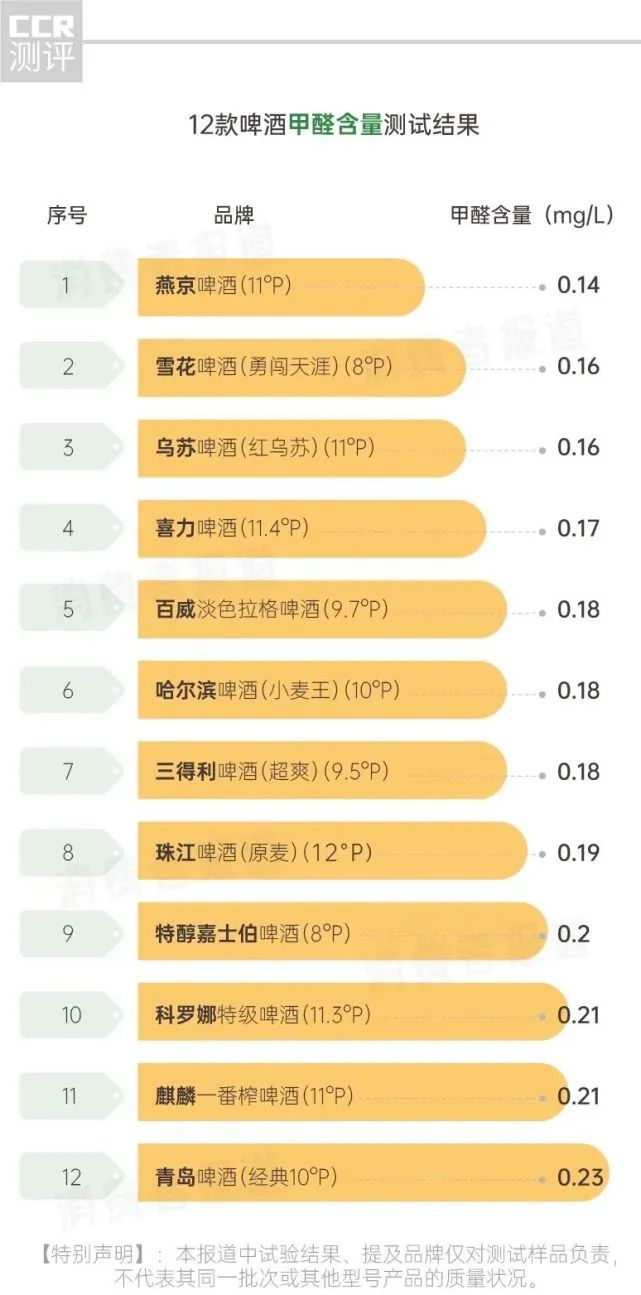
“calcium formaldehyde is also a natural product of yeast metabolism during the brewing of alcohol, and the detection results are very small and far below national standards, indicating that the beer problem is small. "specific technicians say。
However, for some consumers with high alcohol consumption, formaldehyde may be more likely to be consumed, so should such consumers be concerned
The united states environmental protection agency (epa) has recommended an acceptable daily intake of 0. 2 mg per kilogram of formaldehyde, i. E., an adult weighing 60 kg, with daily intake of formaldehyde not exceeding 12 mg。
For example, an adult weighing 60 kg is required to drink approximately 100 bottles of 510 ml of beer per day to exceed the standard in the case of qing island beer (class 10°p) (0. 23 mg/l)。
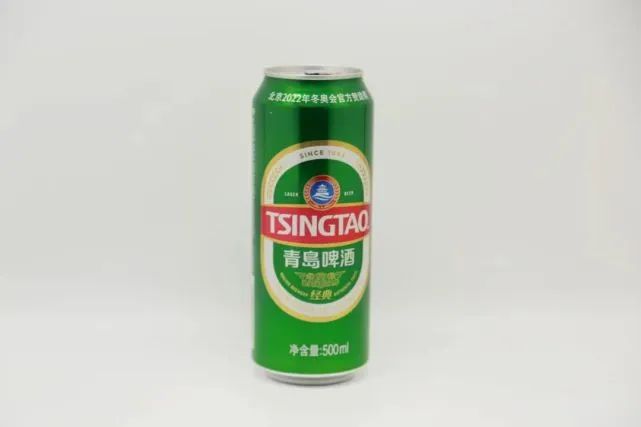
In fact, formaldehyde is widespread in nature, and the metabolism of humans and animals produces trace formaldehyde. Microcaloric formaldehyde is rapidly metabolized into acid in humans, ejected from the respiratory system and urine without compromising human health, and consumers need not be too worried。
[special declaration]: the test results, reference to brands in this report are responsible only for testing samples and do not represent the quality status of the same sub-group or other model products。



