Question: the guangxi jade forest: the golden flower tea shop is a new way to make the country rich
Author, chen jia gae, wenda xin, li yong
It's time for tea and tea. In the xinhua village of jinhu town, yuzhou district, guangxi yulin city, there is a fragrance of mud and gold tea on the green tea hill, and thanks to cheonan and the tea farmers, they travel freely through the tea sheds and cut the flowers with skill。
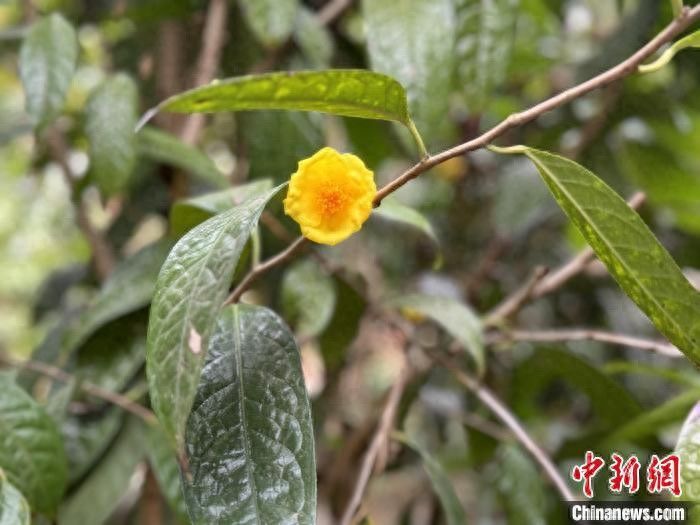
The figure is the gold flower tea that was planted in the demonstration base in nova wang village. Chan jia jia
The golden flower tea plantation base in new wang village is a demonstration base for gold flower tea growing in yuzhou district. The director of the base, xie qing an, is a veteran who, upon his retirement, has led the villagers to develop the tea industry from planting, nurturing, processing to marketing, has moved out of the village to become rich。
Back home as a tea farmer, bravely looking for a way to grow tea
In the early years, xie qingan had learned by accident that the flowers and leaves of gold tea were available for medicine, were of high economic and pharmaceutical value, and that he had been able to smell business opportunities by setting up a family farm in dong an, yu district, and had begun planning to introduce gold tea, which now covers 270 acres。
At this time, the tea season is high, thanks to the qingan presentation, and more than 10 villagers come to collect tea each day, at a maximum of 200 kilograms a day. For some time around the spring festival, the base has taken more than 1,500 kilograms of fresh flowers, at a market price of up to $3,000 per kilogram. The annual production of gold and tea from the base in 2024 was about 8,000 kg, with an annual production value of approximately $20. 8 million。
In addition, in order to better address the problem of green tea and pest control, and to strengthen the selection and cultivation of tea trees, the team led by xiqingan, in collaboration with the guangxi institute of science and others, has set up technical services to provide technical guidance and training to villagers in planting and to encourage villagers to grow gold and flowers on their own land。
Industrial extension for development and co-benefits
However, early equipment shortages, processing capacity constraints and the lack of storage facilities for fresh flowers constrain the continued healthy development of the gold tea industry. As a result of coordinated efforts by the relevant departments, the local government has provided policy and financial support, and by 2024 the base has invested more than $3 million in the purchase of tea-making equipment and the expansion of the tea factory to more than 700 square metres。
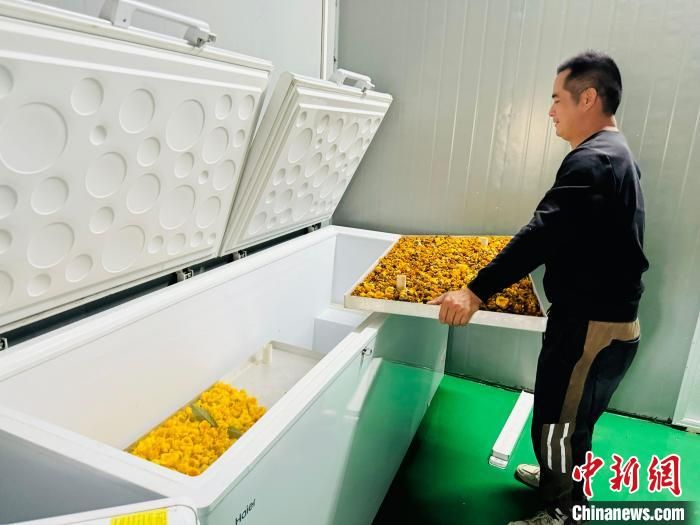
The figure is that she will collect the recovered gold tea flowers and put them in an ice freezer in a freezer to keep them cold and fast. Chan jia jia
In order to increase the value added, visibility and market competitiveness of products, the qingan leadership has actively explored the gold-flowered tea processing techniques, introduced advanced tea processing production lines, adopted a joint farming business model that combines the "town people + base + factory + villagers", prioritized the absorption of poor households, monitoring household work at the base, set different pay rates for different types of work, and radiation boosted the employment of some nearby villagers。
“every time we come to the tea harvest season, we pick more tea, we make more than 100 dollars a day, and i get 2,500 to 2,800 dollars a month for my work alone, and i get employment at home.” according to fenglian, who has many years of experience with tea production at the base。
The tea leaves the big business. The yuzhou region processed and sold approximately 5,400 kg of frozen dry gold tea in 2024 and generated approximately $1. 440 million in revenue from sales. There are 12 fixed jobs provided at the trusted industries base, with 26 additional households driven by radiation. Of these, 8 additional households were raised by monitoring households, more than 80 temporary jobs were settled, and village groups generated more than 240,000 yuan through land migration. (concluded)